
Angola has emerged as Africa’s second largest diamond producer by value, challenging Botswana’s long standing dominance in the global diamond industry. In 2024, Angola’s diamond production reached an estimated value of $1.41 billion, reflecting a major transformation driven by increased production, investment and strategic development of its diamond resources.
Angola’s rise has been shaped by significant reforms following decades of civil conflict, attracting foreign investment and improving mining infrastructure. The country has focused on unlocking the potential of its diamond sector, with major operations such as the Catoca and Luele mines playing a central role.
The Sociedade Mineira de Catoca Joint Venture, which operates these mines, has become the largest diamond producer in Africa after Debswana. Together, Catoca and Luele account for more than 75% of Angola’s diamond production.
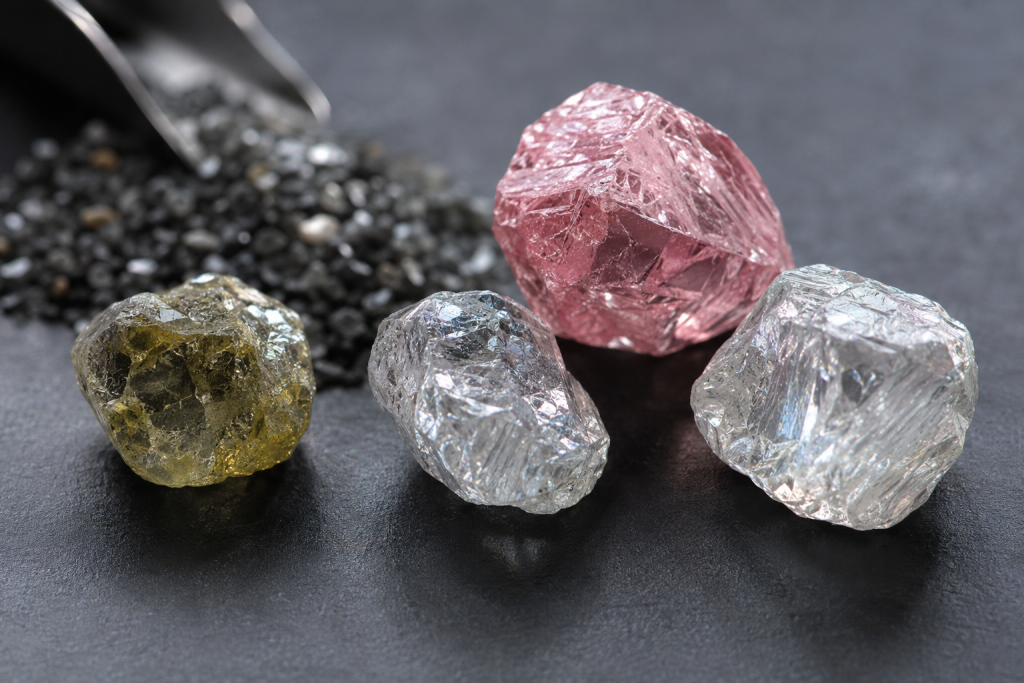
Angola’s success has also been supported by its high quality alluvial diamond deposits. These deposits have produced some of the world’s most remarkable diamonds, including exceptional stones known for their size, colour and rarity. The discovery of the 170 carat pink Lulo Rose from the Lulo mine highlighted Angola’s potential in the luxury diamond market.
While Angola has expanded production, Botswana has taken a different approach. Debswana, the joint venture between the Botswana government and De Beers, has reduced output in response to weaker global demand for natural diamonds. Angola, however, has continued increasing supply, with production from Catoca and Luele reaching approximately 12 million carats in 2024, according to the Kimberley Process.
Industry analysts suggest Angola’s rise has been driven partly by Botswana’s decision to manage supply more carefully, while Angola has focused on increasing production. Botswana’s strategy is viewed by some as a more sustainable approach due to the importance of balancing supply with consumer demand.
Angola’s diamond industry presents a unique contrast. Its kimberlite mines produce large volumes of commercial diamonds, while its alluvial deposits continue to deliver some of the rarest and most valuable stones in the world.
The country’s diamond potential was previously restricted by its civil war, which lasted from 1975 until 2002. The conflict left Angola as one of Africa’s least explored but most promising diamond regions. Over the past decade, the government has prioritised diamond development, improving resource management and attracting international partnerships.
The future of Angola’s diamond sector could become even more significant through its interest in acquiring a stake in De Beers. Angola’s state diamond company, Endiama, has submitted a proposal for a 20% to 30% stake in De Beers, with the goal of creating a stronger African ownership model alongside countries such as Botswana, Namibia and South Africa.
The outcome of the De Beers ownership process could have a major impact on the future direction of the natural diamond industry. The focus will not only be on ownership, but also on how the company drives long term demand for natural diamonds.
The diamond industry is facing increased competition from lab grown diamonds, creating a need for stronger collaboration among natural diamond producers. Unlike natural diamonds, which are limited by geological supply, lab grown diamonds can be produced in controlled quantities according to market demand.
The challenge for the natural diamond industry is to communicate the unique value of natural diamonds, including their rarity, geological history and the positive economic impact they create in producing countries.
Both Angola and Botswana are expected to remain key players in the global diamond market due to their significant resources. Their future success will depend not only on production, but also on investing in cutting and polishing facilities, creating skilled employment and telling the story of how diamonds benefit communities.
A stronger connection with consumers, especially younger generations, could help further differentiate natural diamonds from lab grown alternatives and reinforce the enduring value of a natural diamond.
Comments are closed