
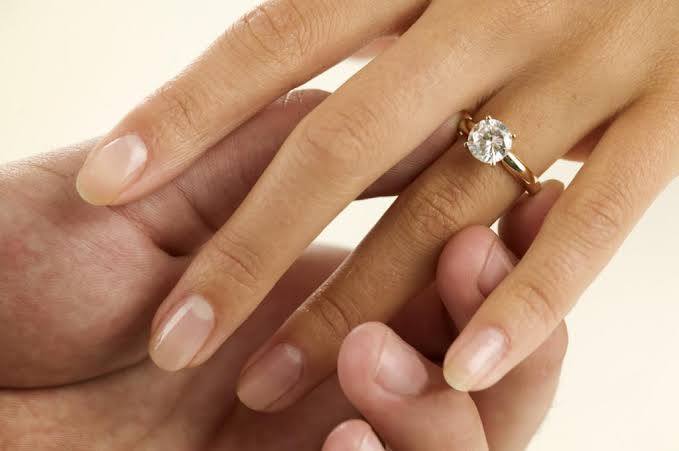
The average price of a natural diamond engagement ring in the United States rose by 9 per cent to US$7,346 in 2025, according to the Natural Diamond Council (NDC). In its latest report, Natural Diamond Trends: A 2025 Overview, the NDC notes that the average centre stone size increased by 5 per cent to 1.16 carats, reflecting continued consumer preference for larger, statement diamonds.
Round brilliant diamonds maintained their dominant position, accounting for 62 per cent of all engagement ring sales, unchanged from the previous year. Oval cuts eased slightly to 14 per cent, down from 16 per cent, while long fancy shapes such as marquise and cushion continued to gain traction. SI1 clarity was the most commonly purchased grade, although the report did not specify the leading colour category.
Diamond engagement rings — including complete rings, loose centre stones and bridal semi-mounts — represented 38 per cent of all natural diamond jewellery sales by volume in 2025. The data, compiled by Tenoris from more than four million anonymised point-of-sale transactions across 2,500 US specialty retailers, highlights a market driven by quality upgrades and larger stones. Across the broader natural diamond jewellery category, the 2.00–2.24 carat and 1.50–1.59 carat segments recorded the fastest unit sales growth, contributing to a 10 per cent rise in average jewellery prices. Seasonal gifting periods — notably November and December, together with Valentine’s Day and Mother’s Day — accounted for 46 per cent of annual diamond jewellery volume.
How does this compare with Australia?
In Australia, the average spend on a natural diamond engagement ring is generally lower than in the US, typically ranging between AUD $5,000 and AUD $8,000 depending on city, retailer positioning and diamond specifications. While the Australian market also shows strong demand for round brilliant cuts, there has been a noticeable shift toward oval and elongated fancy shapes, particularly among younger buyers seeking distinctive designs.
From a grading perspective, Australian consumers — particularly those purchasing through independent jewellers and specialist laboratories such as Diamond Certification Laboratory of Australia (DCLA) — tend to place strong emphasis on accurate certification, cut quality and value retention. Carat weights commonly centre around the 1.00 to 1.20 carat range, closely mirroring US trends, although there remains a solid market for well-cut diamonds just under key weight thresholds (e.g. 0.90–0.99 carats) where value optimisation is a priority.
Overall, the US data confirms a global pattern: consumers are gravitating toward larger stones, higher specifications and enduring classic shapes. In Australia, while total average spend remains slightly below US levels when adjusted for currency, the qualitative trends — preference for natural diamonds, round brilliants and milestone gifting seasons — remain closely aligned with international markets.
Comments are closed