
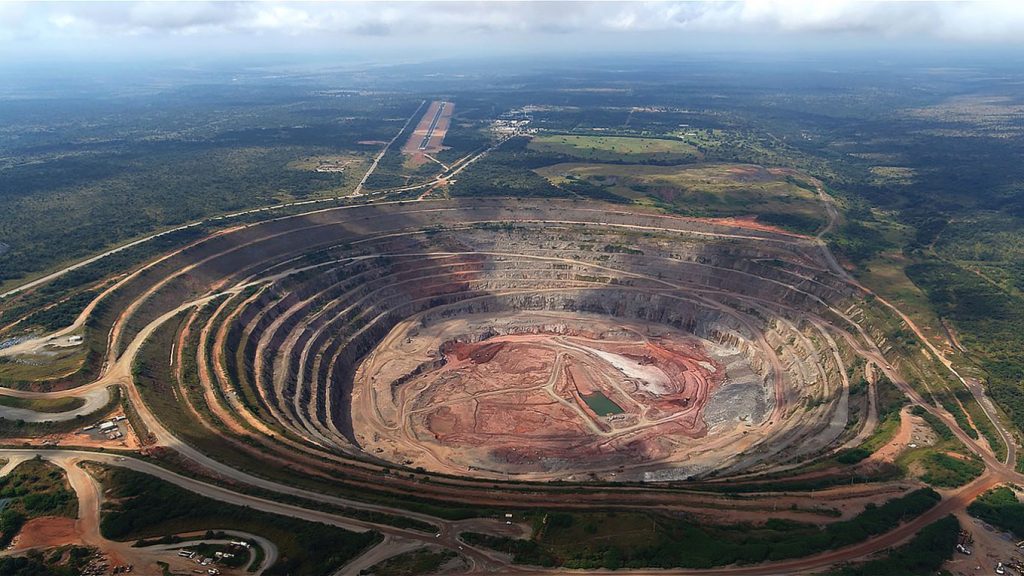
Angola’s diamond sector delivered a robust production and sales performance in 2025, generating approximately $1.8 billion in rough-diamond revenue, even as global trading conditions remained challenging.
According to Sodiam, Angola’s state-owned diamond marketing and sales authority, the country exported 17.2 million carats of rough diamonds during the year, representing a 69% increase compared with 2024. Total sales volume rose by 70% to 17.7 million carats, while overall sales value increased by 21% year-on-year, highlighting Angola’s growing capacity to bring rough supply to the international market.
Sodiam attributed the strong volume growth to improved sales management practices, including tighter inventory control and strategies aimed at preventing excess stock accumulation. These measures helped stabilise cash flow and improve market access at a time when demand across parts of the midstream remained under pressure.
Angola’s rough diamond output is sourced primarily from major mining operations, including the Catoca, Luele, and Lulo deposits. In particular, increased production at the Luele mine played a pivotal role in boosting export volumes and strengthening Angola’s position as one of Africa’s leading diamond producers.
“These figures reflect a significant expansion in the country’s capacity to place its diamonds on the international market,” Sodiam said, pointing to operational efficiencies and sustained investment in mining infrastructure.
Despite the strong gains in volume and revenue, average realised prices declined by 29% on a per-carat basis, underscoring ongoing pricing pressure in the global rough diamond market. The price contraction reflects softer demand in certain size and quality categories, as well as continued caution among manufacturers and traders.
For the wider diamond industry, Angola’s 2025 performance illustrates a clear divergence between volume-led growth and price dynamics, reinforcing the importance of disciplined production, transparent sales mechanisms, and accurate grading and valuation standards as market conditions continue to evolve.
Comments are closed