
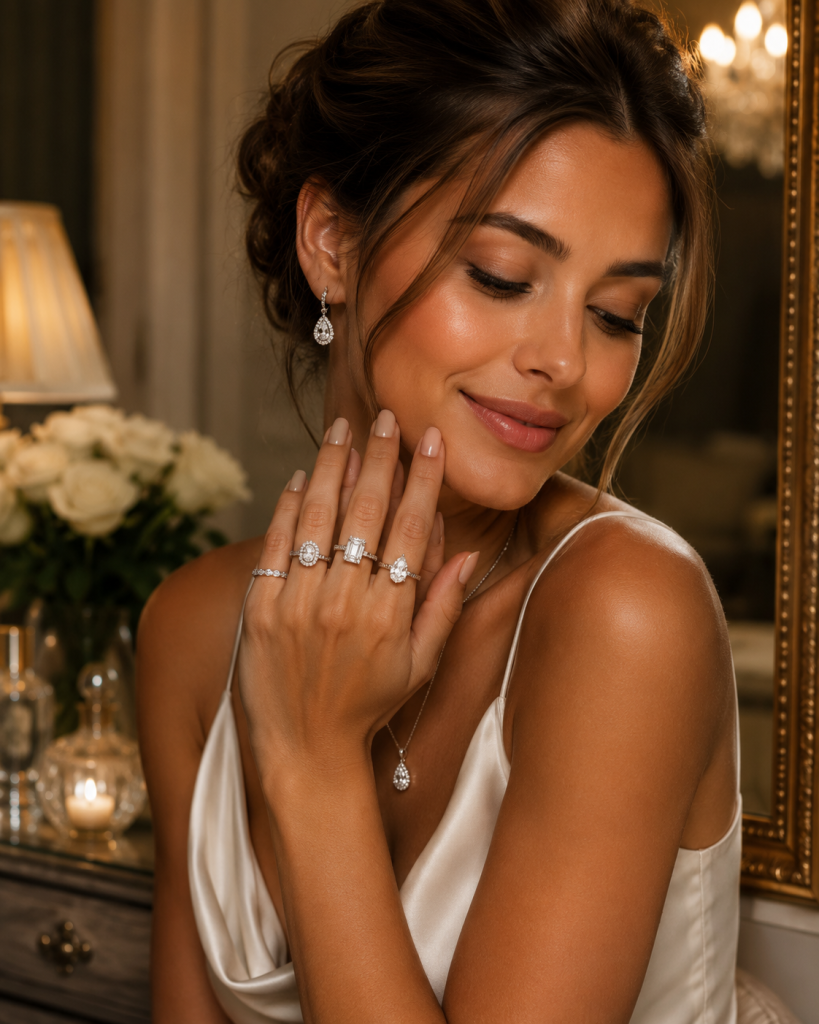
A DCLA Guide to Choosing the Perfect Ring
An engagement ring is one of the most meaningful purchases you will ever make. It symbolises love, commitment and a lifetime together, making it far more than simply a piece of jewellery. With countless styles, diamond shapes, coloured gemstones and precious metals available, deciding which ring is right can feel overwhelming.
The good news is that there is no single “perfect” engagement ring. The perfect ring is the one that reflects your personality, complements your lifestyle and fits comfortably within your budget.
Start With Your Lifestyle
Before considering the size of the diamond or the latest fashion trends, think about how the ring will be worn.
If you lead an active lifestyle, work with your hands, or regularly wear gloves, a lower-profile design with fewer exposed claws is often the most practical choice. If you enjoy glamour and statement jewellery, a larger setting with additional diamonds may be ideal.
The ring should suit everyday life just as much as special occasions.
Popular Engagement Ring Styles
Solitaire
The solitaire remains the world’s most popular engagement ring.
Featuring a single centre stone, the solitaire showcases the diamond without distraction. It is timeless, elegant and never goes out of fashion.
Best for:
- Classic style
- Maximum emphasis on the centre diamond
- Future flexibility with wedding bands
Halo
A halo ring surrounds the centre diamond with a circle of smaller diamonds.
This creates the illusion of a much larger centre stone while adding exceptional sparkle.
Advantages
- Makes the centre diamond appear larger
- Excellent brilliance
- Glamorous appearance
Considerations
- More intricate cleaning
- More small diamonds requiring periodic inspection
Hidden Halo
One of today’s most sought-after designs, the hidden halo places small diamonds beneath the centre stone where they are visible from the side.
From above the ring appears like a solitaire, while side angles reveal extra brilliance.
It offers a modern twist without overwhelming the centre diamond.
Trilogy (Three-Stone)
The trilogy ring features three main stones.
Traditionally they symbolise:
- Past
- Present
- Future
The side stones may be diamonds or coloured gemstones.
This design offers greater finger coverage while carrying strong symbolic meaning.
Pavé
Pavé settings feature numerous small diamonds set closely together along the band.
Rather than drawing attention only to the centre stone, pavé creates sparkle across the entire ring.
It pairs beautifully with solitaires, halos and hidden halos.
Vintage and Art Deco
Vintage-inspired rings incorporate intricate engraving, milgrain edges and geometric details.
They appeal to buyers seeking individuality and timeless craftsmanship.
Choosing the Diamond Shape
The shape of the centre stone dramatically influences the overall appearance.
Round Brilliant
The world’s most popular cut.
- Maximum brilliance
- Timeless
- Highest demand
Oval
Creates the illusion of longer fingers while appearing larger than an equivalent round diamond.
Cushion
Soft square shape with rounded corners.
Romantic and vintage-inspired.
Emerald Cut
Long rectangular facets create elegant flashes rather than sparkle.
Perfect for those who appreciate understated sophistication.
Princess
Square with brilliant faceting.
Modern and highly brilliant.
Pear
A combination of round and marquise shapes.
Elegant and distinctive.
Marquise
Its elongated shape can make the diamond appear significantly larger than its actual carat weight.
Radiant
Combines the brilliance of a round diamond with the outline of an emerald cut.
White Diamonds or Coloured Stones?
While colourless diamonds remain the traditional choice, coloured diamonds and gemstones have become increasingly popular.
White Diamonds
Remain the benchmark for durability, brilliance and timeless appeal.
Suitable for virtually every ring style.
Yellow Diamonds
Warm, vibrant and increasingly fashionable.
Often paired with yellow gold.
Pink Diamonds
Rare and highly sought after.
Natural pink diamonds, particularly those from Australia’s Argyle Mine, are among the world’s most valuable gemstones.
Blue Diamonds
Elegant, sophisticated and exceptionally rare.
Often selected by collectors seeking something unique.
Champagne and Cognac Diamonds
Natural earthy colours offering excellent value while remaining completely natural diamonds.
Sapphires
One of the most popular alternatives to diamonds.
Available in blue, pink, yellow, green and white.
Highly durable and suitable for everyday wear.
Emeralds
Known for their vivid green colour.
While beautiful, emeralds naturally contain internal features and require more care than diamonds.
Rubies
Rich red and exceptionally durable.
A favourite for those wanting bold colour with excellent longevity.
Does Size Matter?
Carat weight is only one factor influencing beauty.
A well-cut 1.00 carat diamond often appears more brilliant than a poorly cut 1.50 carat diamond.
Many buyers choose slightly below common weight thresholds such as:
- 0.90 ct
- 1.40 ct
- 1.90 ct
These can offer significant savings while appearing almost identical in size.
Remember that finger size also influences perception. A one-carat diamond appears larger on a smaller finger than on a larger one.
Matching the Budget
A common misconception suggests spending several months’ salary on an engagement ring.
In reality, there is no correct amount.
Instead, balance your budget across the entire ring.
For example:
- Centre stone quality
- Ring design
- Metal choice
- Craftsmanship
- Certification
Sometimes selecting a slightly smaller but higher-quality diamond creates a far more beautiful ring than choosing the largest stone possible.
Choosing the Metal
Platinum
- Extremely durable
- Naturally white
- Dense and secure
- Ideal for heirloom jewellery
18ct White Gold
- Bright appearance
- Popular modern choice
- Usually rhodium plated
Yellow Gold
- Traditional elegance
- Complements coloured diamonds beautifully
Rose Gold
- Romantic appearance
- Increasingly fashionable
- Flatters many skin tones
Durability Matters
Not all gemstones are equally suited to everyday wear.
The Mohs Hardness Scale measures resistance to scratching.
| Gemstone | Mohs Hardness | Everyday Suitability |
|---|---|---|
| Diamond | 10 | Outstanding |
| Moissanite | 9.25 | Excellent |
| Sapphire | 9 | Excellent |
| Ruby | 9 | Excellent |
| Spinel | 8 | Very Good |
| Topaz | 8 | Good |
| Emerald | 7.5–8 | Moderate – requires extra care |
| Aquamarine | 7.5–8 | Moderate |
| Morganite | 7.5–8 | Moderate |
| Tanzanite | 6–7 | Better suited to occasional wear |
| Opal | 5.5–6.5 | Delicate |
| Pearl | 2.5–4.5 | Special occasion jewellery |
Although emeralds have relatively good hardness, they are naturally more brittle because of internal inclusions. They can chip more easily if knocked. Diamonds, by comparison, are exceptionally resistant to scratching, making them the preferred choice for everyday engagement rings.
Certification Gives Confidence
Regardless of the design, always insist on an independent grading report for significant diamonds.
Certification confirms the identity and quality of the stone and provides confidence that the diamond has been assessed impartially using recognised international grading standards.
For coloured diamonds and coloured gemstones, expert identification and grading are equally important to verify authenticity, treatments and origin where applicable.
The Perfect Ring Is Personal
There is no universal “best” engagement ring.
Some people fall in love with the simplicity of a solitaire, while others are captivated by the brilliance of a halo or the symbolism of a trilogy design. Some prefer the timeless elegance of a white diamond, while others choose the individuality of a natural pink diamond or a vibrant sapphire.
The most important considerations are how the ring suits your lifestyle, how comfortable it is to wear, whether the centre stone is durable enough for everyday use, and whether it fits comfortably within your budget.
An engagement ring should never be chosen simply because it is fashionable. It should be chosen because it tells your story and will remain as meaningful in fifty years as it is on the day it is given.
When carefully selected, beautifully crafted and independently certified, an engagement ring becomes more than jewellery it becomes a treasured family heirloom that can be passed from one generation to the next.
Comments are closed