
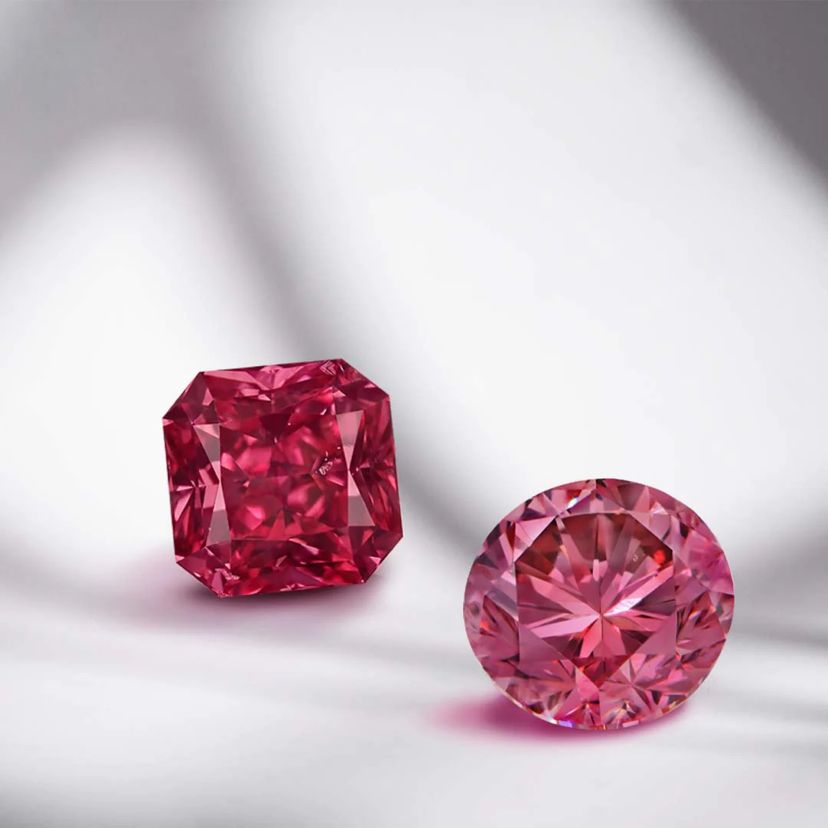
British jeweller secures rare Argyle pink diamond inventory as the legacy of Australia’s legendary mine enters a new chapter
British luxury jeweller Boodles has strengthened its position in the highly exclusive world of fancy coloured diamonds after acquiring the remaining inventory of Argyle Pink Diamonds from Rio Tinto, together with ownership of the iconic Argyle Pink Diamonds brand.
The agreement gives Boodles control of the brand, associated trademarks, website and digital assets, as well as a collection of some of the exceptionally rare pink diamonds produced by the Argyle mine in Western Australia.
For Boodles, the transaction represents much more than the acquisition of a collection of diamonds. It is a long term investment in one of the most recognisable and historically significant coloured diamond brands in the world.
Jody Wainwright, joint managing director of Boodles, described the transaction as a significant, long term investment and said the company intends to release the diamonds gradually over approximately a decade.
“Each one is like a Picasso,” he said, reflecting the extraordinary rarity and individuality of the stones.
The Argyle legacy
The Argyle mine, located in Western Australia’s remote East Kimberley region, became synonymous with pink diamonds and, for decades, supplied more than 90 per cent of the world’s pink diamond production.
Mining ceased in November 2020 after the mine had produced approximately 865 million carats of rough diamonds. Yet only a tiny fraction of that enormous production was pink.
According to Rio Tinto, less than 0.1 per cent of Argyle’s total rough diamond production was pink, illustrating why these stones have become so highly prized.
DCLA has previously examined the extraordinary rarity of pink diamonds and the geological processes responsible for their colour in its article on Pink Diamonds.
The closure of Argyle permanently changed the supply equation for pink diamonds. Unlike white diamonds, where new production continues from mines around the world, there is no comparable source capable of replacing Argyle’s extraordinary output of pink diamonds.
This has transformed existing Argyle pink diamonds into a finite historical inventory.
Boodles has had a long relationship with Argyle pink diamonds. The jeweller purchased its first Argyle pink diamond in 1998 and later participated in the famous annual Argyle Pink Diamonds Tender, where some of the world’s finest stones were offered to a select group of international dealers, jewellers and collectors.
Pink diamonds are extraordinarily rare
Pink diamonds occupy a special position within the coloured diamond market.
Unlike blue diamonds, where the colour is generally associated with boron, or many yellow diamonds, where nitrogen plays an important role, the precise cause of the pink colour is associated with structural distortion within the diamond’s crystal lattice.
The geological forces required to create this distortion are exceptionally unusual.
DCLA’s Diamond Colour Authentication and Advanced Diamond Testing explains the importance of determining whether the colour of a fancy coloured diamond is natural or the result of treatment.
This distinction is critical because natural colour is one of the fundamental characteristics that determines the rarity and value of a fancy coloured diamond.
Pink diamonds from around the world
While Argyle became the world’s dominant source of pink diamonds, it was certainly not the only source of important pink stones.
Some of the most significant and celebrated pink diamonds in history have originated from South Africa, Lesotho, Russia, Canada and other African diamond producing nations.
South Africa has a particularly important place in coloured diamond history. The country’s historic diamond mines have produced exceptional pink and other fancy coloured stones, including some of the world’s most famous diamonds.
One of the most important examples is the extraordinary 59.60 carat CTF Pink Star, which was mined by De Beers in South Africa before being cut and polished into the famous Fancy Vivid Pink diamond. DCLA has previously documented the remarkable history of the Pink Star.
Lesotho has also emerged as an important source of exceptional pink diamonds. The Kao mine produced the 108.39 carat rough crystal from which the remarkable Kao Legend Collection was created, including the 20.49 carat Fancy Intense Purplish Pink Kao Legend.
Canada has produced notable coloured diamonds, while Russia’s Siberian diamond mines have also yielded rare pink stones.
The important point is that exceptional pink diamonds can occur in several geological environments. What made Argyle unique was the extraordinary frequency with which its geology produced pink diamonds and the sheer volume of rare coloured stones recovered during the mine’s lifetime.
Provenance matters
The story of Argyle also demonstrates why provenance has become increasingly important in the world of exceptional diamonds.
A diamond may display characteristics associated with a particular mine, but those characteristics do not necessarily constitute scientific proof of origin.
DCLA recently examined this issue in detail in Where Did My Diamond Come From?, explaining the distinction between a diamond displaying characteristics associated with a particular locality and scientifically establishing its geographic origin.
For Argyle diamonds, however, historical documentation, provenance and the established Argyle brand can add another dimension to a stone’s story.
A finite supply
The closure of Argyle has fundamentally altered the market.
The Fancy Color Research Foundation reported that pink diamond prices had increased by almost 390 per cent between 2005 and the second quarter of 2026.
With no new Argyle production coming to market, collectors and investors increasingly focus on provenance, colour intensity, size, quality and historical significance.
DCLA has followed this market closely, including recent coverage of major pink diamonds appearing at international auctions and the continuing demand for exceptional natural coloured diamonds.
The DCLA Pink Diamond archive provides an extensive history of major pink diamonds, auctions and developments in the market.
The world’s auction houses have repeatedly demonstrated the extraordinary prices that exceptional pink diamonds can command.
The CTF Pink Star, a 59.60 carat Fancy Vivid Pink diamond, remains one of the most famous gemstones ever offered at auction. It achieved HK$553 million, approximately US$71.2 million at the time, at Sotheby’s in Hong Kong in 2017.
However, size alone does not determine the value of a pink diamond. In the world of fancy coloured diamonds, colour saturation, hue, distribution, clarity, cut and provenance can have an enormous influence on value.
A small but intensely coloured pink diamond can therefore be considerably more valuable than a much larger stone with a weaker colour.
Boodles builds on a long association with pink diamonds
Pink diamonds already account for approximately 5 per cent of Boodles’ jewellery production by volume.
The company incorporates them into collections including Raindance, Play of Light and Be Boodles, as well as selected engagement rings.
Boodles is also planning a new high jewellery collection inspired by Australia, with Argyle pink diamonds expected to feature prominently.
The company has also incorporated the history of Argyle into its new London premises at 23 Old Bond Street, including an Argyle Lounge featuring jewellery, historical material and artefacts connected with the mine.
Among the items are examples of the original Argyle colour grading system and materials documenting the history of the mine and its remarkable contribution to the coloured diamond industry.
From mine to museum piece
The Boodles acquisition illustrates an important change taking place in the diamond market.
Argyle pink diamonds are no longer simply newly mined commodities. They are increasingly being viewed as pieces of geological and mining history.
Every Argyle pink diamond that has been recovered is now part of a finite population.
The mine is closed, the geological source cannot be replenished and the world’s remaining Argyle pink diamonds will progressively move from miners and dealers into the hands of jewellers, collectors and private owners.
This gives provenance an increasingly important role.
For the diamond industry, Argyle represents one of the clearest examples of how a mine can become a brand in its own right. The combination of geological rarity, Australian provenance, recognised colour grading and a finite supply has created an identity that extends well beyond the intrinsic characteristics of the individual diamond.
DCLA’s recent article on The World’s Most Valuable Coloured Diamonds explores this broader world of natural fancy coloured diamonds and explains why the rarest colours can command extraordinary values.
Boodles’ acquisition ensures that the Argyle Pink Diamonds name will continue to have a place in the luxury jewellery market.
It also highlights a fundamental truth about exceptional coloured diamonds:
When the source disappears, the diamonds already recovered become part of a finite piece of history.
For collectors, the appeal is therefore not simply owning a beautiful pink diamond. It is owning a small piece of the geological history of the Earth — from a mine that will never produce another Argyle pink diamond.
Comments are closed