
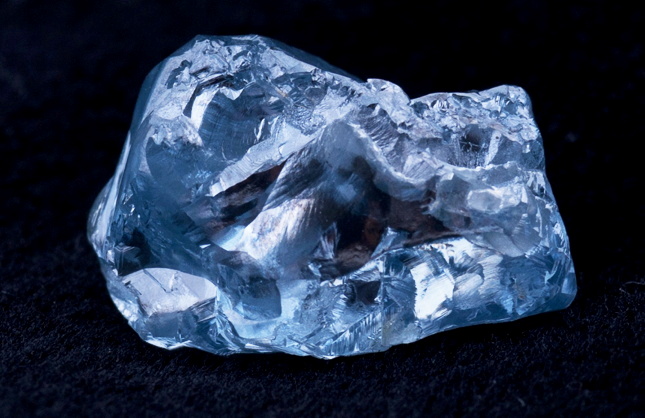
The global diamond industry has suffered another setback, with Petra Diamonds announcing a business rescue plan for its financially distressed Finsch Mine in South Africa. The move highlights the ongoing pressure facing natural diamond producers after several years of declining prices and weakening demand.
Under South African law, a business rescue practitioner can be appointed when a company is unlikely to meet its financial obligations within the next six months. Petra Diamonds said the decision was necessary to preserve the future of the operation and maximise value for stakeholders.
Petra Chief Executive Vivek Gadodia cited a combination of persistently weak diamond prices and the strength of the South African rand as key factors behind the mine’s financial difficulties. While mining costs have remained elevated, revenue from diamond sales has failed to keep pace, placing significant strain on profitability.
The Finsch Mine, one of South Africa’s most important diamond producing assets, now joins a growing list of operations worldwide that have faced closure, suspension, or restructuring during the deepest downturn the diamond industry has experienced in decades.
A major factor behind the crisis has been the rapid rise of laboratory grown diamonds. The dramatic fall in the retail price of synthetic stones has disrupted traditional diamond markets and placed downward pressure on natural diamond prices. As consumers increasingly compare natural and laboratory grown products, mining companies have been forced to navigate one of the most challenging periods in the history of the industry.
The impact has been felt across the entire diamond supply chain. Russian mining giant Alrosa continues to struggle with weak prices, compounded by geopolitical pressures and sanctions. The company’s share price recently fell to an all time low of 25 rubles, representing a decline of almost 50 per cent over the past year and more than 80 per cent over the past five years.
De Beers has also been forced to confront the new market reality. Parent company Anglo American has recorded a series of substantial write downs on its diamond business, including US$2.3 billion in the most recent reporting period. This follows impairments of US$2.9 billion in 2024 and US$2.6 billion in 2023, reflecting the severe decline in the value of diamond inventories and mining assets.
Despite the continued challenges, there are emerging signs that the worst of the crisis may be passing. Several major producers have significantly reduced rough diamond production over the past two years, helping to rebalance supply with demand. Inventories throughout the pipeline have also been gradually worked down, while the widening price gap between natural and laboratory grown diamonds is reinforcing the unique rarity and investment appeal of natural stones.
Industry analysts are increasingly suggesting that the natural diamond market may be approaching a turning point. Although a rapid recovery is unlikely, production cuts, reduced inventories, and stabilising consumer demand could lay the foundation for a healthier market in the years ahead.
For now, the restructuring of Petra’s Finsch Mine serves as another reminder of the profound transformation taking place within the global diamond industry. However, after years of falling prices and mine closures, there is growing evidence that the sector may finally be moving closer to a long awaited recovery.
Comments are closed