
At the very top of the diamond market, conventional pricing methods no longer hold sway. Standard reference points price lists, per-carat averages, and even traditional scarcity models lose meaning in a segment where buyer appetite for extraordinary, one-of-a-kind gems drives value.
The Record-Breaking Diamonds report from the Natural Diamond Council (NDC) explores this ultra-high-end world, analysing the largest and most valuable diamonds ever recovered, cut, and sold. Drawing on mining data, gemological research, and auction results, the report highlights how extreme rarity shapes pricing in the natural-diamond supply chain.
From Cullinan to Lesedi La Rona: Rare Diamonds Through History
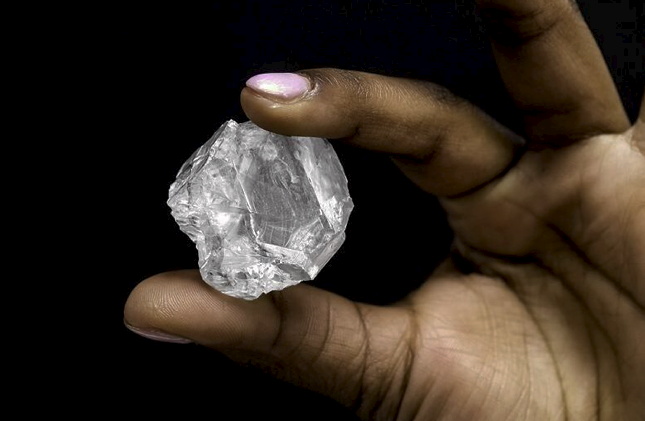
For more than a century, the discovery of large, gem-quality diamonds was extraordinarily rare. After the 1905 discovery of the 3,106-carat Cullinan diamond in South Africa, no comparable stones surfaced for decades. That long wait ended in 2015 with the 1,109-carat Lesedi La Rona from Botswana’s Karowe mine, signaling a measurable shift in the recovery of large diamonds.
Since then, at least nine diamonds over 1,000 carats have been unearthed, including two exceeding 2,000 carats: the 2,488-carat Motswedi (2024) and the 2,036-carat near-gem-quality stone in 2025. Both originated from Karowe, which now ranks among the most prolific producers of super-sized diamonds worldwide.
This increase does not reflect a surge in the number of large diamonds but rather improvements in extraction techniques. X-ray transmission (XRT) technology allows miners to detect diamonds by density differences before crushing ore, significantly reducing the risk of fracturing these extraordinary stones. Karowe, owned by Lucara Diamond Corp., has combined XRT with a Mega Diamond Recovery (MDR) system to protect exceptionally large diamonds, setting a benchmark in the field.
Other mines, including the Cullinan deposit and Letšeng in Lesotho, adopting similar methods, have also seen an uptick in the recovery of high-value, large stones. Even with these advancements, diamonds over 1,000 carats remain statistical outliers rare beyond measure.
Beyond Size: Type IIa and “Superdeep” Diamonds
At this level, size is just one part of the equation. Many of the largest diamonds are type IIa, chemically pure with no measurable nitrogen impurities, forming under extreme pressures deep within the Earth (360–750 km) and often referred to as “superdeep” diamonds.
These stones, also known as CLIPPIR diamonds (Cullinan-like, large, inclusion-poor, pure, prismatic, irregular, resorbed), are prized for their clarity, transparency, and irregular crystal shapes, making them exceptionally rare and highly sought after.
On the market, their pricing no longer scales predictably by carat weight. For instance, Lucara’s 2016 sale of the Constellation diamond, 812.77 carats in rough form, fetched $63.1 million, setting a record for a rough diamond and demonstrating how extraordinary quality can dramatically outpace size-based pricing.
Auction Highlights: Pink and Blue Diamonds
In the polished market, standout examples like the 59.60-carat CTF Pink Star sold for HKD 553 million ($71.2 million) at Sotheby’s Hong Kong in 2017, while the 11.15-carat Williamson Pink Star achieved $57.7 million in 2022, equating to over $5 million per carat—the highest per-carat price ever achieved.
Blue diamonds also highlight market nuance: the Oppenheimer Blue (14.62 carats) and the De Beers Blue (15.10 carats) both sold for $57.5 million, despite minor differences in size and clarity and six years between sales.
Yellow diamonds, by contrast, trade at significant discounts even in exceptional sizes. The 100.09-carat Graff Vivid Yellow sold for $16.8 million in 2014 (~$168,000 per carat), illustrating how color and rarity intersect to influence value.
Museum Diamonds and Market Perception
Not all record-breaking diamonds enter commercial markets. Stones like the Hope Diamond at the Smithsonian and the Regent diamond at the Louvre serve as cultural and institutional benchmarks, reinforcing the notion of irreplaceable rarity. These exhibition diamonds shape market perception, providing historical context for new records and influencing buyer confidence for decades.
Comments are closed