
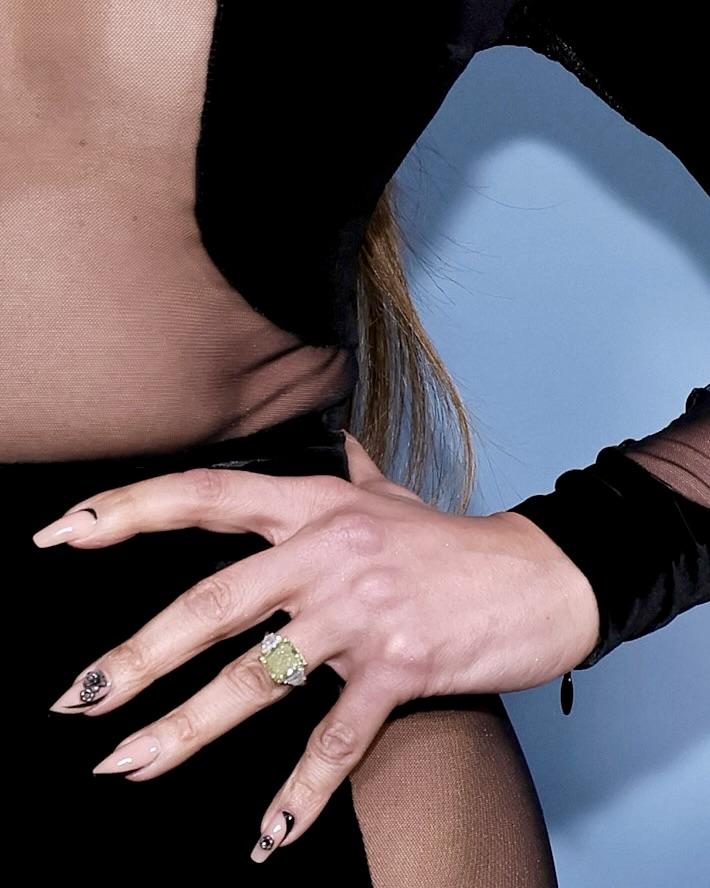
For generations, the traditional diamond engagement ring has been dominated by the classic colourless stone. But the world of exceptional diamonds is changing. Increasingly, collectors, celebrities and high jewellery connoisseurs are turning towards something far rarer and far more individual: natural fancy colour diamonds.
From vivid pinks and intense blues to extraordinary greens, yellows and the exceptionally rare reds, these diamonds are no longer simply an alternative to the traditional white diamond. They are becoming recognised as some of the most desirable and collectible gems in the world.
Jennifer Lopez Put Green Diamonds in the Spotlight
One of the most talked-about examples came in 2022, when Ben Affleck proposed to Jennifer Lopez with an extraordinary natural green diamond.
The choice was particularly appropriate for Lopez, who has long associated the colour green with good fortune and famously wore the iconic green Versace dress at the 2000 Grammy Awards.
But the ring represented more than a celebrity engagement.
It introduced millions of people to a diamond category that had traditionally been the domain of specialist collectors and serious diamond enthusiasts.
Green diamonds are exceptionally unusual. Unlike many other coloured diamonds, their colour is generally associated with natural radiation occurring over geological time. Importantly, green colour can be concentrated near the surface of the diamond, making the cutting and preservation of the stone particularly challenging.
The result is a diamond where colour, rarity, provenance and individuality can all become major components of its value.
According to GIA, natural fancy colour diamonds are among the rarest gemstones, with red, green, purple and orange among the rarest colours.
What Makes a Fancy Colour Diamond So Special?
With a conventional D-to-Z diamond, the absence of colour is generally desirable.
Fancy colour diamonds work differently.
Their value can increase with the strength, purity and quality of the colour. GIA’s grading system assesses factors including hue, tone and saturation, with descriptions such as Fancy, Fancy Intense, Fancy Vivid and Fancy Deep.
This creates a fascinating situation in the diamond market.
Two diamonds of exactly the same weight can have dramatically different values because their colours are different.
A small variation in hue or saturation can transform a beautiful diamond into an exceptional one.
And when the colour is extremely rare, the difference can be enormous.
The most coveted colours include:
Red – among the rarest of all natural diamond colours.
Pink – historically one of the most sought-after colours among collectors.
Blue – exceptionally rare, with its colour generally associated with boron.
Green – extraordinarily unusual and often associated with natural radiation.
Orange – rare and highly prized when the colour is strong and pure.
Yellow – more commonly encountered than green, blue or red, but spectacular vivid yellow diamonds can be exceptionally valuable.
GIA notes that saturated pinks, blues and greens are among the rarest and most valuable fancy colour diamonds.
Celebrities Are Changing the Conversation
Fancy colour diamonds have a long relationship with Hollywood and international celebrity culture.
The legendary Tiffany Yellow Diamond, weighing 128.54 carats, is one of the world’s most famous yellow diamonds. It has been associated with Audrey Hepburn, Lady Gaga and Beyoncé, helping demonstrate how a coloured diamond can become part of popular culture rather than simply a gemological curiosity.
Other celebrities including Beyoncé, Paris Hilton, Miley Cyrus, Angelina Jolie and Heidi Klum have also worn fancy colour diamonds on major occasions.
And the trend is very much alive today.
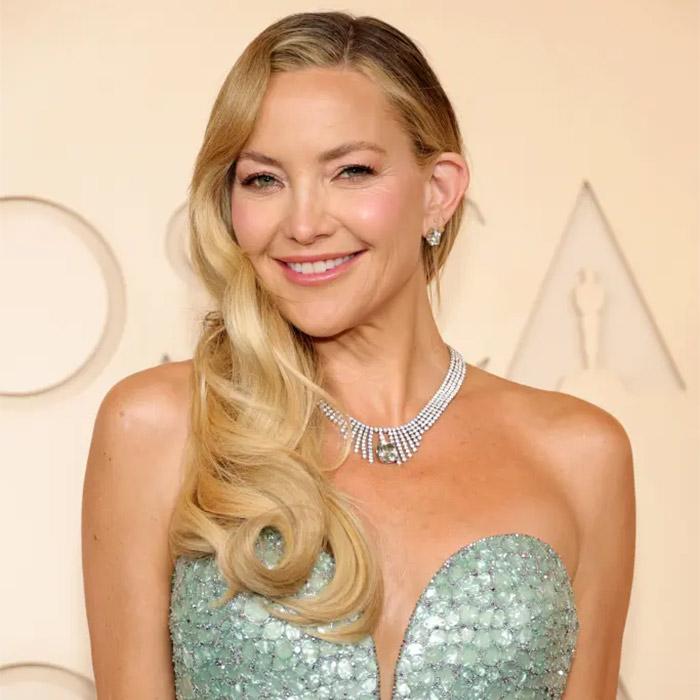
At the 2026 Oscars, Kate Hudson made headlines wearing more than 41 carats of rare green diamonds by Milan-based Garatti. Her spectacular jewellery included a 16-carat fancy green diamond necklace, a 15-carat Fancy Deep green diamond ring and matching green diamond earrings. The collection was reported at approximately US$35 million.
Lupita Nyong’o also brought green diamonds to the red carpet in 2026, wearing Garatti earrings incorporating Fancy Intense Green diamonds at The Odyssey world premiere in London.
At the 2026 Golden Globes, Kate Hudson again wore green diamonds, including a 5-carat pear-shaped Fancy green diamond and a 3.19-carat Fancy Deep green diamond combined with pink and white diamonds.
These appearances are important because they expose a much wider audience to a category of diamond that was once largely understood only by specialists.
The Rise of the Collector’s Diamond
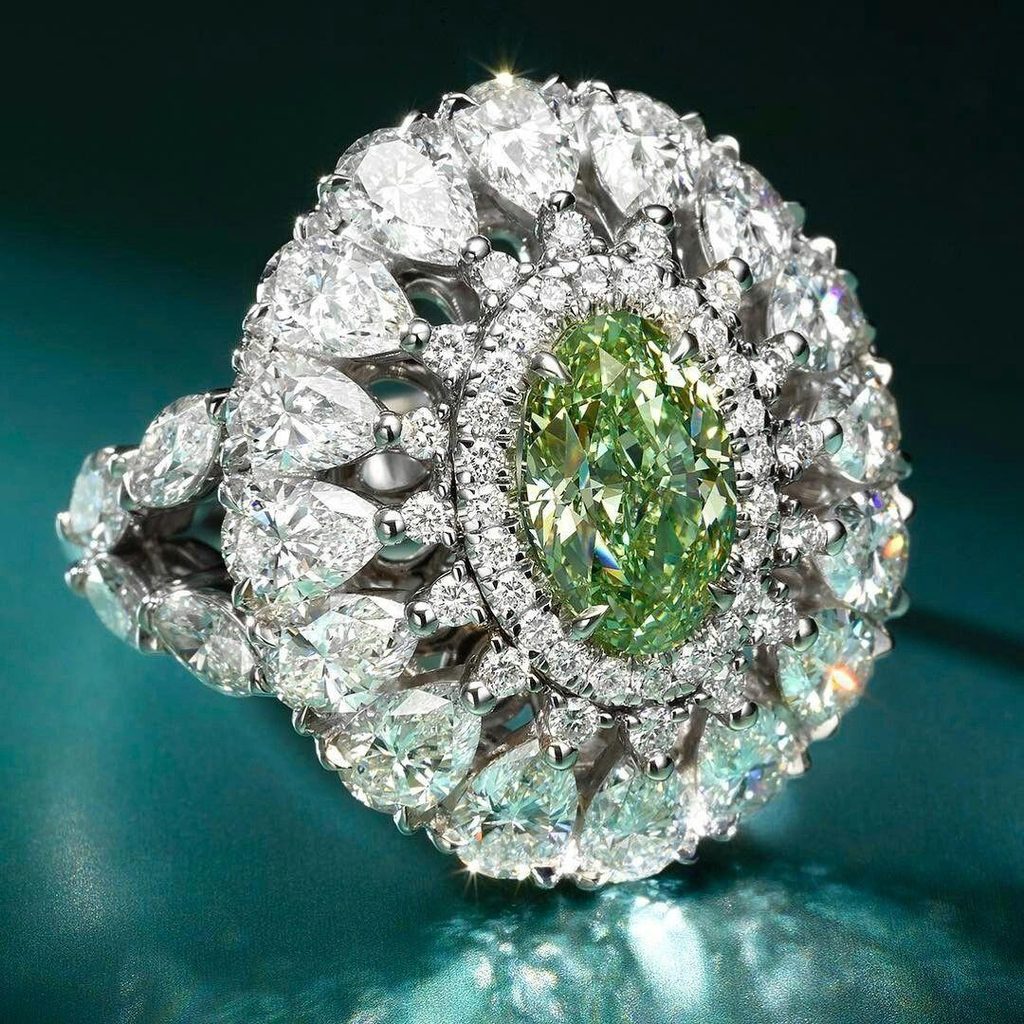
The greatest appeal of a natural fancy colour diamond is that it can be much more than jewellery.
It can become a collectable gemstone.
Unlike mass-market jewellery, exceptional natural colour diamonds are finite. There is no guarantee that another stone with exactly the same combination of colour, saturation, size, clarity, shape and provenance will ever appear.
That individuality is fundamental to their attraction.
A collector may therefore look at a fancy colour diamond in much the same way an art collector looks at a unique painting.
The question isn’t simply:
“How much does it cost?”
It becomes:
“How rare is it, how exceptional is it, and will another one like it ever come onto the market?”
Green Diamonds Require Specialist Knowledge
Green diamonds are particularly fascinating because their colour formation and appearance can be complex.
GIA explains that the green colour in many natural green diamonds is concentrated near the surface of the stone, which means cutters often attempt to preserve natural rough material around the girdle.
This makes identification and grading particularly important.
A purchaser should never rely simply on the description “green diamond”.
The exact grading terminology matters.
Natural or laboratory-grown?
What is the origin of the colour?
What is the strength and distribution of the colour?
What laboratory has graded the stone?
What does the certificate actually say?
For a significant fancy colour diamond, independent laboratory documentation is essential.
Fancy Colour Diamonds Are Not Just a Fashion
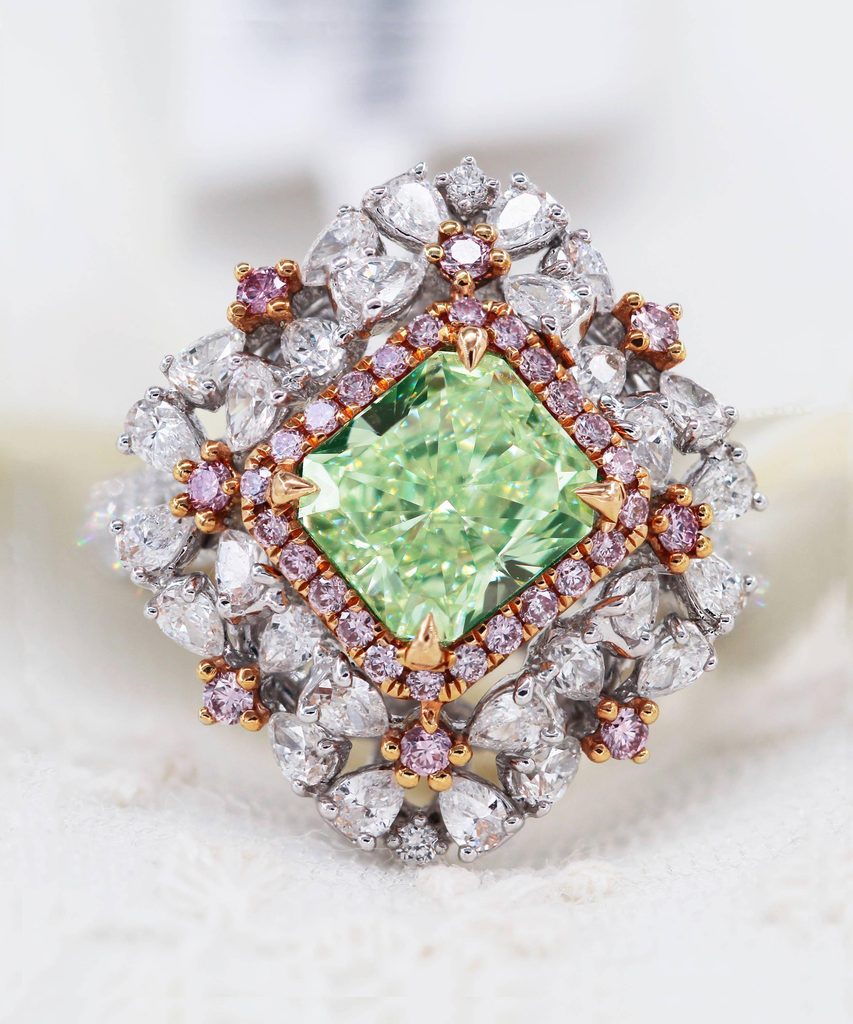
Celebrity attention can create trends, but the fascination with fancy colour diamonds goes much deeper.
Their rarity is geological.
Their beauty is natural.
Their individuality is impossible to reproduce precisely.
And the finest examples can occupy a completely different level of the diamond market from ordinary jewellery diamonds.
This is why the current interest in green diamonds should not simply be dismissed as another celebrity fashion.
Jennifer Lopez may have helped introduce green diamonds to a global audience, but the stones themselves have been extraordinary for millions of years.
Today, collectors are beginning to appreciate what specialist diamond dealers and gemmologists have known for decades:
the world’s rarest diamonds are not necessarily the whitest.
Sometimes, the colour is the most valuable thing of all.
DCLA: Knowledge Matters
For anyone considering the purchase of a significant fancy colour diamond, independent expertise is critical.
At the Diamond Certification Laboratory of Australia (DCLA), the assessment of a diamond goes beyond simply looking at whether a stone appears attractive.
Fancy colour diamonds require specialist knowledge and careful assessment because subtle differences in colour can have a substantial effect on rarity, classification and value.
A beautiful coloured diamond is an exciting purchase.
An authenticated, professionally graded natural fancy colour diamond can be something much more significant: a rare gemstone with the potential to become a family heirloom and a serious collector’s asset.
DCLA — where diamond knowledge, science and independent assessment come together.
Sources
Fancy Color Diamond Quality Factors
The Magic of Colored Diamonds
Colored Diamonds Buyer’s Guide
Tiffany Yellow Diamond history
Natural Diamonds — Oscars 2026
Natural Diamonds — The Odyssey 2026
People — Kate Hudson’s 2026 Oscars green diamond jewellery
Comments are closed