
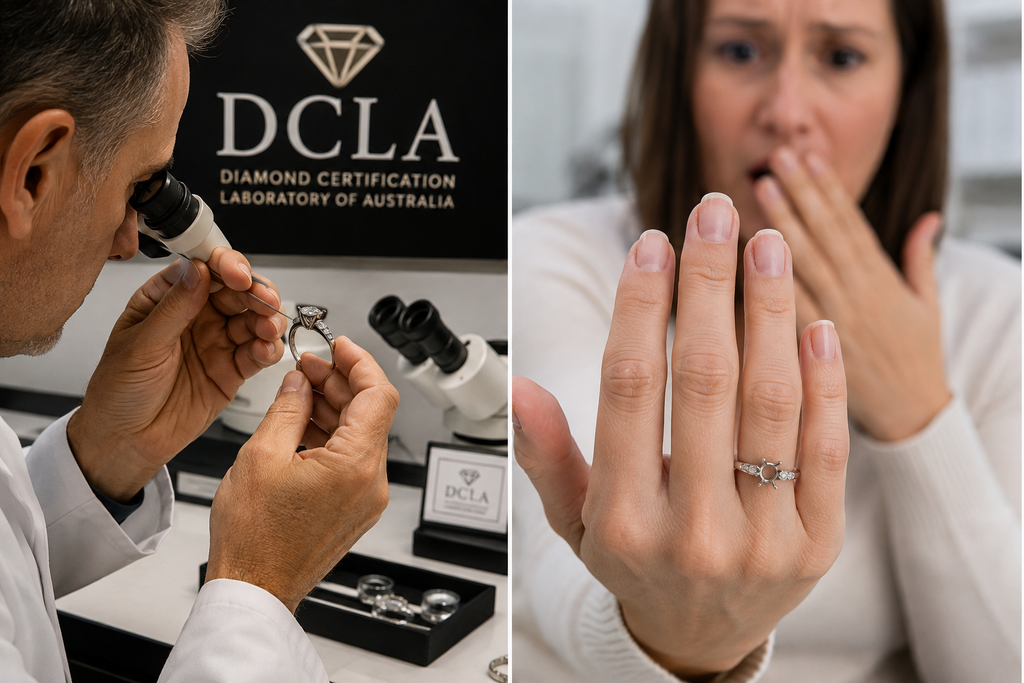
Fine jewellery is designed to be worn and enjoyed, but even the best-made piece will experience wear over time. The metal that holds your diamonds and gemstones is often the part that receives the most punishment, particularly when jewellery is worn every day.
A small amount of wear to a claw, bezel, link or clasp may seem insignificant, but it can eventually result in something much more serious: a lost diamond, gemstone or even the entire piece of jewellery.
Regular inspection and maintenance can help prevent that happening.
Start With the Stones
If your jewellery is claw set, take a close look at the claws holding each stone in place.
Claws can become worn, bent or damaged through everyday wear. They can also catch on clothing, bedding or other objects. A damaged or significantly worn claw may no longer provide the protection it was designed to give.
If you gently touch a stone and it appears to move, or you hear a slight clicking or rattling sound when the jewellery is carefully handled, stop wearing it and have it checked by a professional.
The Jewellers Association of Australia similarly recommends checking for loose gemstones and worn or damaged claws before a loss occurs.
What should you look for?
- Are all the claws still present?
- Do any claws look thinner or shorter than the others?
- Is a claw bent or sitting differently?
- Does the stone appear to have moved?
- Does the stone feel loose?
- Is the metal around the stone worn or damaged?
- Is the stone sitting evenly in its setting?
These are small warning signs that should not be ignored.
Don’t Forget Bezel Settings
Claw settings are not the only settings that require attention.
A bezel setting holds the stone with a surrounding rim of metal. Over time, that rim can become worn, dented or damaged.
Because the metal is what physically holds the gemstone in position, excessive wear can eventually compromise the security of the stone.
A professional inspection can identify areas of wear that may not be obvious to the naked eye.
Check Your Chains, Bracelets and Clasps
It is easy to concentrate on the diamonds and forget about the rest of the jewellery.
Chains and bracelets can suffer considerable wear, particularly where individual links repeatedly rub against each other or against clasps and fittings.
Pay particular attention to:
Links: Look for stretched, thin or damaged links.
Clasps: Make sure the clasp closes securely and does not feel loose.
Jump rings: These small connecting rings can open or become worn.
Chain ends and connecting points: These can experience significant stress during everyday use.
Bracelet connections: Check for excessive movement or signs that the metal has become thin.
A weak link or worn clasp can result in losing the entire bracelet or necklace without you even realising it has happened.
Your Lifestyle Makes a Difference
There is no single maintenance schedule that suits everyone.
How often jewellery should be professionally inspected depends heavily on how often you wear it and what you do while wearing it.
Do you wear your engagement ring every day?
Do you wear your jewellery while working with your hands?
Do you wear your rings while exercising?
Do you work in an environment where your jewellery is regularly exposed to knocks, chemicals, tools or hard surfaces?
Do you sleep wearing your jewellery?
All of these factors can increase the amount of wear placed on your jewellery.
Someone who wears a diamond ring occasionally may require less frequent inspection than someone who wears the same ring every day and works with their hands.
Don’t Wait Until Something Goes Wrong
One of the biggest mistakes jewellery owners make is waiting until a stone falls out or a clasp breaks before having their jewellery checked.
By that stage, the damage has already occurred.
A professional inspection is about prevention. Identifying a worn claw, thinning link or damaged clasp early can allow the problem to be repaired before you lose something valuable or irreplaceable.
And remember, the value of jewellery isn’t always financial. A family heirloom, engagement ring or piece with sentimental significance may be impossible to replace.
How Often Should You Have Your Jewellery Checked?
For jewellery that is worn regularly, an annual professional inspection is a sensible starting point. However, this should be adjusted according to how heavily the jewellery is worn and the type of work or activities it is exposed to.
For jewellery worn every day or subjected to considerable wear, more frequent inspections may be appropriate.
And if you notice something unusual a loose stone, damaged claw, worn link, loose clasp or change in the way the jewellery feels — don’t wait for your next scheduled inspection. Have it checked immediately.
DCLA Can Check Your Jewellery
At the Diamond Certification Laboratory of Australia (DCLA), we understand that protecting your jewellery is about more than simply knowing what your diamonds are worth. It is also about making sure the stones and jewellery are properly maintained.
DCLA offers a jewellery checking service to help identify potential problems with settings, stones and jewellery components before they become costly or heartbreaking losses.
Our laboratory uses professional gemmological equipment, including high-precision microscopes, to examine diamonds and jewellery in detail.
A Few Minutes Could Save You Thousands
Your jewellery deserves regular care just like any other valuable possession.
Check your stones. Check the claws. Check the bezel. Check the links. Check the clasp.
Most importantly, don’t ignore small changes.
A little maintenance today could prevent the loss of a diamond tomorrow.
DCLA independent diamond expertise and professional jewellery services, helping you protect what matters. DCLA is Australia’s internationally accredited diamond certification laboratory, with independent gemmological assessment carried out in its Sydney laboratory.
For more information about having your jewellery checked, contact DCLA – Diamond Certification Laboratory of Australia.
Comments are closed