
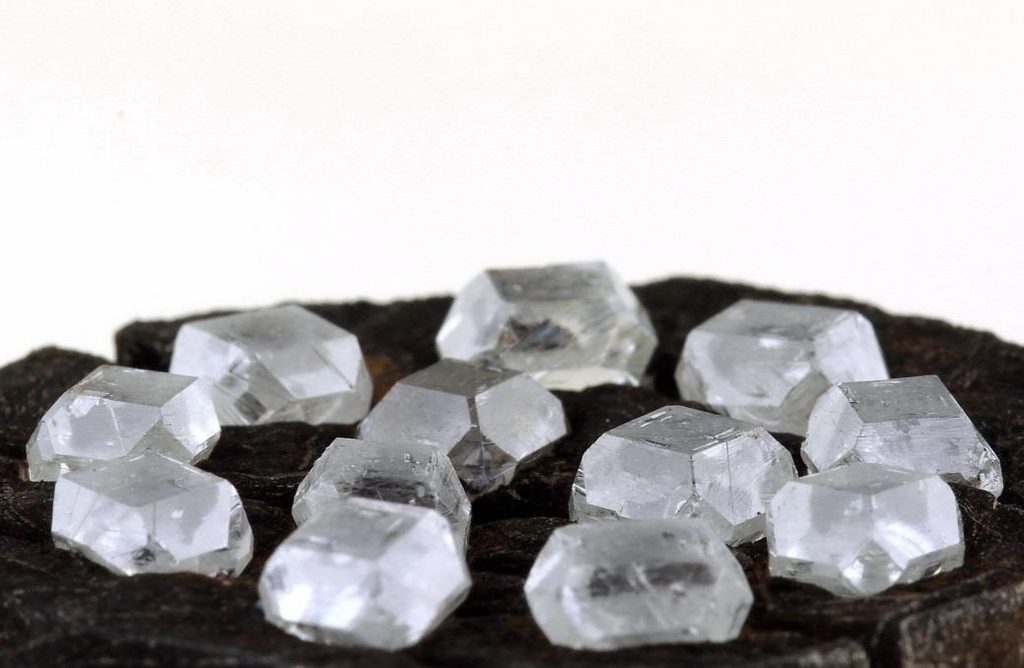
The energy, environmental costs and marketing claims behind the laboratory-grown diamond industry
Laboratory-grown diamonds are increasingly marketed as the environmentally friendly alternative to natural diamonds. The message is simple: no mining, less environmental damage and a greener way to produce a diamond.
But is that really the full story?
The answer is considerably more complicated than the marketing suggests. And when we look at the electricity, manufacturing processes, carbon emissions and wider economic contribution of the diamond industry, the claim that laboratory-grown diamonds are automatically greener than natural diamonds becomes much harder to defend.
At DCLA, we believe environmental claims should be supported by evidence, not simply by marketing.
The energy required to grow a diamond
A laboratory-grown diamond does not simply appear inside a machine. It is manufactured through an industrial process requiring specialised equipment, controlled environments and substantial amounts of energy.
There are two principal methods used to produce gem-quality laboratory-grown diamonds.
HPHT – High Pressure High Temperature
This process recreates the extreme conditions required for diamond crystallisation, using pressures of several gigapascals and temperatures generally around 1,300–1,600°C. Specialised presses, heating systems and cooling equipment operate throughout the growing cycle.
CVD – Chemical Vapour Deposition
This process uses carbon-containing gases, commonly methane and hydrogen, inside a controlled chamber. Energy is used to create and maintain the plasma environment in which carbon atoms gradually deposit onto a diamond seed.
Depending on the equipment, the growth process can continue for days or weeks.
Both methods require significant industrial infrastructure. The equipment itself represents a substantial capital investment, while electricity, cooling, gases, maintenance and other operating costs all contribute to the final production cost.
The important question is not simply how a diamond is grown, but how much energy is required and where that energy comes from.
What does the scientific research actually tell us?
A particularly interesting peer-reviewed study published in 2021 in the scientific journal Energies, titled A Comparative Analysis of Energy and Water Consumption of Mined versus Synthetic Diamonds, examined the energy requirements of natural diamond mining and laboratory production.
The researchers reported the following electricity consumption per carat of rough diamond:
| Production method | Energy consumption |
|---|---|
| Natural diamonds – ALROSA | 96 kWh |
| Natural diamonds – De Beers | 150 kWh |
| Laboratory HPHT | 36 kWh |
| Laboratory CVD – IIa Technology | 77 kWh |
| Laboratory CVD – Ekati | 143 kWh |
| Laboratory CVD – researchers’ equipment | 215 kWh |
These figures reveal something important.
Some laboratory-grown production methods can use less electricity per carat than the mining operations examined. However, other CVD processes can consume considerably more.
The study also highlights how dramatically energy consumption can vary depending on equipment, cooling systems, production capacity and manufacturing conditions.
It would therefore be incorrect to claim that every laboratory-grown diamond consumes more electricity than every natural diamond.
But it would be equally misleading to assume that laboratory-grown diamonds are automatically the environmentally superior option.
The research is available here:
Read the full scientific study – MDPI, Energies (2021).
Where does the electricity actually come from?
This is where the environmental debate becomes particularly important.
China and India are major centres of laboratory-grown diamond manufacturing. Both countries continue to rely significantly on fossil fuels for electricity generation, particularly coal.
A manufacturer may operate sophisticated diamond-growing equipment, but if that equipment is powered by electricity generated from coal, the environmental footprint must reflect that reality.
Electricity consumption alone does not tell the complete story. The source of that electricity is equally important.
A laboratory using genuinely renewable electricity may have a substantially different carbon footprint from an otherwise identical facility relying on a coal-intensive electricity grid.
This is why consumers should be asking manufacturers some straightforward questions:
- Where was the diamond manufactured?
- How much electricity was required to grow it?
- What proportion of that electricity came from renewable sources?
- Are the environmental claims independently verified?
- Does the reported carbon footprint include the entire manufacturing process?
Without this information, describing a laboratory-grown diamond as environmentally friendly is an assumption, not a demonstrated fact.
Can carbon credits really make a diamond green?
Another area deserving scrutiny is the growing use of carbon credits and renewable energy certificates in environmental marketing.
Some manufacturers promote their green credentials by purchasing carbon credits, investing in renewable energy or claiming to offset their electricity consumption.
But there is an important distinction between actually reducing emissions and compensating for emissions generated elsewhere.
Purchasing a carbon credit does not change the electricity physically consumed by a diamond-growing facility.
Likewise, purchasing renewable energy certificates does not automatically mean that the manufacturing equipment itself was powered directly by renewable electricity.
Some renewable energy agreements and carbon credit programmes can make a genuine contribution to reducing emissions. However, the claims must be transparent, independently verified and properly accounted for.
Consumers should be able to distinguish between a manufacturer genuinely reducing its environmental footprint and one relying primarily on offsetting arrangements to support a green marketing message.
Buying an environmental credit is not the same as eliminating the environmental impact of production.
Natural diamonds contribute more than just a beautiful stone
There is another important part of this comparison that is frequently overlooked.
Natural diamond mining is not simply about extracting a precious stone from the ground. In many producing countries, the industry supports thousands of jobs, government revenue, infrastructure, education, healthcare and entire communities.
Botswana provides one of the clearest examples of the economic importance of natural diamond mining. Diamonds have played a major role in the country’s development and international trade.
South Africa, Namibia and Canada also have established diamond industries that contribute to employment and economic activity.
Mining undoubtedly has an environmental footprint. Land disturbance, water consumption, energy use, waste management and rehabilitation are all important considerations.
Responsible mining requires substantial investment in environmental management and ongoing rehabilitation.
However, a meaningful comparison must look beyond the immediate extraction of a diamond.
It should consider the complete environmental and economic lifecycle of both products, including the machinery, electricity, raw materials, manufacturing infrastructure, transportation and wider social contribution.
A laboratory-grown diamond may avoid the direct land disturbance associated with mining, but it still requires industrial manufacturing, equipment, energy and resources.
The environmental discussion should recognise both sides.
Are laboratory-grown diamonds actually bad?
Absolutely not.
Laboratory-grown diamonds have an important place in today’s diamond industry and will continue to play a significant role in the future.
They are genuine diamonds, with essentially the same chemical composition and crystal structure as natural diamonds. They offer consumers another choice, particularly when size and affordability are important considerations.
Technology has also created new opportunities beyond jewellery, including advanced industrial, scientific and technological applications.
At DCLA, we recognise both natural and laboratory-grown diamonds as important parts of the modern diamond industry.
Our position is straightforward: consumers should know exactly what they are purchasing, understand the differences and have access to independent, accurate information.
We have previously explored these differences in our articles:
What Is a Diamond? Natural vs Laboratory-Grown – Structure, Science and Pricing.
The Diamond You Choose: Natural Rarity or Laboratory-Grown Quality.
The difference between marketing and science
The diamond industry is changing rapidly, and consumers are entitled to question the environmental claims being made by manufacturers and retailers.
A laboratory-grown diamond is not automatically sustainable simply because it has not been mined.
Equally, a natural diamond should not automatically be considered environmentally responsible simply because it was formed naturally.
Both industries have environmental responsibilities.
The real comparison requires transparent, independently verified lifecycle assessments that consider electricity consumption, energy sources, water, materials, manufacturing, mining, transportation and emissions.
A 2024 research paper published in Humanities and Social Sciences Communications examined the environmental impacts of the global diamond industry and modelled possible future sustainability pathways. Its findings also demonstrate why the discussion needs to consider more than one environmental indicator.
DCLA: Knowledge, transparency and independent assessment
At DCLA, our responsibility is to provide accurate, independent diamond identification and grading.
Whether a diamond is natural or laboratory-grown, consumers deserve to know what they own.
The two categories have different origins, market characteristics and histories. Understanding those differences is essential when making an informed purchasing decision.
Our laboratory uses advanced diamond testing technology to examine and identify diamonds, including distinguishing natural stones from laboratory-grown material.
You can learn more about our diamond identification and grading technology or explore our independent diamond grading reports.
The bottom line is simple. Laboratory-grown diamonds have a legitimate future, but calling them green does not automatically make them environmentally superior to natural diamonds.
The electricity must come from somewhere. The manufacturing process has a footprint. Carbon credits do not erase physical consumption, and the contribution of natural diamond mining to producing countries should not be ignored.
Consumers deserve facts, not slogans.
DCLA – Diamond Certification Laboratory of Australia
Knowledge. Experience. Transparency.
Comments are closed