
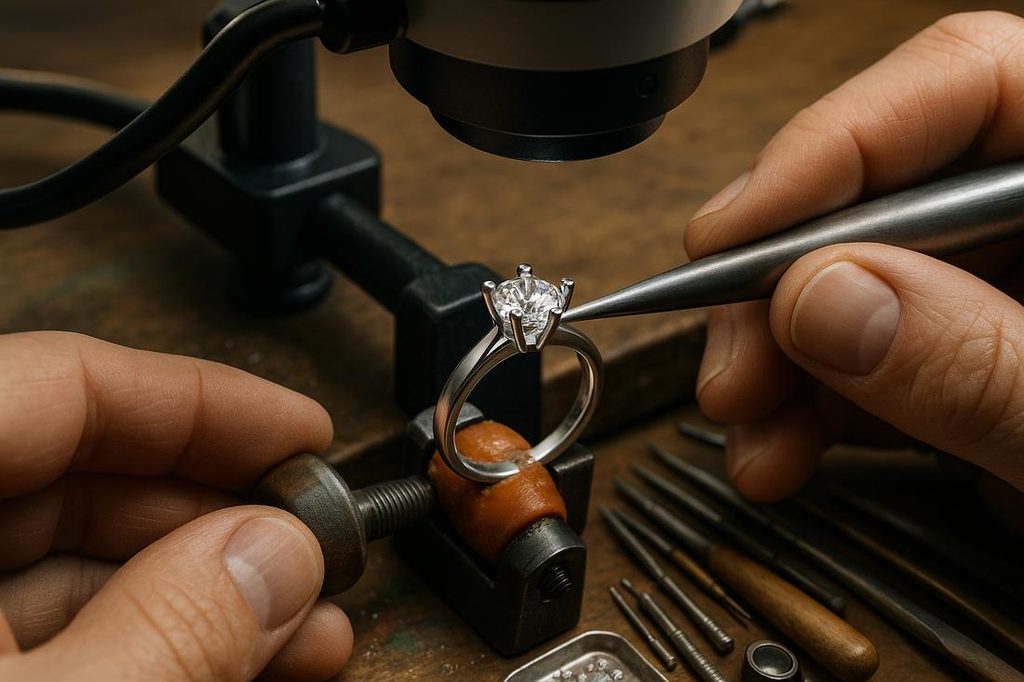
Understanding the difference in durability, hardness and the ability of precious stones to withstand a lifetime of wear.
Diamonds have long been celebrated as a symbol of eternal love, with the familiar expression “Diamonds Are Forever” carrying a great deal of truth. While diamonds are admired for their brilliance, beauty and rarity, one of their most remarkable qualities is their exceptional durability.
Unlike many coloured gemstones and pearls, diamonds can withstand considerable wear and, when properly handled, can be removed from jewellery and reset multiple times without compromising the integrity of the stone.
Coloured gemstones and pearls, although beautiful and often extremely valuable, have very different physical properties. Their relative softness, toughness and internal structure make them more susceptible to damage over time.
Understanding these differences is important when purchasing, wearing, maintaining or restoring fine jewellery.
1. The Mohs Scale: Measuring Hardness
To understand why diamonds are so durable, it is important to understand the Mohs Scale of Mineral Hardness.
Developed by German mineralogist Friedrich Mohs in 1812, the scale ranks minerals from 1 to 10 according to their resistance to scratching.
Diamond sits at the very top, with a hardness rating of 10. It is the hardest naturally occurring mineral, making it exceptionally resistant to scratching and surface abrasion.
However, there is an important distinction: the Mohs scale measures hardness, not overall toughness or resistance to breaking.
For example, a diamond can resist scratching from virtually every other natural mineral, yet a sharp impact in the wrong direction can still cause it to chip or fracture.
The scale is also not linear. The difference between 9 and 10 is considerably greater than the difference between many lower numbers. Diamond is substantially harder than ruby and sapphire, despite being only one point higher.
Comparing the hardness of popular gemstones
| Gemstone | Mohs hardness |
|---|---|
| Diamond | 10 |
| Ruby | 9 |
| Sapphire | 9 |
| Topaz | 8 |
| Emerald | 7.5–8 |
| Amethyst | 7 |
| Tanzanite | 6–7 |
| Opal | 5.5–6.5 |
| Pearl | 2.5–3 |
Figures are approximate and can vary between varieties and individual specimens. Pearl is an organic gem material rather than a mineral.
As the table illustrates, coloured gemstones have widely differing levels of hardness. Rubies and sapphires are particularly durable, whereas opals, tanzanite and pearls require considerably more care.
Importantly, hardness alone does not tell the complete story. A gemstone’s internal structure, natural inclusions, cleavage, toughness and sensitivity to heat or chemicals all contribute to its ability to withstand everyday wear. GIA 4Cs+2
2. Coloured Gemstones: Beauty Comes with Different Durability
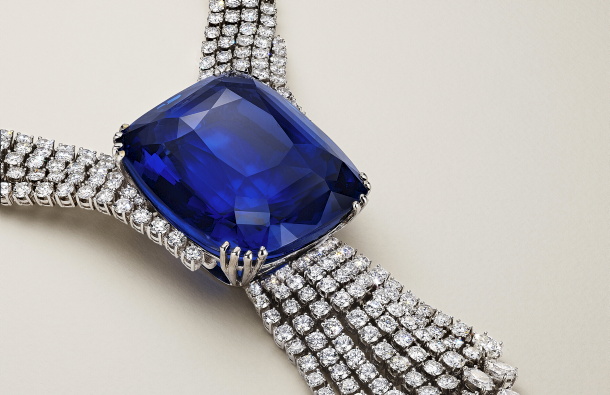
Coloured gemstones offer an extraordinary range of natural colours, from the deep blue of sapphires and rich red of rubies to the vivid green of emeralds and the beautiful violet-blue of tanzanite.
However, unlike diamonds, many coloured gemstones are more vulnerable to the physical demands of everyday jewellery wear.
Even gemstones with relatively high Mohs hardness can have weaknesses within their crystal structure.
Emeralds, for example, are reasonably hard, generally rating between 7.5 and 8 on the Mohs scale. However, they commonly contain internal fissures and fractures, sometimes referred to in the trade as jardin. These natural characteristics can make emeralds more vulnerable to impact and damage. Many emeralds are also treated with oil or resin to improve the apparent clarity of these fissures.
Tanzanite is considerably softer, with a hardness of approximately 6 to 7. It also has cleavage, meaning it can split or fracture if struck in the wrong direction. A knock against a hard surface can cause damage that may be difficult or impossible to repair without altering the stone.
Opals are another example of a gemstone requiring special care. Their relatively low hardness makes them susceptible to scratching and abrasion. Changes in temperature and humidity can also affect certain opals, potentially resulting in cracking or crazing.
Rubies and sapphires, on the other hand, are among the most durable coloured gemstones. With a hardness of 9, they are well suited to regular jewellery wear, although they can still chip or fracture following a sufficiently hard impact.
This is why it is incorrect to assume that all coloured gemstones have the same durability. Each variety has its own physical characteristics, and its suitability for everyday wear should be assessed individually.GIA 4Cs+2
3. Pearls: Beautiful but Particularly Delicate
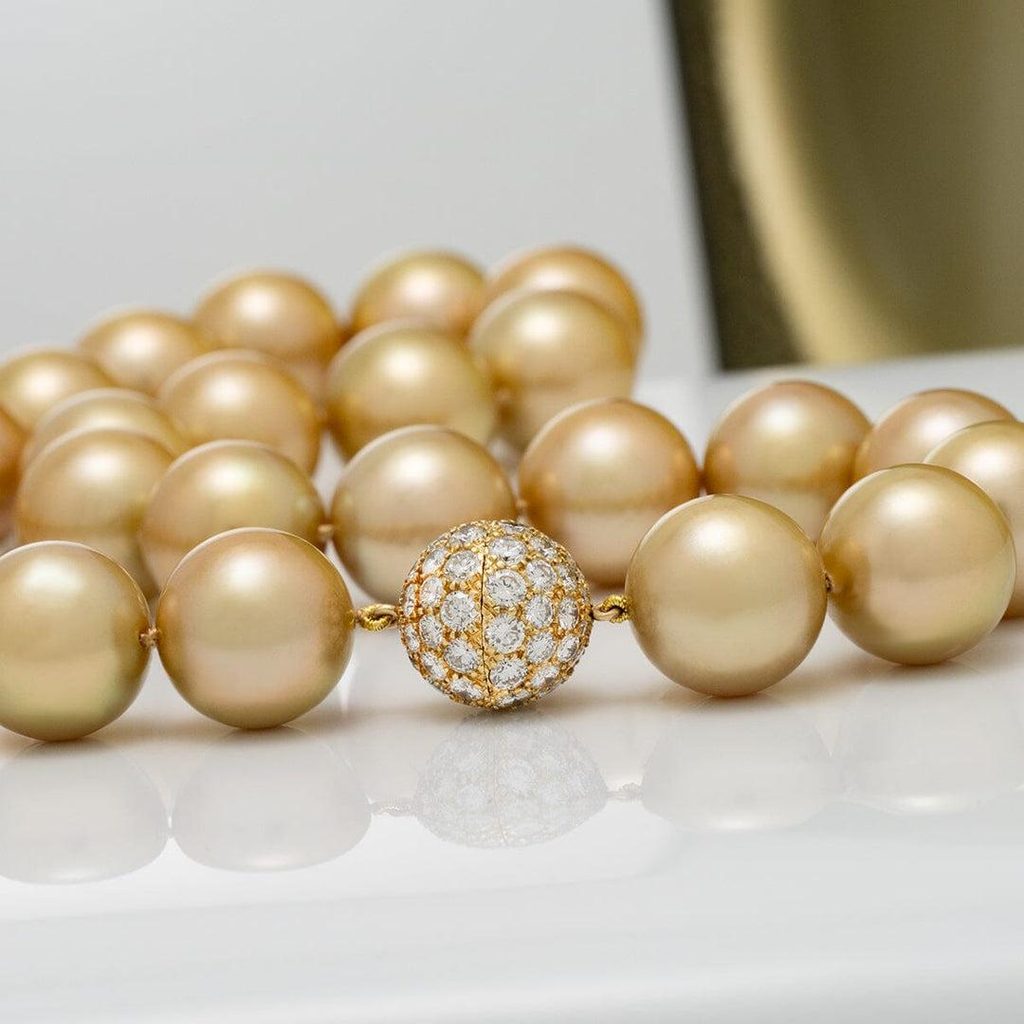
Pearls are fundamentally different from diamonds and coloured mineral gemstones.
They are organic gems formed within molluscs, consisting primarily of layers of nacre, the material responsible for their distinctive lustre.
Unlike diamonds, pearls are exceptionally soft, generally measuring between 2.5 and 3 on the Mohs scale.
This makes them particularly susceptible to scratching, abrasion and surface damage.
Even everyday contact with harder jewellery, metal objects or rough surfaces can gradually affect a pearl’s lustre and surface finish.
Pearls are also sensitive to chemicals and environmental conditions. Perfume, hairspray, cosmetics, household cleaning products, perspiration and excessive heat can all affect their appearance and condition.
Unlike a diamond, a pearl cannot simply be repolished to restore its original surface without potentially removing valuable layers of nacre and changing its appearance.
Pearl jewellery therefore requires considerably more care. It should be stored separately, cleaned gently and protected from chemicals and unnecessary friction.
While pearls can certainly become treasured family heirlooms, their delicate structure means they are less suited to the same level of everyday wear as diamonds. gia+1
4. Why Diamonds Can Be Reset Again and Again
One of the greatest advantages of diamonds is their ability to be incorporated into jewellery, removed and reset into new designs over generations.
A diamond engagement ring purchased decades ago can be redesigned into a contemporary setting, transformed into a pendant or incorporated into another piece of jewellery.
Provided the diamond is in sound condition and the work is carried out by an experienced professional, removing and resetting the stone does not inherently compromise its structural integrity.
This is a significant difference when compared with many coloured gemstones and pearls.
With softer gemstones, repeated setting and removal can increase the risk of scratching, chipping, abrasion or damage to vulnerable edges and corners. Pearls can be particularly challenging because their structure and surface are not designed to withstand repeated mechanical handling.
Diamonds are not indestructible, however. Their natural cleavage planes, existing inclusions, fractures, thin girdles and exposed points must all be considered during jewellery manufacture and repair.
A professional jeweller should always inspect a diamond before removing or resetting it. Appropriate tools, techniques and care are essential to minimise the risk of damage.
Nevertheless, the exceptional hardness and stability of diamonds make them particularly suitable for jewellery intended to be worn, redesigned, inherited and enjoyed for generations.
5. The Difference Between Hardness and Toughness
An important point often misunderstood by jewellery owners is that hardness and toughness are not the same thing.
- Hardness refers to a gemstone’s resistance to scratching and abrasion.
- Toughness refers to its ability to withstand impact without chipping, cracking or breaking.
- Stability refers to its ability to withstand exposure to heat, light, chemicals and changes in environmental conditions.
Diamond scores exceptionally highly for hardness, but it is not immune to impact damage because of its natural cleavage planes.
Some coloured gemstones may be less hard but can have different levels of toughness. Jade, for example, is renowned for its exceptional toughness despite having a much lower hardness rating than diamond.
Understanding all three properties is essential when selecting a gemstone for jewellery, particularly engagement rings and pieces intended for everyday wear.
6. Jewellery That Can Be Passed Down Through Generations
There is a reason diamonds have traditionally been chosen for engagement rings, wedding jewellery and important family heirlooms.
Their exceptional hardness, resistance to scratching and remarkable long-term stability make them particularly well suited to jewellery that is intended to last.
A diamond can be passed from one generation to another, removed from an old-fashioned setting and incorporated into a completely new design. Its original beauty can be preserved through generations of changing jewellery styles.
Coloured gemstones and pearls have their own unique appeal, and many can also become wonderful family heirlooms. However, their care and maintenance requirements are different. Some may require more frequent inspection, protective settings and careful handling to preserve their condition.
The important distinction is that a diamond’s exceptional durability gives it a versatility that few other gemstones can match.
Conclusion: Diamonds Really Are Forever
The expression Diamonds Are Forever is more than just a successful jewellery slogan. It reflects one of the most remarkable physical properties of this extraordinary natural gemstone.
While diamonds can chip, fracture or suffer damage under certain conditions, their exceptional hardness and stability make them uniquely suited to a lifetime of wear and repeated jewellery redesign.
Coloured gemstones and pearls offer magnificent beauty, individuality and colour, but their physical properties mean they require different levels of care and protection.
At DCLA, we believe understanding the science behind gemstones is just as important as appreciating their beauty.
Whether purchasing a diamond, restoring an inherited ring or choosing a coloured gemstone, knowing the differences in hardness, toughness and durability helps ensure that precious jewellery can be enjoyed and preserved for generations.
Diamonds may change their setting, their design and even their owner, but with proper care, the stone itself can remain a lasting part of a family’s history.
Further reading: DCLA Diamond Glossary
Explore the DCLA Glossary & Picture Library for explanations of diamond characteristics and terminology:
Comments are closed