
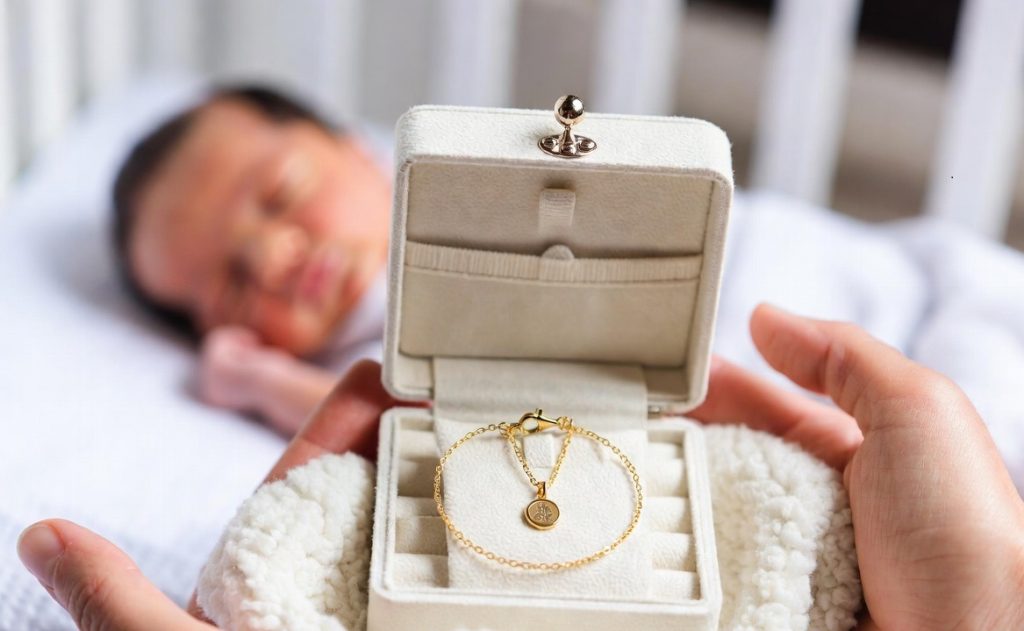
Giving a piece of jewellery to a newborn or young child is a tradition that has been passed down through generations. A small gold bracelet, an engraved pendant, or a delicate necklace often becomes a treasured keepsake that can remain in a family for decades.
However, while jewellery can be a beautiful and meaningful gift, it is important to remember that babies and young children have very different safety requirements than adults. What may appear to be a harmless piece of jewellery can present serious risks if worn too early.
At the Diamond Certification Laboratory of Australia (DCLA), we believe that understanding these risks helps families make informed decisions while preserving the sentimental value of these special gifts.
Necklaces – Best Kept as Keepsakes
One of the most common gifts given to infants is a gold necklace with a religious symbol, nameplate, or small pendant.
While these necklaces are beautiful, they are generally not recommended for babies or toddlers to wear.
Potential risks include:
- Strangulation if the necklace catches on furniture, bedding, prams or playground equipment.
- Choking hazards if a clasp, pendant or decorative element becomes detached.
- Injury if another child pulls on the necklace during play.
- Entanglement during sleep.
For these reasons, a necklace is best kept safely stored until the child is older and able to understand how to wear jewellery responsibly.
Bracelets – Not Always as Safe as They Look
Baby bangles and identity bracelets have been popular gifts for generations.
Although they may seem safer than necklaces, they can still present hazards.
A bracelet may:
- Catch on clothing, blankets or toys.
- Become trapped while crawling or climbing.
- Cause cuts or bruising if it is too tight.
- Slip off and become a choking hazard if too loose.
If a child is going to wear a bracelet, it should only be under close adult supervision and removed during sleep or active play.
Earrings
Parents often ask about ear piercing for young children.
From a jewellery safety perspective:
- Earrings should only be fitted once the ears have fully healed.
- Small plain studs are generally safer than hoops or dangling earrings.
- Hoop earrings can catch on clothing, towels or playground equipment.
- Larger decorative earrings may be pulled by curious children or playmates.
Professional piercing and high-quality hypoallergenic jewellery can help reduce the risk of infection or allergic reactions.
Rings
Children’s rings are generally not recommended for infants or toddlers.
A ring that fits today may become dangerously tight as fingers grow, restricting circulation.
Conversely, a loose ring can easily fall off and become a choking hazard.
Most jewellers recommend waiting until a child is significantly older before wearing rings regularly.
What Makes a Good Gift?
If you’re looking for a meaningful jewellery gift for a newborn or young child, consider pieces that are intended to become lifelong keepsakes rather than everyday jewellery.
Excellent choices include:
- An engraved gold or silver identity bracelet to be worn later in childhood.
- A quality gold pendant kept safely until the child is older.
- A birthstone pendant.
- A commemorative coin or small investment-grade gold or silver piece to celebrate their birth.
- A jewellery box containing a family heirloom to be passed on in the future.
These gifts retain all of their sentimental value without exposing the child to unnecessary risks.
If You Receive Jewellery as a Gift
Many parents receive jewellery from grandparents, relatives and close friends shortly after the birth of a child.
While the gesture is thoughtful and generous, there is no obligation to have the baby wear the jewellery immediately.
In fact, the safest option is often to:
- Store the jewellery securely.
- Keep any certificates, receipts and valuations.
- Photograph the item for insurance purposes.
- Present it to the child when they are mature enough to wear it safely.
The gift remains just as meaningful, and in many cases becomes even more special when the child is old enough to appreciate its significance.
Choosing Quality Matters
When purchasing jewellery intended to become a lifelong keepsake, quality is far more important than fashion.
Look for:
- Solid precious metals rather than plated jewellery.
- Secure soldering and high-quality craftsmanship.
- Reliable clasps and settings.
- Appropriate hallmarks indicating metal purity.
- Pieces made by reputable jewellers.
Well-made jewellery can last for generations, becoming a treasured family heirloom.
The DCLA Recommendation
Jewellery given at birth is often one of the first heirlooms a child will ever own. While these gifts carry enormous sentimental value, they should always be balanced against the child’s safety.
For infants and toddlers, jewellery is generally best regarded as a keepsake rather than an item for everyday wear. Waiting until a child is older significantly reduces the risks associated with necklaces, bracelets, rings and earrings while ensuring that the gift can be enjoyed safely for many years to come.
A beautiful piece of jewellery should create lifelong memories—not unnecessary hazards. Choosing quality, storing it safely, and waiting until the appropriate age allows families to enjoy both the emotional and lasting value that fine jewellery was always intended to provide.
Disclaimer: This article is provided for general educational and informational purposes only and should not be considered medical, paediatric, or safety advice. Recommendations regarding children’s jewellery may vary depending on a child’s age, development, and individual circumstances. Parents and caregivers should always follow current product safety guidelines and consult an appropriate healthcare or child safety professional if they have concerns about a child’s use of jewellery. DCLA recommends that jewellery intended for infants and young children be selected with safety as the primary consideration and used under appropriate adult supervision where applicable.
Comments are closed