Okavango: “It wasn’t an Emergency Tender”

Okavango Diamond Company

Okavango, Botswana’s state-owned diamond company, says its planned sale of 1m rough carats last month was not “an emergency tender”.

And it says the fact that it didn’t sell a single stone didn’t mean it was a failure. Rather, it was the result of a “deliberate and prudent decision to withhold certain goods”.

The “closed” tender on 25 September was reportedly aimed at raising revenue for the government (something the company denies) which had been severely hit by the slump in demand for natural diamonds. But buyers weren’t prepared to pay the reserve prices.

“Withholding goods in the short term ensures better outcomes for the market,” Okavango Diamond Company’s managing director Mmetla Masire (pictured) said in a statement.

“We will not join the race to the bottom on prices, our focus is on protecting the integrity and enduring value of Botswana’s diamonds.”

It said the tender was scheduled back in July and was part of regular sales management, not a last-minute revenue-raising emergency.

The ad hoc tender was a marked departure from the norm. ODC usually holds about 10 scheduled online spot auctions annually for registered buyers, typically raising at least $60m.

The company now sells 30 per cent of the rough output from Debswana, the 50/50 joint venture between the Botswana government and De Beers.

Source: IDEX

6.95-Carat Pink Diamond to Headline Vanderbilt Family Jewels Auction in Geneva

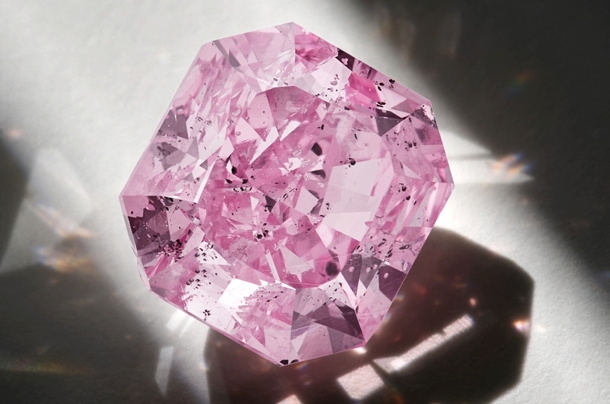
fancy vivid purplish pink diamond

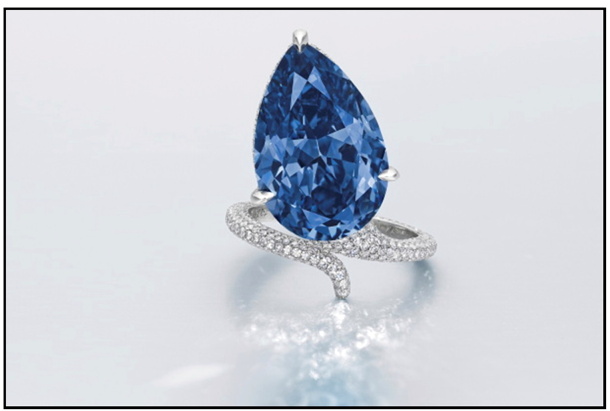
A spectacular 6.95-carat fancy vivid purplish pink Golconda diamond will lead The Geneva Jewels Auction: V, as Phillips Geneva prepares to offer an extraordinary collection of jewels once owned by the legendary Vanderbilt family, once America’s richest dynasty.

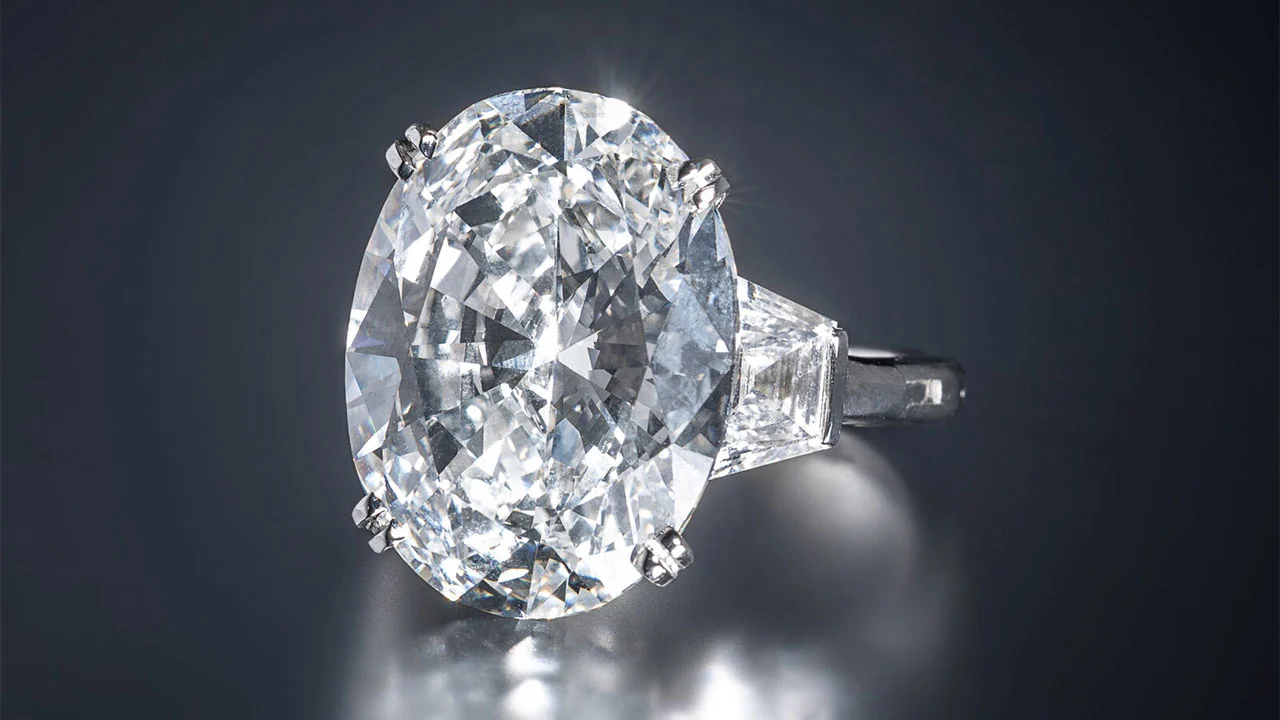
Among the highlights is a Tiffany & Co. 42.68-carat sugarloaf Kashmir sapphire and diamond brooch, estimated at US$1 million to US$1.5 million, alongside a step-cut Kashmir sapphire and diamond ring weighing 18.09 carats (estimate US$2.2 million to US$2.8 million). The sale also features a stunning pair of brilliant-cut diamond ear studs, weighing 8.00 and 8.28 carats, both graded D colour, VVS1 clarity, with an estimate of US$600,000 to US$850,000.

The Vanderbilt name is synonymous with immense wealth and American industrial power. The family’s fortune began with Cornelius Vanderbilt, who, at age 16, borrowed $100 from his mother to start a ferry service in 1810. He later built a shipping and railroad empire that made him the richest man in the United States, worth about $100 million at his death in 1877 — equivalent to at least $185 billion today.

His son, William Henry Vanderbilt, further doubled that fortune to over $200 million (around $370 billion in today’s terms). However, the family’s wealth gradually dispersed over subsequent generations, with the combined net worth of the Vanderbilt descendants now estimated at around $200 million.

The Geneva Jewels Auction: V, featuring The Vanderbilt Family Jewels, will take place on 10 November at Phillips Geneva, marking a rare opportunity for collectors to acquire pieces linked to one of America’s most storied families.

Fabergé’s Legendary Winter Egg Expected to Shatter Records with $27 Million Estimate

The 1913 Winter Egg with its hidden floral surprise.

A rare Fabergé masterpiece — the Winter Egg, crafted in 1913 from rock crystal and adorned with 1,660 diamonds — is set to reclaim its world record with an estimated sale price exceeding $27 million when it goes under the hammer at Christie’s London on 2 December.

Commissioned by Tsar Nicholas II as an Easter gift for his mother, the Dowager Empress Maria Feodorovna, the exquisite egg was designed by Alma Theresia Pihl, one of only two female artists to ever design for the House of Fabergé.

Standing four inches tall, the Winter Egg opens to reveal a platinum trelliswork basket of carved quartz flowers, each delicately set with rose-cut diamonds and demantoid garnet centres, resting on a base of gold moss. The egg itself sits upon a rock-crystal plinth shaped like melting ice, symbolising the transition from winter to spring — a theme often celebrated in Fabergé’s Imperial creations.

The piece will be the centrepiece of The Winter Egg and Important Works by Fabergé from a Princely Collection sale. Christie’s confirmed the estimate is “in excess of £20 million” (US$26.9 million).

The Winter Egg has twice held the world record for a Fabergé piece sold at auction — fetching $9.1 million in Geneva in 1994 and $9.6 million in New York in 2002. The current record holder, the Rothschild Egg, achieved $11.9 million at Christie’s London in 2007, a benchmark the Winter Egg is now poised to surpass.

Between 1885 and 1916, the House of Fabergé produced 50 Imperial Easter Eggs, with 43 known to survive today. Most reside in museum collections, while only seven, including the Winter Egg, remain in private hands — making this sale a landmark moment for collectors and historians alike.

De Beers Launches “Desert Diamonds” – A Bold Campaign Celebrating the Uniqueness of Natural Diamonds

De Beers Launches “Desert Diamonds”

De Beers has unveiled its largest natural diamond campaign in over a decade, reaffirming the beauty, rarity, and authenticity of natural diamonds in an era where lab-grown stones are increasingly prevalent.

The new campaign, titled “Unlike Anything,” introduces Desert Diamonds — a collection inspired by the natural hues of the desert, showcasing warm, earthy tones that celebrate individuality and the timeless connection between nature and human emotion.

As mass-produced, lower-cost lab-grown diamonds continue to gain market share, De Beers’ message is clear: natural diamonds remain unmatched — each one a product of geological wonder, billions of years in the making, and entirely unique.

According to De Beers, research found that 90% of consumers expressed interest in purchasing a Desert Diamond as a distinctive expression of style and a symbol of connection with nature. The campaign positions these desert-inspired shades as markers of authenticity, highlighting how the nuances in colour reflect the natural beauty and individuality of each stone.

“With Desert Diamonds, the ancient sands of time meet today’s zeitgeist for authentic beauty,” said Sandrine Conseiller, CEO of De Beers Brands. “Natural diamonds are unique and rare – no two are the same. Their colours have been forged by nature and perfected over billions of years.”

The growing appreciation for warmer diamond tones has also been influenced by high-profile figures such as Taylor Swift, whose engagement ring features a vintage old mine-cut diamond with a soft “candlelight glow,” as well as Kim Kardashian and Doja Cat, both of whom have embraced the desert-diamond aesthetic.

Industry analysts note that De Beers’ strategy goes beyond aesthetics. Chandler Mount, founder of Affluent Consumer Research Company, commented:

“Desert Diamonds mark a shift from diamonds as objects to diamonds as identity. De Beers isn’t just selling colour — they’re selling character. This is white space strategy executed with emotional intelligence.”

For the DCLA (Diamond Certification Laboratory of Australia), which upholds the highest standards in natural diamond grading and certification, De Beers’ campaign reinforces a vital message: authentic natural diamonds remain irreplaceable — not only for their enduring beauty, but for the story each stone carries within it.

Alrosa’s $240m Plan to Dig Deeper at Udachny Mine

Udachny Mine

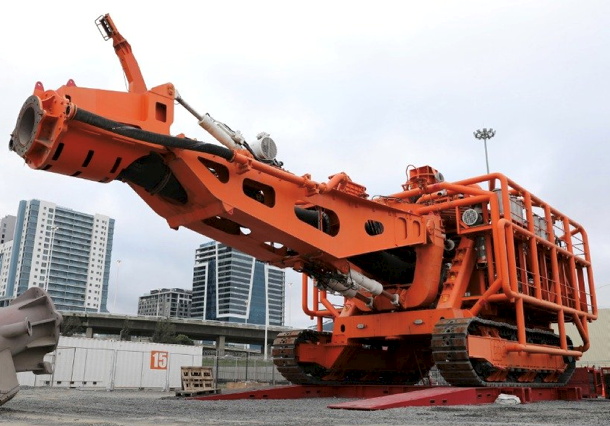
Alrosa is to invest RUB 20bn ($240m) digging deeper to extend the life of the vast underground Udachny mine, just outside the Arctic Circle, until at least 2055.

Mining will eventually take place more than 1km below the surface, extracting 4.1m tonnes of ore annually. The target horizon – the level where mining operations are planned – is 1.13 km below the surface ( at an absolute elevation of -780 m, when taking the surface elevation as a baseline).

Alrosa CEO Pavel Marinychev says annual profit from the planned expansion is estimated at almost RUB 6bn ($73m) a year.

Udachny opened as open-pit mine in 1967 and switched to underground operations in 2014, producing over 10 per cent of Alrosa’s total output. It was due to reach the end of its life in 2039.

Alrosa said the investment committee had approved the project. Udachny is one of the world’s largest kimberlite pipes. Trucks take over 30 minutes to reach the bottom, currently 680 metres below the surface.

“The implementation of the investment project will enable us to significantly extend the duration of mining at the deposit, which currently produces more than 10 per cent of Russian rough diamonds,” said Marinychev.

“From 2025 through 2055, 4.1 million tonnes of ore will be mined here annually and profit is estimated at almost 6 billion rubles per year.”

Source: IDEX

Antwerp Negotiates Zero US Tariff for Polished Diamonds

Antwerp Negotiates Zero US Tariff for Polished Diamonds

The US has agreed to ditch its 15 per cent tariff on imports of diamonds polished in Antwerp and elsewhere in the EU.

They will be zero-rated, following intensive lobbying from the AWDC (Antwerp World Diamond Centre).

The exemption, made in a US executive order, means Antwerp’s 350 or so diamond polishers are now subject to zero tariffs on US imports, while the thousands of polishing units in India are currently subject to a 50 per cent tariff.

The 15 per cent tariff was introduced on 1 September as part of a global move announced by US President Donald Trump. The new diamond exemption is effective retroactively from that date.

AWDC described it as a “tremendous boost for the Antwerp diamond industry,” one which could pave the way for other diamond countries to negotiate lower tariffs with the US.

CEO Karen Rentmeesters (pictured) said: “The agreement is of vital importance and strengthens our competitiveness as both a trading and polishing hub. For goods of European origin – polished in Antwerp – which account for half of all polished diamond exports to the U.S., the 15 per cent tariff will no longer apply.

“By setting this precedent, we have opened the door for other diamond-producing and polishing countries to negotiate similar arrangements in the near future.”

Diamonds polished in an EU country are now included on the list of exemptions summarized in so-called ‘Annex II,’ which outlines products that can be exempted once a bilateral trade agreement with the U.S. is reached.

Source: IDEX

Diamonds as Time Capsules: Rare Inclusions Reveal Hidden Chemistry Deep Within Earth’s Mantle

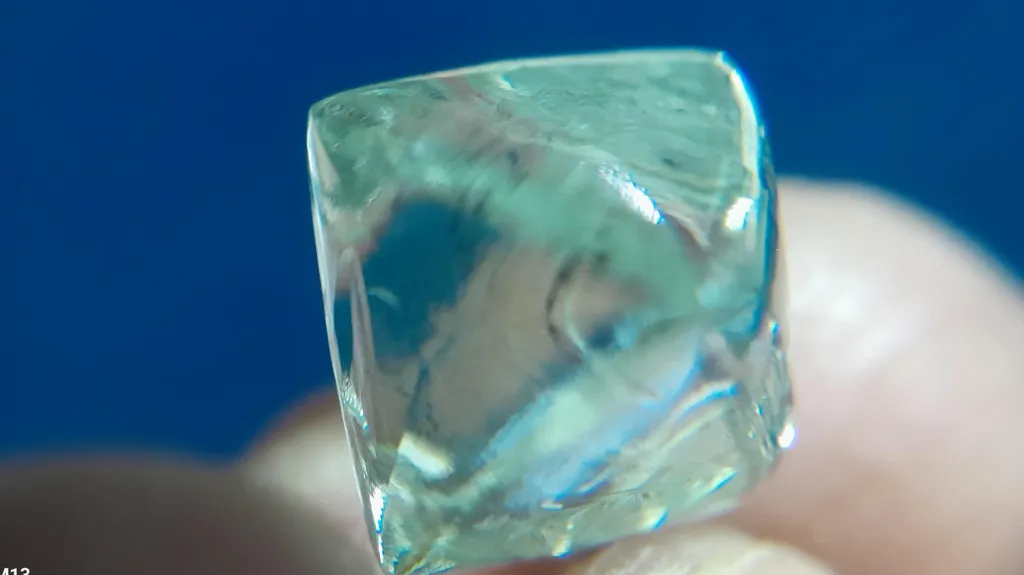
Deap Diamond Time Capsule

Two extraordinary diamonds from South Africa have provided scientists with a rare glimpse into the hidden chemistry of Earth’s mantle—nearly 300 kilometres beneath the surface.

A research team from the Hebrew University of Jerusalem has identified the first direct evidence of nickel-iron metallic alloys and nickel-rich carbonates at these extreme depths. The discovery was made by examining tiny inclusions preserved inside diamonds from the Voorspoed mine in South Africa.

Diamonds as Nature’s Record Keepers

While diamonds are prized for their beauty, their true scientific value often lies in what they conceal. Inclusions—whether microscopic minerals or metallic alloys—serve as natural records of deep-Earth processes that would otherwise remain invisible.

“These diamonds act as tiny time capsules, preserving a rare chemical reaction that would otherwise disappear,” explained lead researcher Yaakov Weiss.

The inclusions confirm the diamonds’ origins in the deep upper mantle and shallow transition zone, at depths of 280–470 kilometres.

Diamonds as Time Capsules

Unlocking Diamond Formation

The study revealed an unusual coexistence of nickel-iron alloy and nickel-rich carbonate within the same inclusions. Normally, these materials would react instantly and could not exist side by side. Their preservation points to a process known as a metasomatic redox-freezing reaction, in which oxidised, carbon-rich melts infiltrate metal-bearing mantle rock.

This finding strengthens the theory that diamonds can form from reactions between carbonates and reduced metals in the mantle—a mechanism first suggested by evidence at shallower depths.

It may also explain why some natural diamonds contain nickel atoms within their crystal structure, solving a mystery that has long puzzled geologists.

Insights into Volcanoes and Kimberlites

The implications extend beyond diamond formation. The reactions preserved within these inclusions suggest that the mantle becomes enriched with elements like carbon and potassium. This enrichment may be a critical step in generating kimberlite magmas—the volcanic eruptions that transport diamonds to the surface.

A Scientific Treasure

For the DCLA, this discovery highlights yet another dimension of diamond’s significance. Beyond their role as treasured gems, diamonds are windows into Earth’s inaccessible depths, preserving geological secrets for millions of years.

As Yaakov Weiss put it:
“Diamonds act as tiny time capsules, capturing a moment of mantle chemistry in action.”

Rio Tinto ends diamond era with historic final auction

Argyle mine in Australia

Rio Tinto is auctioning its final collection of rare diamonds from its closed Argyle mine in Australia and the soon-to-shutter Diavik operation in Canada. 

The tender, called Beyond Rare, includes 52 lots totalling 45.44 carats and marks the end of an era for two of the world’s most celebrated diamond mines.

The centrepieces are six diamond sets selected to represent the peak of production from the East Kimberley region of Western Australia and the Northwest Territories of Canada. The tender also features 39 individual stones and seven curated sets.

Rio Tinto Diamonds’ general manager of sales and marketing, Patrick Coppens, called the auction a historic moment. “It is hard to overstate the importance of this final collection,” he said in the statement. “No other mining company in the world has custody of such an exquisite range of diamond colours, shapes and sizes.”

Rio Tinto closed Argyle in 2020, ending production of the famed pink, red and violet stones that made the mine world-renowned. Although Argyle accounted for about 75% of Rio’s diamond output, the impact on the company’s earnings was minimal, with diamonds contributing only about 2% of revenue. Diavik, the miner’s last diamond asset, is scheduled to close in 2026.

The collection includes one GIA Fancy Red diamond, 12 Fancy Violet, and 76 Fancy Pink and Purple-Pink stones from Argyle’s legacy inventory. From Diavik, highlights include two flawless D-colour white diamonds, an emerald cut weighing 5.11 carats and a pear shape of 3.02 carats. Both of them were cut from the same rough stone. 

Rio Tinto ends diamond era with historic final auction
Collection includes one GIA Fancy Red diamond, 12 Fancy Violet, and 76 Fancy Pink and Purple-Pink stones from Argyle’s legacy inventory.

The tender also features a Fancy Vivid Yellow diamond weighing 6.12 carats.

The diamonds will tour Hong Kong, Australia and Antwerp before bids close on October 20. Industry insiders expect strong competition from top jewellers, collectors and connoisseurs.

Source: Mining.com

Diamond selling processes are outdated and hurting producers, trader says

Diamond selling processes are outdated

The sale of diamonds through tenders and auctions is opaque and inefficient and should be revamped for producers to earn more and to survive the current price slump, a leading gem trader said on Thursday.

Oded Mansori, co-founder and managing partner of Belgian gem trader HB Antwerp, said the impact on producers could be reduced by doing away with inefficiencies in the industry.

The diamond market is currently going through a prolonged downturn with demand hurt by global economic uncertainty and the rising popularity of lab-grown stones.

Producer countries such as Botswana have been hard hit by lower revenues, while miners such Burgundy and Lesotho’s biggest diamond mine Letseng have had to lay off workers.

“For years, miners relied on tenders and auctions, systems that look efficient on paper but in practice resemble a casino,” Mansori said in a statement, as the industry battles a crisis considered to be its deepest in history.

“Rough stones are pushed into opaque markets where value is anyone’s guess. When global demand softens, as it has in cycles over the last decade, producers are left exposed. Workers pay the price, while shareholders watch assets decline,” he added.

Rough diamonds are typically sold through a competitive bidding system where buyers place confidential bids on individual stones or parcels.

Mansori, whose company operates a profit-sharing model with miner Lucara Diamond Corp, says producers’ revenues should be tied to the eventual polished value of its stones “rather than gambling on rough sales in opaque auctions”.

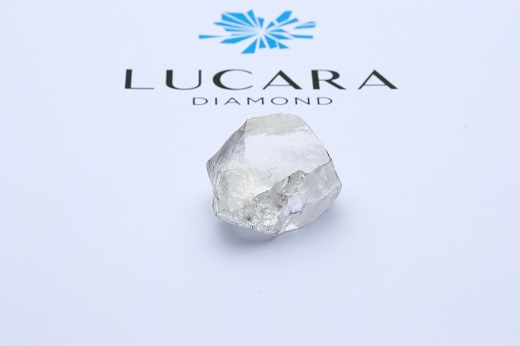
Under its partnership with Lucara, HB Antwerp buys stones of 10.8 carat quality and above from the Toronto-listed company’s Karowe Mine in central Botswana at prices based on the estimated polished value of each diamond.

HB Antwerp accounted for 72% of Lucara’s $74-million diamond revenue in the six months to June 30, up from 65% the year before.

The trader says producers can earn up to 40% more revenue if they sell through this model.

Source: Miningweekly

After 15 Years, Disputed Diamonds Finally being Sold

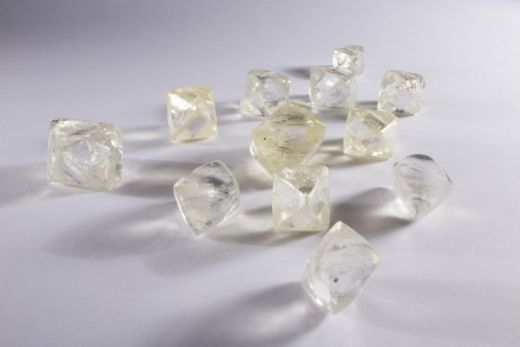
Zimbabwe Rough diamonds

Rough diamonds that were locked in a 15-year legal dispute in Zimbabwe are finally being sold.

The UK miner Vast Resources is offering parcels totaling 135,000 carats at a series of public and private tenders from now until the end of October.

Vast surrendered the gems in 2010 amid allegations it had exploited diamonds on mining claims previously owned by De Beers, which withdrew from Marange in 2006, saying it had failed to find viable reserves.

Vast Resources (then known as African Consolidated Resources) subsequently discovered massive alluvial diamond deposits there, which prompted the Zimbabwe government to revoke its mining licenses within months, and evict it.

The diamonds, held at Zimbabwe’s central bank since 2009, were finally handed back to Vast in April of this year.

They have undergone an extensive cleaning process in Dubai to remove multiple layers of metallic silicates and mineral coatings. As a result, around 6,000 carats initially classified only as industrial diamonds have been upgraded to gem quality.

In an update (on 15 September) Vast spoke of “a unique opportunity to most effectively realize value from the long-awaited parcels from the historic settlement and could open further opportunities for the company in the future”.

Source: IDEX