
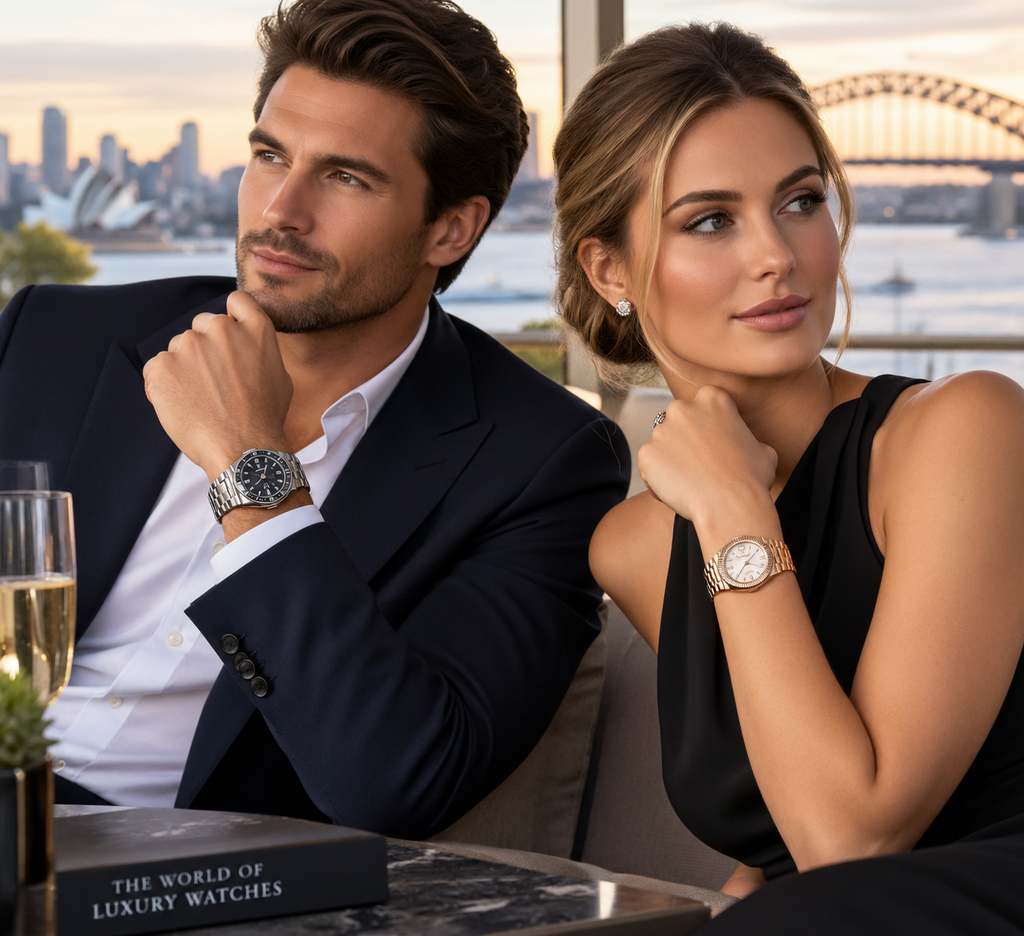
There was a time when buying a high-end watch was simply about owning something beautifully made. Today, for many collectors, a luxury watch is much more than a way of telling the time. It can be a statement of achievement, a piece of craftsmanship, a collector’s item and, when chosen carefully, a wearable asset.
From Rolex and Omega to Audemars Piguet, Vacheron Constantin and Patek Philippe, the world of fine watchmaking has developed into a global market where certain models can command extraordinary prices and maintain strong demand for years.
The names that define luxury watchmaking
Few names carry the prestige of Rolex. Models such as the Submariner, Daytona, GMT-Master II and Day-Date have become icons, recognised well beyond the traditional watch-collecting community.
Audemars Piguet, particularly with the Royal Oak, occupies another level of luxury watchmaking. Its distinctive design and highly regarded mechanical movements have made it one of the world’s most recognisable collector watches.
Then there is Patek Philippe, a name synonymous with traditional Swiss watchmaking. Its philosophy has always been centred on craftsmanship, exclusivity and longevity. Patek Philippe itself distributes watches through its authorised network, with availability dependent on the individual retailer and model.
Vacheron Constantin, one of Switzerland’s great historic manufacturers, appeals strongly to collectors who appreciate exceptional finishing and watchmaking heritage.
And then there is Omega. From the Speedmaster’s association with NASA and the Moon landing to the Seamaster’s long-standing reputation as a professional dive watch, Omega combines history, engineering and everyday wearability.
Other names including Cartier, Jaeger-LeCoultre, IWC, Panerai, Breitling, Tudor, Blancpain and Zenith have also established important places in the luxury-watch market.
A watch you can actually wear
Perhaps the greatest attraction of a luxury watch is that, unlike many traditional investments, you can enjoy it every day.
A share certificate stays in your portfolio. A property remains on the balance sheet. A luxury watch can be on your wrist.
That makes the concept of a wearable investment particularly appealing.
Of course, there are no guarantees. Not every luxury watch increases in value, and buying a watch purely because you expect it to appreciate can be risky. Model, reference, condition, rarity, provenance, box and papers, servicing history and market demand can all influence future value.
But certain watches have demonstrated remarkable resilience because collectors continue to want them.
The current market also shows how strongly the high end of Swiss watchmaking continues to attract collectors. Recent industry analysis indicates that value growth has become increasingly concentrated in ultra-luxury and highly sought-after timepieces, while the broader market has been more mixed.
The authorised retailer: The traditional way to buy
For many buyers, purchasing directly through an authorised retailer remains the ultimate luxury experience.
You get the brand environment, expert advice, manufacturer’s warranty and the knowledge that you are purchasing a genuine new timepiece through the manufacturer’s official distribution network. Rolex, for example, states that new genuine Rolex watches are sold exclusively through Official Rolex Retailers.
There is, however, one significant drawback.
You may have to wait.
For some of the most desirable models, availability can be extremely limited. The watch you want may not simply be sitting in a display cabinet waiting for the next customer.
You may register your interest, develop a relationship with the retailer and wait for the right allocation. Depending on the model and circumstances, that wait can be lengthy.
And that creates an interesting dilemma.
Do you wait years for the opportunity to buy the exact watch you want new?
Or do you find the watch now?
The rise of the specialist watch dealer
This is where the specialist secondary-market dealer has changed the way collectors buy luxury watches.
Rather than waiting indefinitely for a particular allocation, collectors can purchase an existing watch that has already entered the market.
One Sydney business that has embraced this model is The Watch Business, founded and operated by Dmitri.
Based in the Sydney CBD, The Watch Business specialises in pre-owned luxury watches and deals in brands including Rolex, Omega, Audemars Piguet, Patek Philippe, Vacheron Constantin, Cartier and many others. The business operates by private appointment and says its watches are inspected and authenticated by a professional watchmaker before being offered for sale.
For the collector, the attraction is simple:
If the watch you want is available, you don’t necessarily have to wait years to own it.
And that has fundamentally changed the buying experience.
From new to pre-owned and from one watch to another
Perhaps the biggest evolution is not simply the ability to buy a watch. It is the ability to trade.
Collectors rarely stay with one watch forever.
You might start with an Omega Speedmaster. A few years later, you decide you want a Rolex Submariner. Eventually, you might aspire to an Audemars Piguet Royal Oak or a Patek Philippe.
Traditionally, moving between watches could mean selling your existing watch privately, negotiating with buyers, waiting for payment and then starting the search for the next piece.
A specialist dealer can simplify that process.
The Watch Business, for example, offers buying and trade-in services, allowing clients to use an existing watch as part-payment towards another timepiece.
That creates a completely different way of thinking about collecting.
Instead of asking, “How much will my next watch cost?”
The collector can ask:
“What is my current watch worth, and what does it cost me to move up to the next one?”
That difference is significant.
The great advantage of the specialist dealer
There is another important distinction between the traditional retail model and the specialist dealer.
A traditional authorised watch retailer’s primary business is selling the manufacturer’s watches. It is not necessarily a place where you can walk in with your existing Rolex, Omega or Patek Philippe and negotiate a trade against another brand or model.
A specialist dealer operates in a different ecosystem.
They buy watches.
They sell watches.
They trade watches.
They source watches.
And, importantly, they can provide a market for the watch you already own.
This is one of the major limitations of the traditional retail experience: the store where you purchased a new watch may not be the same place that will buy it back from you or trade it towards your next watch.
That is where specialist dealers have carved out an increasingly important role.
The collector’s choice
For someone who has the time and patience, buying from an authorised retailer can be a wonderful experience.
You get the new-watch presentation, manufacturer’s warranty and the satisfaction of being the original owner.
But if you have decided exactly which watch you want and you don’t want to wait potentially years for availability the specialist dealer offers another route.
You can inspect the watch, establish its condition and provenance, understand its market value and potentially walk away with the watch you have been searching for.
And when you eventually decide to upgrade, you can return to the same market and trade your existing piece towards something different.
That makes luxury-watch collecting increasingly fluid.
A changing definition of investment
The luxury watch market has changed dramatically.
The modern collector isn’t necessarily buying one watch and keeping it locked away in a safe.
They may buy a watch, wear it, enjoy it, trade it, upgrade it and eventually move into another piece.
That is what makes a great luxury watch so interesting.
It can be craftsmanship, jewellery, history, status and a potentially valuable asset all on your wrist.
For today’s discerning collector, the question is no longer simply:
“What watch should I buy?”
It is increasingly:
“What watch should I own next?”
And with specialist dealers such as The Watch Business changing the way Australians buy, sell and trade luxury timepieces, building a collection has never been more accessible.
For collectors who value experience, expertise and the ability to trade one exceptional timepiece for another, this has quickly become a compelling alternative to the traditional retail model.
Comments are closed