
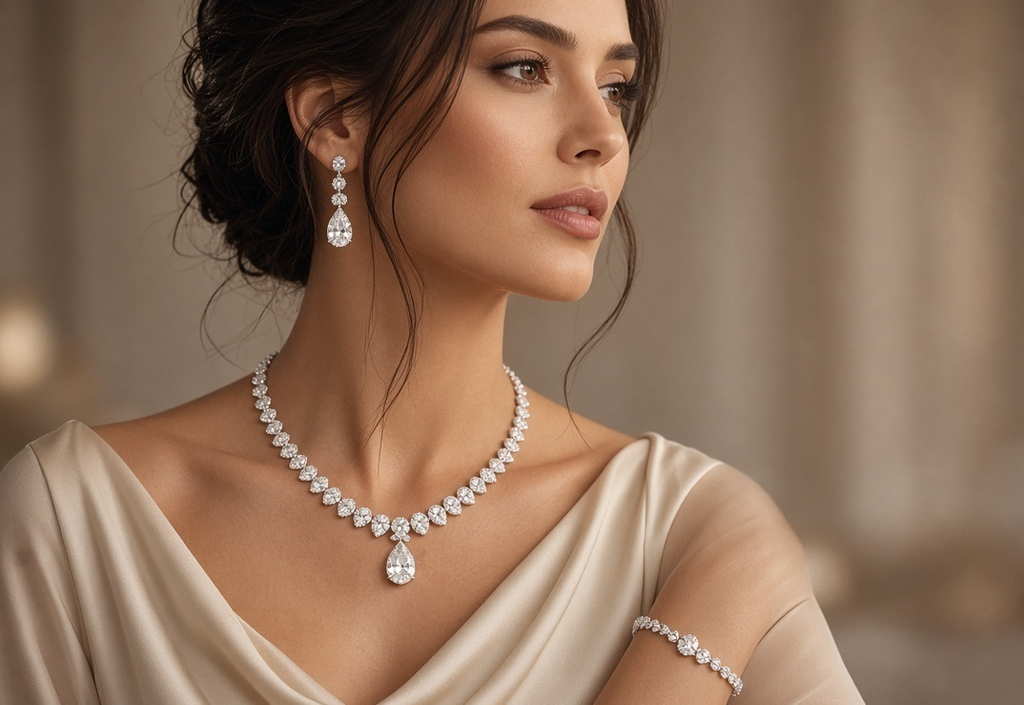
The luxury of the name, the value of the stone, and what happens when you come to sell
Walking into a prestigious jewellery boutique is an experience.
The polished stone, the carefully designed interior, the champagne, the personal attention and the beautifully presented jewellery all contribute to a sense that you are purchasing something truly exceptional.
And sometimes you are.
But there is an important question that every sophisticated jewellery buyer should ask:
Are you paying for a better diamond or gemstone — or are you paying for the brand surrounding it?
The answer can be both.
The diamond does not know whose box it is in
A diamond’s physical properties do not change because it is mounted in a famous piece of jewellery.
Its colour, clarity, carat weight, cut, proportions, fluorescence and other gemmological characteristics remain the same whether the stone is set by a world-famous luxury maison or an independent jeweller.
A 1.50-carat diamond does not become a 1.60-carat diamond because it carries a prestigious name.
Likewise, a diamond graded as a particular colour and clarity does not automatically become a higher-quality stone because it was purchased from an internationally recognised brand.
This is where independent diamond knowledge becomes important.
DCLA’s Diamond Grading Report provides an independent description of a diamond’s characteristics, including its carat weight, colour, clarity and cut.
A luxury brand can provide extraordinary design, craftsmanship, provenance, service and heritage. But these are different attributes from the intrinsic gemmological characteristics of the diamond itself.
So why can branded jewellery cost so much more?
Because the jewellery is more than its raw materials.
When you purchase from a major luxury house, you may be buying:
- The brand’s heritage and reputation
- Original design
- Highly skilled craftsmanship
- Boutique and after-sales service
- Marketing and global recognition
- Packaging and presentation
- Limited collections
- Celebrity association
- Provenance and collectability
- The emotional experience of owning it
These elements can have real commercial value.
The important distinction is that commercial value and intrinsic gemmological value are not necessarily the same thing.
Does a famous brand make jewellery more valuable?
Not necessarily.
It can make a piece more desirable to a particular market, and in some circumstances that desirability can translate into a stronger resale price.
But that is not guaranteed.
The secondary market operates very differently from the luxury boutique.
When a customer buys a new piece of jewellery at retail, the price can include the brand, boutique experience, design, manufacturing, marketing, distribution and retail margins.
When the same piece is sold later, the next buyer may not place the same value on those elements.
This is why the original retail price should never automatically be treated as an indication of future resale value.
DCLA has also highlighted the distinction between the price originally paid for jewellery and its potential value when sold later. Retail prices can include manufacturing, design, branding, retail margins, GST and other costs that may not be recoverable in the secondary market.
The difference between retail value and resale value
This is one of the most misunderstood areas of jewellery ownership.
Imagine two rings containing diamonds with broadly comparable gemmological characteristics.
One is purchased from a famous international maison for $50,000.
The other is purchased from an independent jeweller for $25,000.
It would be incorrect to assume that the first ring will necessarily be worth twice as much when it is sold.
The resale market may place considerable importance on the brand — or it may focus primarily on the diamonds, precious metal, design, condition and current market demand.
The circumstances of the sale also matter.
A private sale, specialist auction, dealer purchase, insurance replacement valuation and immediate sale can all produce very different figures.
There is no single “value” for a piece of jewellery.
Where famous brands can make a difference
There are situations where the brand itself can become an important part of the value.
Certain historically significant pieces, rare collections, discontinued designs and jewellery with exceptional provenance can attract collectors.
At auction, the identity of the maker can be highly relevant.
A piece from a recognised maison with documented provenance, original paperwork and a desirable design may have a very different market than an otherwise similar piece from an unknown manufacturer.
But this is the crucial distinction:
The brand can create collectability. It does not automatically create gemmological quality.
What about the diamond itself?
This is where buyers should look beyond the name on the shopping bag.
When considering a significant diamond purchase, understand exactly what you are buying.
Look at:
Carat weight
The weight of the diamond, not simply the overall size of the jewellery.
Colour
For white diamonds, colour grading can have a significant influence on value.
Clarity
The nature, position and visibility of inclusions matter. DCLA’s Diamond Clarity guide explains how clarity is assessed and why it can influence a diamond’s appearance and value.
Cut and proportions
Two diamonds with identical carat weight, colour and clarity can look dramatically different because of their cut and proportions. DCLA explains the importance of diamond cut, proportions, symmetry and polish in determining light performance and appearance.
Natural or laboratory-grown
This distinction is fundamental and should be clearly established. DCLA discusses the differences between natural and laboratory-grown diamonds, including their different market characteristics.
Laboratory report
For significant diamonds, independent documentation can provide important information about the stone’s characteristics.
Provenance
For some exceptional diamonds, documented history can itself become an important part of the story and potentially the market appeal.
The boutique experience is real — and there is nothing wrong with paying for it
There is another side to this discussion.
Why do people buy luxury jewellery from famous boutiques?
Because jewellery is emotional.
People are not always trying to buy the cheapest diamond or achieve the lowest possible price per carat.
They may want to celebrate an anniversary.
They may want a particular design.
They may admire a maison’s history.
They may want the experience of walking into a beautiful boutique and being treated exceptionally well.
They may simply love the piece.
That experience has value to the person buying it.
There is nothing wrong with paying a premium for something you genuinely appreciate.
The mistake is assuming that the premium automatically represents an equivalent increase in the underlying value of the diamonds or gemstones.
Jewellery is not always an investment
This is perhaps the most important point.
A beautiful piece of jewellery can be a wonderful store of wealth, a family heirloom or an object that carries enormous emotional significance.
But buying jewellery primarily because you believe the retail price will automatically be recovered — or exceeded — when you eventually sell is a very different proposition.
Luxury jewellery should not be confused with a guaranteed investment.
Even exceptional jewellery can take time to sell, and the price achieved will depend upon market conditions, the buyer, the selling channel, the condition of the piece, documentation, desirability and many other factors.
So what are you really buying?
When purchasing high-end jewellery, it is useful to separate the purchase into three components:
1. The materials
The diamond, coloured gemstones and precious metals.
2. The craftsmanship and design
The skill involved in creating the piece and the originality or desirability of its design.
3. The brand and experience
The name, heritage, boutique experience, packaging, service, marketing and emotional connection.
All three can have value.
But they are not interchangeable.
A buyer who understands this can make a much more informed decision.
The DCLA perspective
At DCLA, our role is to examine the diamond and provide objective gemmological information about its characteristics.
A diamond does not become scientifically superior because it is sold from a particular boutique.
Equally, a famous brand should not automatically be dismissed as simply a premium for a name. Design, craftsmanship, provenance, rarity and collectability can all contribute to the market appeal of a piece.
The intelligent approach is to understand what portion of the price relates to the diamond, what relates to the jewellery itself, and what relates to the brand.
Then you can decide how much the complete experience is worth to you.
DCLA explains that a diamond grading report is not a valuation. A grading report documents the characteristics of the diamond, while a valuation estimates monetary value for a particular purpose and point in time.
Because ultimately, there is nothing wrong with buying the beautiful box, the boutique experience and the famous name.
Just make sure you also know exactly what is inside the box.
DCLA — Independent Diamond Expertise
When purchasing a significant diamond, independent gemmological assessment can help separate the diamond’s documented characteristics from the marketing and retail presentation surrounding it.
DCLA examines diamonds according to recognised gemmological standards and provides independent diamond reporting and certification services. Its grading process examines characteristics including colour, fluorescence, clarity, cut, proportions, polish, symmetry and transparency.
Know the diamond. Understand the jewellery. Then decide what the name is worth to you.
DCLA reports are gemmological documents and are not valuations. Market value can vary according to the circumstances of sale, market conditions, provenance, design, brand, condition and other factors.
Comments are closed