
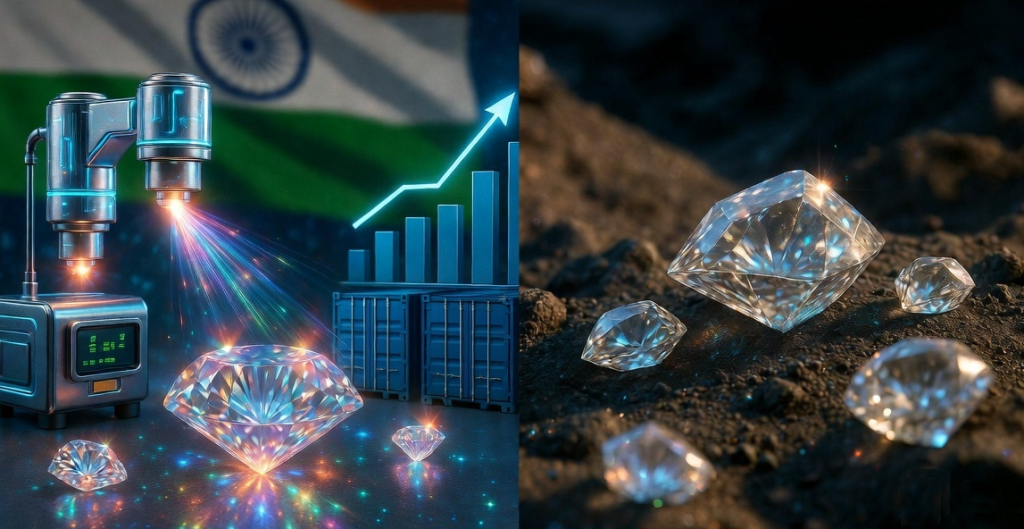
India’s polished lab grown diamond exports have overtaken natural diamond exports by volume for the first time, marking a significant shift in the global diamond manufacturing industry.
According to figures released by the Gem and Jewellery Export Promotion Council (GJEPC), exports of polished lab grown diamonds reached 18.84 million carats during the financial year ending March 2026, an increase of almost 31 per cent year on year.
By comparison, polished natural diamond exports fell nearly 4 per cent to 16.00 million carats.
Despite the dramatic rise in lab grown volumes, natural diamonds continue to generate the overwhelming majority of industry revenue due to the substantial price difference between the two categories. Average export values for natural diamonds remain around US$760 per carat, compared to approximately US$60 per carat for lab grown goods.
As a result, natural diamond exports generated approximately US$12.16 billion during the year, while lab grown exports totalled around US$95.52 million.
The figures nevertheless highlight the rapid transformation of India’s diamond manufacturing sector. Just a decade ago, in 2015 to 2016, India exported only around 10,000 carats of polished lab grown diamonds.
Recent monthly data suggests the trend is continuing. During April 2026, India exported 1.36 million carats of polished lab grown diamonds, marginally exceeding natural diamond exports of 1.34 million carats.
The continued growth of lab grown production is reshaping the global diamond trade and placing increasing pressure on the natural diamond pipeline, particularly in the lower price categories.
The Future of Canada’s Ice Road Under Threat
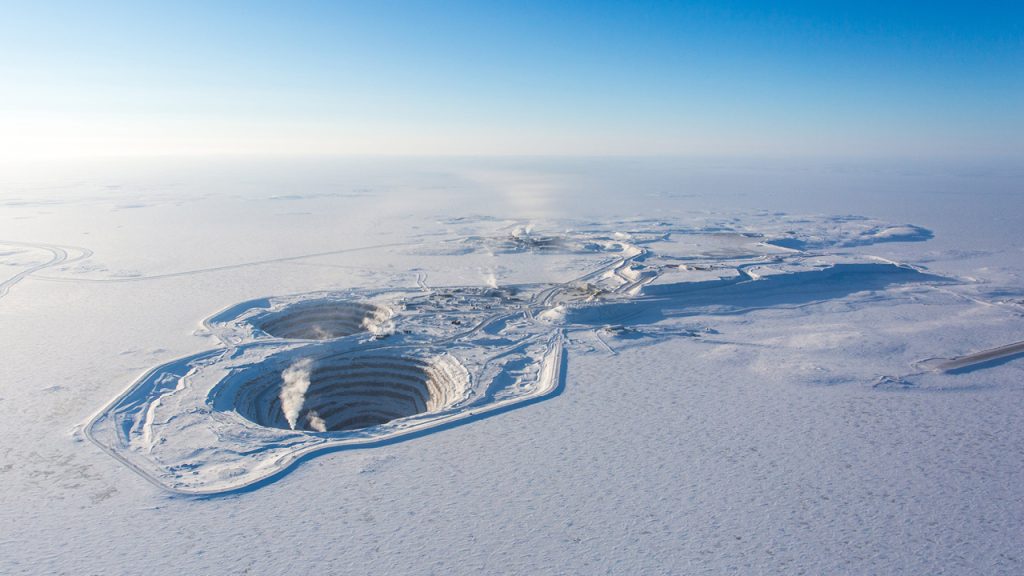
The long term future of Canada’s famous Tibbitt to Contwoyto Winter Road, the critical supply route servicing diamond mines in the country’s far north, is increasingly uncertain amid mine closures, financial instability and warmer winters.
The 370 mile ice road, commonly known as the TCWR, stretches across frozen lakes and remote terrain in the Northwest Territories near the Arctic Circle. For decades it has provided an essential seasonal transport link to the region’s major diamond operations, including Diavik, Ekati and Gahcho Kué.
However, the future viability of the route is now being questioned.
Rio Tinto officially closed the Diavik Diamond Mine in March 2026, while Ekati Diamond Mine entered creditor protection proceedings in April. Meanwhile, De Beers operated Gahcho Kué Mine continues to face significant financial pressure.
The winter road plays a vital logistical role each year, allowing operators to transport fuel, cement, heavy mining equipment, tyres and explosives during a narrow eight to ten week operating window when the lakes remain frozen.
Construction and maintenance of the road reportedly costs around US$20 million annually.
Following the closure of Diavik, De Beers has assumed oversight responsibilities for future operations of the road and has confirmed planning is underway for the 2027 season.
However, uncertainty remains over how long the route can continue operating, particularly as increasingly mild winter conditions shorten the period of safe ice access.
Local media reports have raised concerns over whether sufficient funding and operational support will remain available in coming years, fuelling speculation that the famous ice road may be approaching the end of its operational life.
Comments are closed