Namibia: Gold and Uranium Earnings Overtake Diamonds

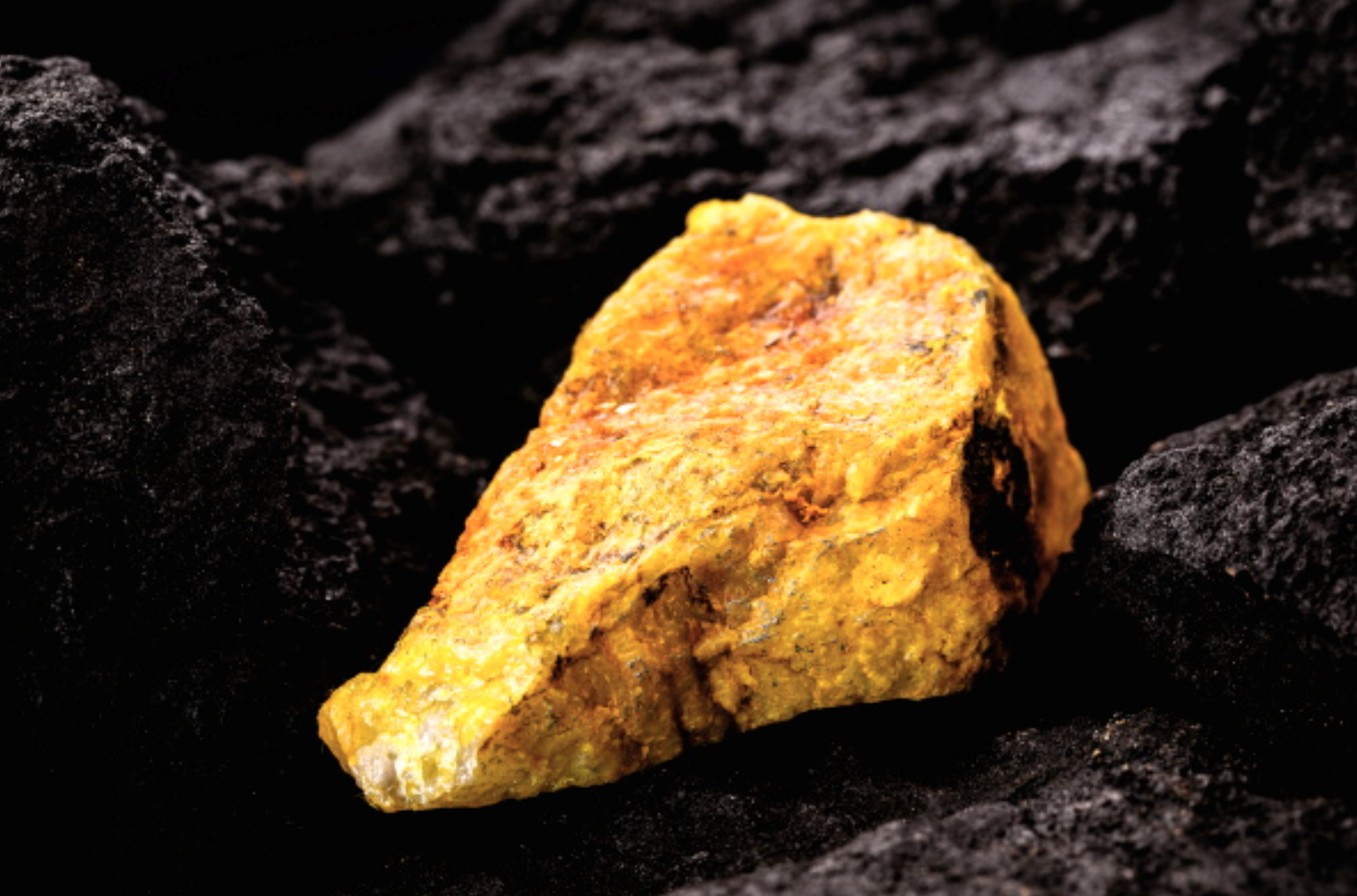
uranium ore in mine, mineral radiation concept, radioactive energy

Namibia has, for the first time, earned more tax revenue from gold and uranium than from diamonds.
Natural diamonds, primarily from marine operations, have long accounted for almost a third of Namibia’s export earnings.

But it has faced a severe contraction since mid-2022. At the same time, gold prices have been surging to record highs, and demand for uranium is rising for nuclear energy production.

Diamond mining is projected to decline by 4.5 per cent in 2025 and 5.7 per cent in 2026, the Bank of Namibia said in its August 2025 Economic Outlook.

“Non-diamond mineral revenues have surpassed diamond revenues for the first time, reinforcing a structural shift towards a more diversified and resilient mining revenue base,” the Chamber of Mines of Namibia said in its report for October, published last week.

It said tax revenue from diamonds in the six months to September was down 79 per cent, year on year. It did not provide like-for-like figures for gold or uranium.

But it said tax revenue from other minerals, mainly uranium and gold, had almost doubled the original budget estimate in the last financial year.

Source: IDEX

BHP Walks Away from Last-Ditch Bid for Anglo American

Perth, Australia Brookfield Place office tower with BHP offices

Mining giant BHP has walked away from a last-ditch attempt takeover bid for Anglo American, parent company of De Beers.

It announced on Sunday (23 November) that it was “no longer considering a combination of the two companies”.

Melbourne-based BHP made hostile bids for Anglo in April and May 2024, both of which failed.

The move prompted loss-making Anglo to start streamlining its operations, to divest some unprofitable activities, including its diamond division, De Beers and to focus on copper and other money-making assets.

Anglo had hoped to complete the sale of De Beers by the end of this year, but despite intense interest, from the Botswana government among others, that has yet to happen.

BHP renewed its bid primarily to disrupt Anglo American’s planned $53 billion merger with Canadian miner Teck Resources, which is expected to go ahead on 9 December

Source: IDEX

Anglo American writes down value of diamond firm De Beers by $2.9bn

Sale of De Beers, which is now valued at $4bn, may be delayed following ‘really, really difficult’ market

The world’s biggest diamond miner, De Beers, cost its parent company almost $3bn last year as the growth in lab-grown stones continues to take the shine off the industry.

Anglo American was forced to write down the value of the renowned gem producer for a second consecutive year as its chief executive admitted the diamond markets had proved “really, really difficult for the company”.

Duncan Wanblad, the chief executive of Anglo American, added that its plan to shrug off De Beers as part of a radical strategy to dismantle parts of the 108-year-old group – which coined the slogan “a diamond is forever” in 1947 – may be delayed.

He added that the FTSE 100 company did not expect “much traction or progress” on its plans to spin off De Beers in the first half of the year, which could be via a trade sale or a listing via an IPO or demerger, but it might “pick up” towards the end of the year.

Diamond prices have slumped over the past decade because of the rising popularity of cheaper, lab-grown versions and a slowdown in consumer spending in China.

In response, Anglo has taken impairments of $2.9bn on De Beers last year, after a $1.6bn writedown of the company in its annual results last year. This drove Anglo to a $3.1bn net loss in 2024, from a $283m profit the previous year.

The latest writedown of De Beers, which once controlled 90% of the world’s diamond market, means the company is now valued at $4bn.

Anglo laid bare the ongoing losses at De Beers after setting out a plan last year to sell the diamond business as part of a historic corporate overhaul to defend the company against a £34bn takeover plot by the Australian miner BHP.

Anglo hopes to guard the company against further unsolicited advances from BHP, which attempted to force the board to offload two Johannesburg-listed subsidiaries, the platinum miner Amplats and the iron ore miner Kumba, in order to complete a takeover.

Wanblad said the company had received unsolicited interest in the diamond business but a formal process had not started. At least part of the company is expected to be purchased by the government of Botswana, which hosts many of the company’s diamond mines.

Source: Theguardiam

New BHP/Anglo Bid “Almost Oven-Ready”

A renewed takeover bid of Anglo American by rival miner BHP is "almost oven-ready," according to City sources cited by the UK Sunday Times newspaper
Anglo American plc is a one of world largest mining company

A renewed takeover bid of Anglo American by rival miner BHP is “almost oven-ready,” according to City sources cited by the UK Sunday Times newspaper (12 January).

Australia-based BHP made an unsuccessful bid for the company that owns De Beers last April, increasing from its all-share offer of $39bn to just over $49bn before it was rejected by the Anglo board.

But the six-month cooling-off period imposed by UK regulators is now over and speculation is again mounting that BHP is set for a new assault.

“Anglo’s management have got the bit between the teeth,” one investor with big holdings in both companies told the Sunday Times.

“Ironically, this may make them more of a target. But the price they could demand for Anglo would be higher.”

BHP is keen to acquire Anglo’s copper mines but has made it clear that it has no interest in De Beers, or in its PGM (platinum group metals) assets.

Since the failed BHP bid, Anglo has raised $4bn from the sale of coal mines, and is preparing to dump De Beers and its PGNs, all of which makes it more attractive to BHP.

Anglo announced in May, shortly after the BHP bid, that it would sell or demerge both its diamond and PGM operations (as well as nickel and steelmaking coal) to focus on copper and other more profitable parts of its business.

De Beers, which seen sales slump in 2023, would “be divested or demerged, to improve strategic flexibility for both De Beers and Anglo American,” the company said.

Source: IDEX

De Beers cut diamond production

In a significant move, the world’s largest diamond mining company by value has announced further production cuts, adding to its already implemented plan to curtail output by 10 percent. This decision led to a 15 percent year-on-year decline in second-quarter production, dropping to 6.4 million carats, as reported in an update on Thursday.

The potential sale or listing of De Beers was a crucial component of Anglo’s broader strategy to fend off a £39 billion takeover bid from industry giant BHP earlier this year. However, the ongoing slump in the diamond market poses a challenge to achieving this goal by the end of 2025.

“Trading conditions became more challenging in the second quarter as Chinese consumer demand remained subdued,” stated Duncan Wanblad, Anglo’s chief executive.

High inventories for diamond traders and manufacturers, coupled with expectations of a slow recovery, have prompted the company to consider further production cuts. This strategy aims to manage working capital and preserve cash amid the tough market conditions.

The prospect of deeper production cuts comes as the company disclosed the impact of other setbacks in its second-quarter production update, which had been anticipated by analysts.

Anglo has downgraded its full-year guidance for metallurgical coal from 15-17 million tonnes to 14-15.5 million tonnes following a fire at its Grosvenor mine in Australia, which has been out of action for months. Costs for the coal business are also expected to rise significantly this year, estimated at $130 to $140 per tonne, up from $115 per tonne.

The company is prioritising the sale of its metallurgical coal division due to strong buyer interest, with plans to divest De Beers, its platinum unit, and nickel operations to follow.

Additionally, an impairment on the Woodsmith fertiliser mine in North Yorkshire, UK, is expected in the upcoming half-year results, as spending on the project is drastically cut back as part of the turnaround plan.

Despite these challenges, shares in Anglo rose by 2 percent in early trading in London on Thursday, buoyed by production results for most commodities exceeding consensus analyst forecasts. The company achieved record second-quarter iron ore production in Brazil and is on track to meet its guidance for the copper unit.

Wanblad reaffirmed his commitment to streamlining the company to focus on just copper, iron ore, and fertiliser within 18 months. “We are working at pace to execute on the asset divestments, including steelmaking coal,” he said. “Work is progressing with the aim of substantively completing this transformation by the end of 2025.”

Gold miner Richard Duffy appointed new chief of Petra Diamonds

Petra Diamonds

Petra Diamonds has appointed former gold miner Richard Duffy as chief executive as it grapples with a heavy debt load following a period of expansion.

Mr Duffy was previously chief financial officer and head of African operations at AngloGold Ashanti before setting up a company that develops renewable energy projects in Africa.

Mr Duffy “will be critical to drive Petra’s transition from a phase of intensive capital expenditure and expansion to a focus on steady-state, cash-generative operation,” Petra’s chairman, Adonis Pouroulis, said. The appointment comes as Petra faces lower diamond prices and $559m of net debt that it needs to pay off.

Diamond prices were about 4 per cent lower in the six months ending December due to “industry wide lower prices for lower quality” small stones, the company said on Monday. Average pricing for diamonds at the company’s flagship Cullinan mine in South Africa fell to $96 a carat, the lowest six-month level since 2010.

Petra said adjusted earnings before interest tax and other items, or ebitda, fell 6 per cent to $75.6m in the second half of last year. It reported a net loss of $57.9m, from a loss of $117.7m in the same period a year earlier. Revenues rose by 8 per cent to $207.1m as diamonds sold increased by 15 per cent to 1.74m carats. The company said reduction of its debt is a priority.

It has $90.7m in cash at the bank and said net debt is expected to be “largely flat” during the first half of this year if diamond prices remain at the same levels.

Source: ft.com