
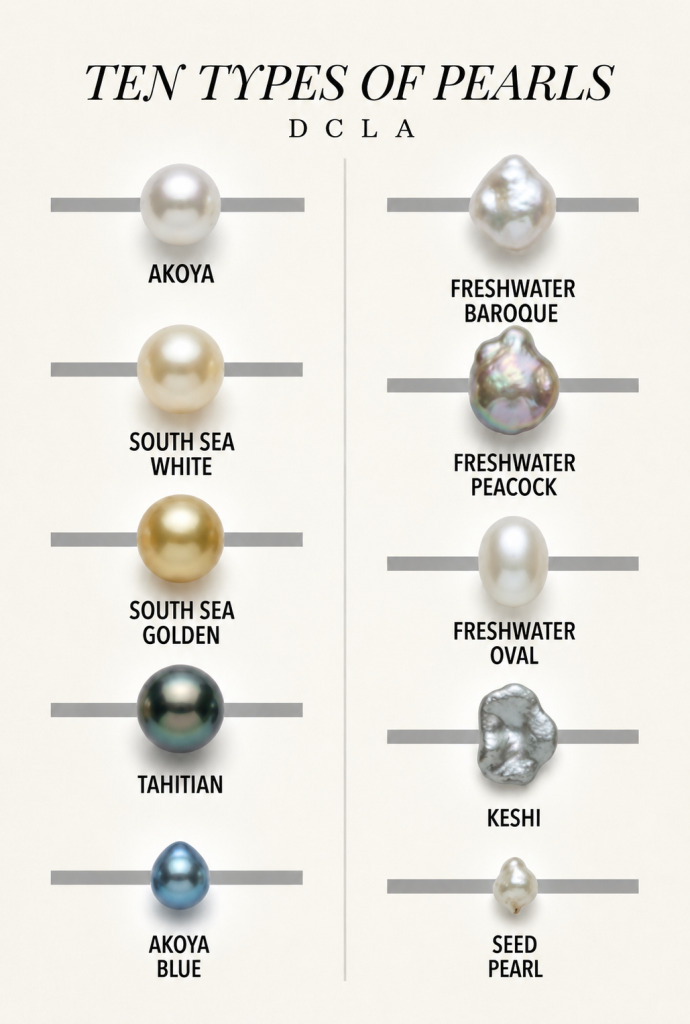
Pearls have fascinated jewellers and collectors for centuries, not only for their natural beauty but also for their wide variation in quality, origin, and value. Unlike gemstones formed in rock, pearls are organic gems created inside molluscs, which means no two are ever exactly the same. Their value is determined by a combination of rarity, lustre, size, shape, surface quality, and origin.
The chart above highlights the major types of pearls found in today’s market, ranging from highly prized saltwater pearls to more accessible freshwater varieties.
Akoya Pearls
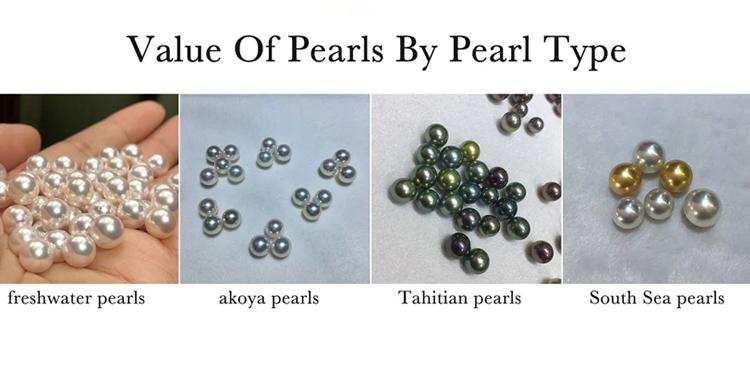
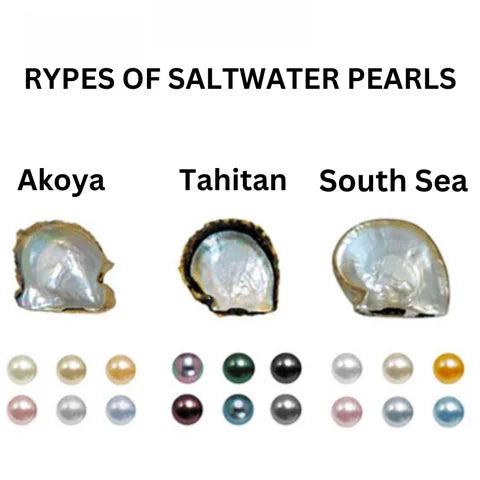
Akoya pearls are the classic round white pearls most people associate with traditional pearl necklaces. They are primarily cultivated in Japan and China.
These pearls are known for:
- Exceptional lustre and mirror like shine
- Near perfect round shape
- Typically smaller size range (6 mm to 8.5 mm)
Value
Akoya pearls sit in the mid to high value range for cultured pearls. High grade strands with strong lustre and minimal blemishes can be highly valuable, especially in larger sizes.
South Sea Pearls
South Sea pearls are among the most valuable pearls in the world. They are grown in Australia, Indonesia, and the Philippines and are produced by the large Pinctada maxima oyster.
White South Sea Pearls
These are prized for their elegant white and silver tones and soft satiny lustre.
Golden South Sea Pearls
These are rarer and often more valuable, especially when they display deep, rich gold colouring.
Value
South Sea pearls are at the top end of the market. Their value is driven by:
- Large size (often 9 mm to 16 mm or more)
- Thick nacre and soft glow rather than sharp shine
- Rarity and long cultivation time
Golden varieties can command the highest prices of all cultured pearls.
Tahitian Black Pearls
Tahitian pearls come from the black lip oyster in French Polynesia. Despite the name, they are not purely black but display a wide range of colours including green, peacock, aubergine, and silver tones.
Value
Their value depends heavily on:
- Intensity and uniqueness of overtones
- Roundness and surface quality
- Size, typically 8 mm to 14 mm
High quality “peacock” coloured pearls are especially desirable and can reach premium prices.
Freshwater Pearls
Freshwater pearls are mainly produced in China and are known for their wide variety of shapes and colours. Unlike saltwater pearls, they are often grown without a nucleus, which allows for multiple pearls to form in one mollusc.
Types include:
- White freshwater pearls
- Baroque freshwater pearls (irregular shapes)
- Oval freshwater pearls
Value
Freshwater pearls are generally the most affordable category. However, high quality strands with strong lustre and near round shape can still hold solid market value. Baroque styles are increasingly popular in modern jewellery design.
Biwa Pearls
Biwa pearls were originally produced in Lake Biwa in Japan. Today, the term is often used more broadly for high quality freshwater pearls with unique shapes and strong lustre.
Value
They are valued for individuality rather than perfection. Their irregular shapes make them popular in artistic jewellery pieces rather than traditional strands.
Keshi Pearls
Keshi pearls are formed without a nucleus, meaning they are made entirely of nacre. This gives them exceptional lustre and organic, irregular shapes.
Value
Keshi pearls can be surprisingly valuable because:
- They are highly reflective
- Each piece is unique
- They are relatively rare as by products of cultured pearl farming
High quality keshi pearls can rival saltwater pearls in price per gram.
Seed Pearls
Seed pearls are extremely small pearls, often less than 2 mm in size. They are commonly used in vintage jewellery and intricate decorative designs.
Value
Individually they are not highly valuable, but antique jewellery containing large numbers of seed pearls can carry significant historical and collectible value.
What Determines Pearl Value Overall
Across all types, the main value drivers are:
- Lustre: the sharpness and depth of reflection
- Surface quality: fewer blemishes increases value
- Shape: perfectly round pearls are most valuable
- Size: larger pearls are rarer and more expensive
- Colour: rare overtones increase desirability
- Origin: saltwater pearls generally command higher prices than freshwater
Final Thoughts
Pearls range from affordable freshwater strands to extremely rare South Sea and Tahitian gems that can rival diamonds in value. Understanding the differences between types helps buyers and collectors make informed decisions, whether they are investing in fine jewellery or simply appreciating the natural beauty of these organic gems.
Comments are closed