
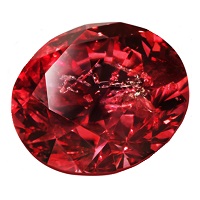
The Argyle Phoenix Redefines Rarity at Auction
At the 2024 Phillips Geneva Auction, the extraordinary Argyle Phoenix Diamond achieved a landmark result, selling to renowned diamantaire Laurence Graff for CHF 3.8 million (approximately USD 4.2 million). This equates to an exceptional USD 2.7 million per carat more than double its pre-sale estimate.
The result established two significant auction records simultaneously: the highest price ever achieved for a fancy red diamond and the highest price per carat for any diamond of its kind at auction.
For Graff, whose career has been defined by acquiring the world’s most exceptional gemstones, the purchase is emblematic. Stones of this calibre particularly natural reds are not simply rare; they are effectively non-recurring assets in the global market.
The Rarest of the Rare: Natural Red Diamonds
To understand the significance of the Argyle Phoenix, one must place red diamonds within the broader hierarchy of gemstone rarity.
According to the Gemological Institute of America, fewer than 0.4% of all diamonds graded over the past two decades qualify as “fancy colour.” Within this already rare category, red diamonds stand alone at the pinnacle. Fewer than thirty true natural red diamonds are believed to exist worldwide not annually, but in total known supply.
Unlike other fancy colour diamonds, which derive their hues from trace elements, red diamonds owe their colour to a phenomenon known as crystal lattice distortion. Under extreme geological conditions, the atomic structure of the diamond is altered, affecting how light is absorbed and reflected. While similar processes produce pink diamonds, red diamonds represent the most intense and rare expression of this structural transformation.
The rarity is so profound that scientific study remains limited; nature produces these stones too infrequently for comprehensive analysis. As such, natural red diamonds remain among the least understood and most coveted gemological phenomena.
Antwerp Diamond Trade Shows Signs of Recovery
Meanwhile, the global diamond trade is demonstrating early signs of stabilisation, particularly in Antwerp, historically one of the world’s most important diamond centres.

Figures released by the Antwerp World Diamond Centre indicate that total diamond trading volume rose by nearly 20% in the first quarter of 2026 compared with the same period in 2025. This marks a continuation of the recovery that began cautiously in late 2025.
CEO Karen Rentmeesters attributes the improvement to a combination of structural reforms and shifting geopolitical dynamics. Measures such as streamlined visa processes for international traders and the formal recognition of diamond cutters and sorters as critical occupations have enhanced Antwerp’s competitiveness.
Additionally, increased cooperation between Belgian and broader European institutions has reinforced the trading hub’s stability and appeal.
Geopolitical Shifts Reshape Trade Flows
Global geopolitical tensions are also influencing the movement of diamond trade activity. Ongoing instability in the Middle East has made alternative centres, such as Antwerp, more attractive to international diamantaires seeking operational certainty.
This shift is further supported by notable supply-side developments, including large-scale auctions such as those conducted by Congolese producer SACIM, which recently sold over 288,000 carats of rough diamonds in Antwerp.
Market Pressures Persist
Despite improving trade volumes, pricing remains under significant pressure. Rough diamond prices declined by approximately 27% in the first quarter of 2026 compared with the previous year.
This downturn is primarily driven by subdued demand for polished diamonds, compounded by the growing market share of synthetic alternatives and residual inventory build-up following the 2022 market peak.
DCLA Perspective
From a DCLA standpoint, the divergence within the diamond market is becoming increasingly clear. At the very top end, ultra-rare natural diamonds such as the Argyle Phoenix continue to command record-breaking prices, driven by extreme scarcity and collector demand.
Conversely, the broader commercial market faces structural challenges, including shifting consumer preferences and increased competition from lab-grown diamonds.
This bifurcation underscores a critical trend: rarity, provenance, and natural origin are becoming more important than ever in defining long-term value within the global diamond industry.
Comments are closed