
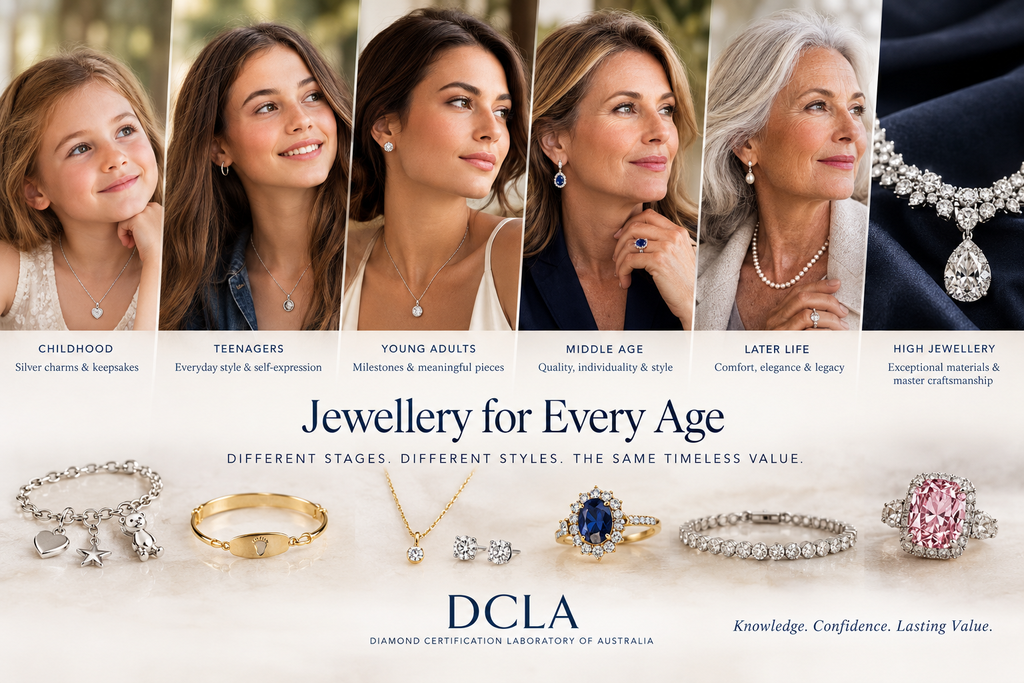
Jewellery has a special place in our lives. It marks milestones, celebrates achievements, expresses personal style and carries memories from one generation to the next. From a child’s first silver charm to a diamond engagement ring or an exceptional high jewellery creation, the pieces we choose often reflect not only our age, but also our lifestyle, personal taste and the significance of the occasion.
At DCLA, we understand that jewellery is about much more than its appearance. The choice of metal, the size and design of a piece, the quality of its gemstones and its financial value all influence its suitability for the person who wears it. What works beautifully for a young child may be entirely different from what appeals to a teenager, a professional adult or an older woman who has spent a lifetime appreciating fine jewellery.
Childhood: Small Pieces, Lasting Memories
A child’s first piece of jewellery is often a gift to mark a birthday, a religious or family celebration, or another important milestone. These early pieces may have modest monetary value, but their sentimental significance can be enormous.
Silver charms, small pendants, simple bracelets and keepsake jewellery are popular choices for younger children. They offer an introduction to jewellery without the need for large gemstones or elaborate designs. As children grow, collecting charms can become a personal tradition, with each addition representing a memory, an achievement or someone special.
Gold baby jewellery, including small keepsake bracelets and delicate pendants, is also traditionally given to celebrate a birth or christening. These pieces are often selected for their enduring material value and the possibility of keeping them as family heirlooms.
However, jewellery for babies and young children requires particular care. Small detachable charms, chains, sharp edges and loose components can present choking, entanglement or other safety risks. Jewellery should be age appropriate, well made and used with proper supervision. For babies, wearing jewellery during sleep or unsupervised periods should be avoided.
At this stage of life, simplicity, comfort and safety matter far more than size or monetary value.
Teenagers: Personal Style Begins to Emerge
As children become teenagers, jewellery often becomes a way to express individuality. Fashion, friendship, music, personal interests and changing trends begin to influence their choices.
Sterling silver, gold-plated pieces, simple gold chains, personalised pendants, earrings and charm bracelets are popular options. Some teenagers prefer understated designs, while others gravitate towards bold statement pieces or contemporary jewellery featuring coloured gemstones.
The financial value of these pieces can vary considerably. Fashion jewellery offers an affordable way to experiment with different styles, while solid gold and selected gemstone pieces may be purchased as more enduring gifts.
Durability becomes increasingly important, particularly for teenagers who wear jewellery daily. The quality of clasps, settings and chains can make a considerable difference to how well a piece withstands everyday use.
This is also an age when jewellery can become an introduction to precious metals and gemstones. Understanding the difference between sterling silver, solid gold, natural diamonds and laboratory-grown diamonds helps young buyers appreciate that appearance, material composition and market value are not necessarily the same thing.
Young Adults: Jewellery That Marks Important Milestones
For young adults, jewellery often takes on a deeper significance. Graduations, first jobs, birthdays, anniversaries and relationships provide opportunities to invest in pieces that can be worn for years.
Gold chains, diamond pendants, elegant earrings and fine bracelets are popular choices. Engagement rings and wedding jewellery may become particularly important, combining personal meaning with careful consideration of design, craftsmanship and budget.
At this stage, the choice often moves beyond fashion towards longevity. A well-made piece in gold or platinum, for example, may be suitable for regular wear and can potentially become a family heirloom.
Diamonds are frequently chosen for their durability and enduring appeal. However, a diamond’s value depends on several factors, including carat weight, colour, clarity, cut quality, whether it is natural or laboratory-grown, and prevailing market conditions.
Two diamonds of the same carat weight can differ substantially in appearance and value. This is why professional gemmological assessment can be important when purchasing a significant diamond or comparing different stones.
The most expensive piece is not necessarily the most suitable. The best choice is one that reflects the wearer’s taste, intended use and budget while offering the quality and characteristics that matter to them.
Middle Age: Confidence, Quality and Individual Taste
As personal style develops, many people begin to favour quality over quantity. Rather than accumulating numerous fashion pieces, they may choose fewer items with better craftsmanship, more distinctive designs or greater personal significance.
This can be the time when jewellery collections expand to include substantial gold pieces, diamond rings, coloured gemstones, bespoke creations and designer jewellery.
Some people prefer classic, understated elegance. Others enjoy bold designs that make a statement. There is no single style associated with any age group, and individual preference should always take precedence over assumptions about what someone should wear.
Financial circumstances may also influence purchasing decisions. A buyer might choose a modest diamond pendant for everyday use and reserve a larger, more valuable piece for special occasions. Another may prefer one exceptional item rather than several smaller purchases.
Bespoke jewellery offers further opportunities to create something personal. The wearer can select the metal, gemstone, proportions and setting to suit their style, comfort and intended use.
At DCLA, understanding the characteristics of the gemstones used in a piece is an important part of appreciating its quality. The design may catch the eye, but the stone itself, the workmanship and the integrity of the materials contribute to the finished result.
Later Life: Elegance, Comfort and Sentimental Value
For older women, jewellery can represent a lifetime of memories, relationships and personal achievements. An engagement ring worn for decades, a necklace received on a special anniversary or a brooch passed down through the family may carry a significance that extends far beyond its monetary value.
Some women continue to enjoy substantial diamond jewellery and high-end designer pieces. Others increasingly favour lightweight earrings, comfortable bracelets, simple gold pendants or versatile pieces that are easy to wear and secure.
Practical considerations may become more important over time. Lightweight designs, reliable clasps, comfortable ring profiles and settings that do not easily catch on clothing can make everyday jewellery more enjoyable.
Ring size can also change over a lifetime, and older pieces may require professional inspection, repair or resizing to remain suitable for wear.
This is also an age when inherited jewellery becomes particularly meaningful. An older piece may be cherished for its history, redesigned to reflect a new generation’s tastes, or assessed to establish its gemstone characteristics and potential market value.
Importantly, age does not determine taste. An older woman may prefer contemporary minimalist jewellery just as readily as she may appreciate an elaborate diamond necklace. The right piece is always the one that suits the individual.
High Jewellery: Exceptional Materials and Master Craftsmanship
At the highest end of the jewellery market, pieces can represent extraordinary levels of craftsmanship, design and material value.
Exceptional natural diamonds, rare coloured gemstones, substantial precious metals and intricate settings may come together in bespoke creations or high jewellery collections. These pieces are often commissioned for major milestones, collected as luxury objects or passed down through generations.
Their value can reflect a combination of rarity, gemstone quality, provenance, designer recognition, craftsmanship and demand within the relevant market.
A large diamond alone does not guarantee exceptional value. Cut quality, colour, clarity, treatments, natural or laboratory-grown origin and the quality of the finished jewellery all influence how a piece is assessed.
For significant purchases, independent gemmological examination and appropriate documentation can help establish what a buyer is acquiring. A laboratory report describes the characteristics of a gemstone within the scope of the examination; it is not automatically a valuation or a guarantee of future resale value.
At this level, the distinction between a beautiful piece of jewellery and an exceptional one often lies in the details that are not immediately obvious to the untrained eye.
Understanding Jewellery Value: Price Is Only Part of the Story
The monetary value of jewellery can differ enormously, from an affordable silver charm to a piece containing rare diamonds worth hundreds of thousands of dollars or more.
Several factors influence value:
- Materials: Sterling silver, gold and platinum have different material values, while alloys, purity and weight also matter.
- Gemstones: Size, quality, rarity, origin and whether a stone is natural or laboratory-grown can materially affect its market value.
- Craftsmanship: Design, setting quality, finishing and the skill involved in creating the piece contribute to its appeal and desirability.
- Brand and provenance: A recognised designer, documented history or notable previous ownership may influence market demand.
- Condition: Wear, damage, repairs, missing stones and alterations can affect both appearance and value.
- Market and resale considerations: Retail price, insurance replacement value and likely resale proceeds are different measures and should not be confused.
A piece purchased for a substantial amount may not necessarily achieve the same price when resold. Equally, an older piece of jewellery that appears dated or modest may contain a valuable diamond or gemstone that deserves closer examination.
This is particularly relevant when families inherit jewellery, divide an estate or consider selling pieces they no longer wear.
Jewellery That Connects Generations
One of the most remarkable qualities of jewellery is its ability to connect people across generations. A gold bracelet given to a baby may eventually become a treasured keepsake. A diamond ring purchased for a wedding may be passed to a child or grandchild. A collection assembled over decades can tell the story of a family in a way few other possessions can.
As jewellery moves between generations, its sentimental importance may remain constant even as fashion, preferences and market values change.
Before selling, redesigning or dividing inherited jewellery, it can be worthwhile to establish exactly what the pieces contain. A professional assessment may identify gemstones that were previously overlooked, clarify the characteristics of a diamond or help determine whether an item warrants a formal valuation.
Understanding what you own allows you to make more informed decisions about its future.
The DCLA Perspective: Knowledge Matters at Every Stage
From a child’s first silver charm to an exceptional natural diamond, jewellery deserves to be appreciated for what it is, how it was made and what it means to the person who owns it.
At DCLA, our focus is on the gemmological characteristics and identification of diamonds and other gemstones. Understanding a stone’s identity and characteristics can be particularly important when purchasing fine jewellery, evaluating inherited pieces or considering a significant investment in a diamond.
Whether you are choosing a meaningful gift, designing a bespoke piece or seeking greater confidence in a valuable jewellery purchase, informed decisions begin with knowledge.
Jewellery may change with age, but its ability to celebrate life’s milestones never loses its appeal. The most suitable piece is not necessarily the biggest or most expensive. It is the one that combines appropriate design, quality, comfort and personal meaning for the person who wears it.
For expert guidance on diamond identification and gemmological assessment, contact DCLA to discuss your requirements.
DCLA reports provide information on gemstone characteristics and identification within the scope of the examination. They are not, in themselves, valuations or guarantees of market value.
Comments are closed