
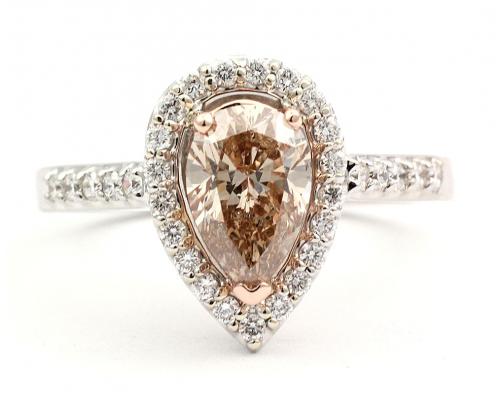
Standalone jewellery insurance or specified items under your home and contents policy?
Understanding the difference could make all the difference when it matters most.
A diamond is often far more than a valuable possession. It may represent an engagement, a marriage, a family inheritance or a milestone that holds a lifetime of memories. Yet, despite the emotional and financial value attached to fine jewellery, many owners have never fully investigated what would happen if their diamond were lost, stolen or accidentally damaged.
The uncomfortable question is simple: if your diamond disappeared tomorrow, would your insurance cover the cost of replacing it with an equivalent stone?
For many jewellery owners, the answer may not be as straightforward as they expect.
The problem with assuming you are covered
Many Australians assume their home and contents insurance automatically provides adequate protection for their jewellery. In reality, coverage varies considerably between insurers and policies.
Standard home and contents policies may impose limits on jewellery claims, apply specific conditions to valuable items, or exclude certain circumstances. A diamond ring worth $20,000, for example, may not be fully covered under a general contents policy unless it has been properly declared and specified.
Even when jewellery is listed as a specified item, the owner should not assume every possible loss is covered. Accidental loss, mysterious disappearance, damage, theft outside the home and overseas travel may all be subject to different conditions.
The critical issue is not simply whether you have insurance. It is whether your policy covers the particular diamond, the circumstances of its loss and the amount required to replace it.
Standalone jewellery insurance versus specified items under home insurance
There are two common approaches to insuring valuable jewellery. Each has advantages, and neither is automatically the better choice for every owner.
Option 1: Standalone jewellery insurance
Standalone jewellery insurance is designed specifically for jewellery and other valuable personal items. Depending on the insurer and policy, it may offer broader protection for risks such as accidental loss, theft and accidental damage.
For someone who regularly wears an expensive diamond ring, travels frequently or owns several high-value pieces, a dedicated policy may provide a more tailored approach to cover.
Potential advantages include:
- Specialist coverage: Policies designed around jewellery may address risks that general contents insurance does not cover in the same way.
- Worldwide protection: Some policies cover jewellery while travelling internationally, subject to their terms and geographical limits.
- Accidental loss protection: Certain policies cover losing a ring or diamond outside the home, although exclusions and conditions apply.
- Specialist claims handling: Some insurers provide access to jewellers and specialists familiar with the replacement of fine jewellery.
- Separate protection: Depending on the policy structure, a claim may be handled independently of the household contents policy.
However, standalone insurance is not automatically comprehensive. Premiums, excesses, exclusions, security requirements and replacement conditions still need to be examined carefully.
Option 2: Specifying your diamond under home and contents insurance
Another option is to list your diamond ring or other valuable jewellery as a specified item under your existing home and contents policy.
This can be a convenient and cost-effective approach, particularly when the insurer offers suitable coverage and the policy adequately addresses the risks associated with the item.
Potential advantages include:
- Convenience: Your jewellery may be managed alongside your other insured possessions.
- Potentially competitive premiums: Depending on the insurer, your existing policy and the item’s risk profile, specifying jewellery may be economical.
- A declared sum insured: The item is individually identified with an agreed or declared value, depending on the policy structure.
- Simplified administration: You may be able to manage your home, contents and specified valuables through one insurer.
The important distinction is that specifying a diamond does not automatically mean it is covered against every eventuality. Some policies may restrict cover to particular events, locations or circumstances.
Owners should also establish whether a claim will be settled in cash, through an approved jeweller, by replacement with an equivalent item or under another settlement arrangement.
The valuation question: What is your diamond actually worth?
One of the most important steps in protecting a valuable diamond is ensuring that its documentation is accurate and current.
A diamond’s value can depend on its carat weight, colour, clarity, cut quality, natural or laboratory-grown origin, and the characteristics of the finished jewellery. The mounting, precious metal and craftsmanship may also affect the replacement cost of a complete ring.
A purchase receipt from several years ago may not accurately reflect the current cost of replacing the same item. Equally, a valuation prepared for insurance purposes should not be confused with a guaranteed resale price.
This distinction matters because insurance replacement value, market value and resale value are not necessarily the same thing.
A diamond that originally cost $15,000 may require a different amount to replace today, depending on market conditions, the specification of the stone and the type of replacement required by the policy.
For this reason, jewellery owners should ask their insurer how frequently valuations should be updated and whether the policy automatically adjusts the sum insured for changes in replacement costs.
Why an independent diamond report matters
When insuring a significant diamond, reliable identification and documentation can be extremely important.
A professional diamond grading report records the characteristics of a stone and helps distinguish it from other diamonds. Depending on the report, this may include information about its carat weight, colour, clarity, cut characteristics and whether it is natural or laboratory-grown.
For a valuable natural diamond, an independent report can provide useful supporting evidence when arranging insurance or establishing the identity of the stone.
However, it is important to understand that a grading report is not the same as an insurance valuation. A grading report describes the diamond’s characteristics; a valuation estimates value for a stated purpose.
At DCLA, the Diamond Certification Laboratory of Australia, our work focuses on the identification, examination and grading of diamonds. Appropriate documentation can help owners and their insurers understand precisely which diamond is being insured.
Five questions every diamond owner should ask their insurer
Before deciding whether standalone jewellery insurance or specified cover under a household policy is more appropriate, ask these questions.
1. Am I covered if I simply lose my ring?
Determine whether accidental loss or disappearance is covered, including situations where you cannot establish exactly when or where the diamond was lost.
2. Am I covered outside my home and overseas?
Check geographical limits, travel conditions and any requirements for wearing, storing or securing your jewellery.
3. How will the insurer settle my claim?
Ask whether the insurer can require you to use an approved jeweller, whether it will replace the item with an equivalent diamond, and whether you can choose a cash settlement.
4. Is my insured value sufficient to replace the actual diamond?
Confirm how the sum insured was determined, whether it includes the complete ring and associated costs, and whether there are any limits or depreciation provisions.
5. What exclusions, excesses and conditions apply?
Read the policy wording carefully. Security requirements, unattended-property exclusions, maintenance conditions and other limitations can materially affect the protection provided.
So, which option is better?
There is no universal answer. A well-designed home and contents policy with specified jewellery cover may provide excellent protection. In other circumstances, standalone jewellery insurance may offer more suitable terms, particularly where accidental loss, travel or specialist replacement arrangements are important.
The best comparison is not simply the annual premium. It is the protection provided relative to the value of the diamond and the circumstances in which it might be lost or damaged.
Compare the actual policy wording, exclusions, excesses, geographical limits, settlement arrangements and replacement provisions. Ask the insurer to clarify anything that is unclear before relying on the cover.
Most importantly, do not assume that because your diamond is listed on a policy, you are necessarily covered for the loss you are most concerned about.
The bottom line: Know what you own and what protects it
Diamonds can be worn every day for decades, passed between generations and treasured long after their original purchase. Yet a moment of carelessness can result in a loss that cannot be reversed.
Insurance cannot replace the sentimental value of a family heirloom, but appropriate coverage may help protect its financial value.
Take the time to review your jewellery insurance, confirm that your diamond is correctly identified, and ensure that your documentation reflects the item you actually own.
Because the worst time to discover that your diamond was inadequately insured is the day you need to make a claim.
Important information: This article is intended for general educational purposes only and does not constitute insurance, financial or legal advice. Insurance coverage, exclusions and claims outcomes depend on the individual policy and insurer. DCLA provides diamond examination and reporting services; readers should consult their insurer or a suitably qualified insurance professional regarding their specific coverage.
Comments are closed