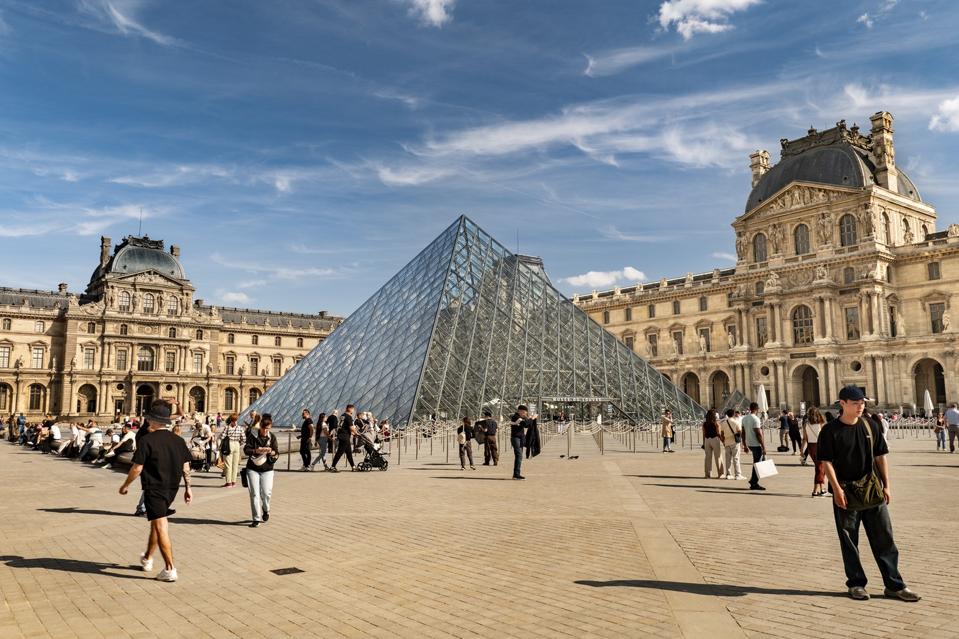
Five more suspects were arrested on Wednesday night (29 October) in connection with the Louvre heist.
One is believed to be a member of the four-man team that carried out the raid, who was identified through DNA evidence and seen on CCTV footage.
The two suspects arrested earlier (on 25 October) have “partially admitted” their involvement in the crime, according to French investigators.
Napoleonic crown jewels valued at over $100m were stolen on Sunday 19 October just as the museum, in Paris, was opening to visitors.
The thieves used mechanical ladder to reach a second-floor balcony, cut through the display cases with power tools, then escaped on motorbikes.
Laure Beccuau, the public prosecutor in Paris, said there was currently no evidence to suggest the theft was an inside job. None of the those arrested worked at the museum.
The four-man gang who carried out the raid left behind a motorbike helmet which provided a crucial hair sample believed to be linked to one of the suspects, together with multiple DNA samples.
The Louvre, the most-visited museum in the world, has since moved the remaining crown jewels to a vault at the Bank of France.
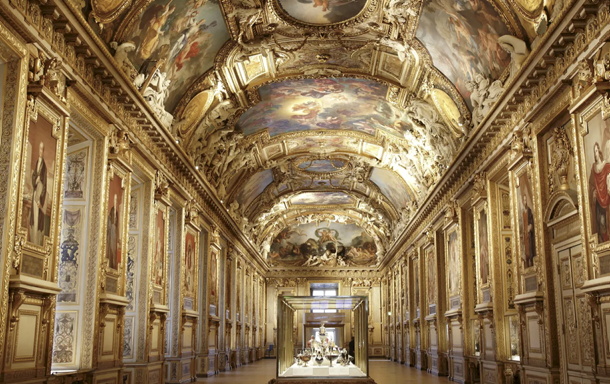
On Sunday, October 19, 2025, the world’s most famous museum became the scene of a real-life thriller. Paris’ The Louvre’s Apollo Gallery, home to priceless crown jewels and some of the most extraordinary diamonds ever mined, was brazenly targeted by masked thieves. Using a mechanical ladder and cutting through reinforced glass panes, the robbers reached the gallery around 9:30 a.m. local time and disappeared in 7 minutes with their haul.
What makes this heist especially fascinating is the connection to Andhra Pradesh’s Golconda mines, historically the source of some of the world’s most coveted diamonds. Several of these legendary stones, including the Regent, Hortensia, and Sancy, are housed in the Apollo Gallery of the Louvre.
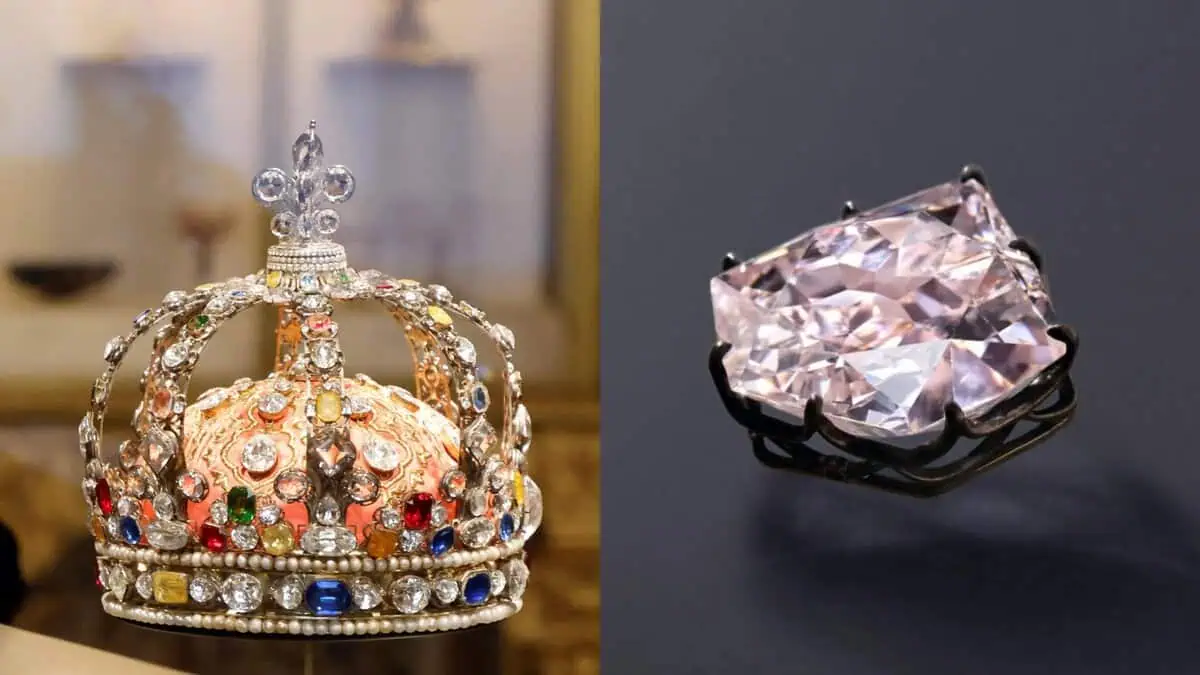
Golconda diamonds on display at the Louvre The most famous of the Golconda gems in the Apollo Gallery is the Regent Diamond, weighing 140 carats. This legendary stone was once embedded in Napoleon’s coronation sword and has a dramatic history. It was smuggled out of India by an enslaved man, who hid the diamond in his leg to secure his escape, only to be fatally attacked by the merchant who purchased it. Despite its storied past and supposed curse, officials have confirmed that the Regent was not stolen during the recent heist, according to the BBC.
Another historic gem, the Hortensia Diamond, is a 20-carat pink diamond renowned for its rare hue. Its status following the robbery remains uncertain, adding a layer of intrigue to the heist.
Beyond these, several other diamonds in the Apollo Gallery, including those set in tiaras and necklaces, are believed to have been mined in Golconda, India. During the 18th and 19th centuries, India was the world’s largest supplier of natural diamonds, and these stones reflect the country’s historic significance in the global luxury and jewellery world.
Indian internet calls for reclamation The Louvre heist has reignited conversations about repatriation, which means the idea of returning cultural treasures to their countries of origin. India, with its centuries-old legacy of diamond mining and craftsmanship, has seen many of its prized Golconda gems travel to European royal collections.
Since news of the robbery broke, netizens on X and Instagram have been vocal about India reclaiming its historic treasures. Posts and threads highlight the legendary journey of diamonds like the Regent, Hortensia, and more from the mines of Golconda to European royal courts. Many users argue that these jewels are not just luxury items but symbols of India’s rich heritage that belong at home. Others have called the heist a reminder of why cultural artefacts should be protected, and, if possible, returned to their country of origin.
The Louvre Museum in Paris was broken into on Sunday morning at opening time, by a group of hooded intruders who made off with antique jewelry that once belonged to Emperor Napoleon. The world-famous museum, which welcomed 9 million visitors from around the world in 2024, remains closed for the rest of the day.
The Louvre has yet to make an official statement, but Agence France-Press reports in vairous French media titles that the group accessed the museum from the Quais François Mitterand, used an external goods lift and breaking first-floor windows to get to the gallery they were interested in, where they broke open display cases. The incident occurred shortly after 9:30am.
According to Le Parisien newspaper, working with AFP, the intruders took advantage of building work that is ongoing at the Louvre to enter and made their way to the Galerie Apollon. While one of them kept watch, two men broke into display cases using chainsaws and made off with nine pieces of jewelry, including brooches, necklaces and tiaras worn by Empress Josephine, that were displayed in the Napoleon and French Sovereigns display cases.
The incident took place in the space of 7 minutes, French Interior Minister Laurent Nunez told the radio station France Inter this morning. One of the jewels – a crown belonging to Emperess Eugénie – was later found outside the Louvre, damaged.
The total value of the stolen goods has yet to be estimated, but the biggest diamond in the collection, the 140-carat Regent diamond, is safe. With the price of gold now topping $4,100/oz, speculation has begun as to whether the items will be dismantled, melted down and sold as raw materials, or find their way into the hands of private collectors. In mid-September the Museum of Natural History in Paris was robbed of several specimens of rough gold, thought to represent $70,000 and described at the time as “an invaluable loss for research and.
According to Rachida Dati, the French Minister of Culture who was at the Louvre with police and museum teams on Sunday morning, “no-one was injured” during the incident at the world’s most-visited museum.