Alrosa to Extract Gold as Byproduct of Diamond Mining

Alrosa to Extract Gold as Byproduct Mirny, in Russia's Sakha Republic.

Alrosa plans to extract gold from its diamond-bearing alluvial deposits in Mirny, in Russia’s Sakha Republic.

The move comes as demand for natural diamond continues to slide, and gold prices reach record highs.

Alrosa, Russia’s state-controlled miner, announced on Friday (24 October) that it was “considering extracting gold as a byproduct during diamond mining at the Mirny-Nyurba Mining and Processing Division”.

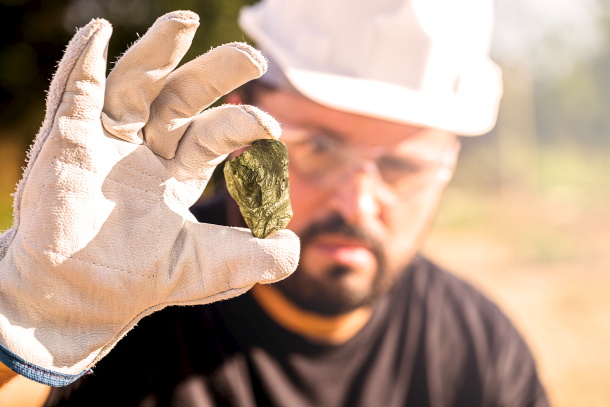
Gold was first found in the area in 2020 and Alrosa says a team of geologists has so far recovered 433kg of it.

The proposal is that gold will be recovered as a byproduct from diamond-bearing sands and placer deposits (accumulations of valuable minerals) in the Mirny area. Alrosa will use existing processing facilities.

In 2024, the company bought the Degdekan gold deposit in the Magadan region – in a notable departure from its core activity of diamond mining.

It said it would invest over $100m in the project, which is expected to produce about 3.3 tonnes of gold annually when it reaches full capacity around 2030.

Source: IDEX

Moscow Investigators Uncover Diamond Theft Scheme Involving Alrosa Employee

diamond producer Alrosa

Moscow investigators on Monday said they сharged an employee of the state-run diamond producer Alrosa, her son and two others in connection with a diamond theft scheme at the company.

Valentina Matyushenkova, an Alrosa employee, is accused of swapping high-value diamonds with cheaper industrial-grade stones between September 2024 and January 2025, according to Russia’s Investigative Committee.

Authorities say the stolen diamonds were smuggled to Armenia.

Matyushenkova was caught in the act while attempting to steal a batch of diamonds valued at more than 1.7 million rubles ($21,700), investigators said. Her son, Alexei Matyushenkov, is accused of acting as a middleman.

Two other suspects, Armen Petrosyan and Arman Sahakyan, allegedly transported the stolen stones across the border to Armenia.


A video published by the Kommersant business newspaper showed Matyushenkova confessing to her role in the scheme during questioning. One of the other suspects claimed he was working as a deliveryman at the time of his arrest.

Searches of the suspects’ homes uncovered some 200,000 carats of low-grade industrial diamonds, which investigators say were used to replace the high-quality raw stones.

All four suspects have been placed in pre-trial detention. If convicted, they face up to 10 years in prison on theft charges and up to seven years for the illicit trafficking of precious stones and metals.

Source: Themoscowtimes

Russia Partners with Belarus

Alexei Vladimirovich Moiseev - Russian Deputy Minister of Finance
Alexei Vladimirovich Moiseev – Deputy Minister of Finance

Russia is joining forces with its ally Belarus to promote jewelry exports to China, the UAE, Vietnam, and Southeast Asia, in response to G7 sanctions.

The collaboration was agreed last Friday (4 April) after Russia’s deputy finance minister Alexei Moiseyev (pictured) met Belarus’s finance minister Yury Seliverstov in the Belarus capital, Minsk.

Both sides discussed further developing e-commerce in jewelry made in Belarus and Russia, as well as the mutual recognition of state standard marks.

The two countries are close trade partners and Belarus has been sanctioned for supporting Russia’s invasion of Ukraine.

“A marketplace for the sale of Belarusian and Russian jewelry on foreign markets is planned to be launched in test mode this year, Moiseyev said, according to BelTA, Belarus’s state news agency.

He said the Eurasian Development Bank, founded jointly by Russia and Kazakhstan, was taking part in the collaboration.

Source: IDEX

Mining Company Alrosa Unveils Russia’s Largest-Ever Diamond

The 100-carat vivid yellow stone named New Sun

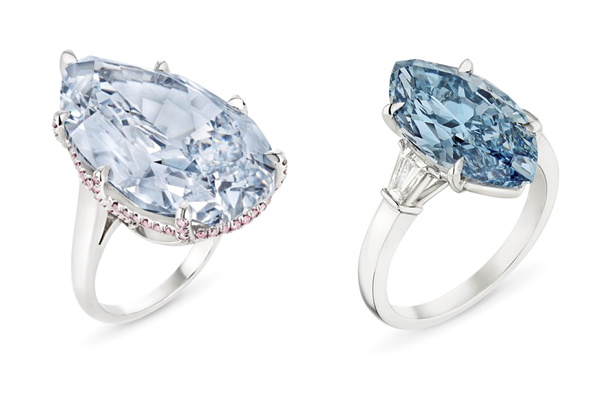
Russian diamond producer Alrosa announced Friday that it finished the two year cutting process of the country’s largest ever diamond a 100 carat vivid yellow stone named New Sun.

New Sun was cut from a billion year old 200 carat rough diamond, which was unearthed from an ancient riverbed at the Ebelyakh mine in the Far East republic of Sakha (Yakutia).

Alrosa said 15 of Russia’s top jewelers worked meticulously to “achieve the perfect balance between light, color and the play of shades.”

“Thanks to the highest skill of Russian experts, the diamond has acquired impeccable proportions that accentuate its depth and brightness of its sunny hue,” the company said.

The cutting process marks a “new stage” in the development of the Russian Cut, a gem cutting technique known for its precision and brilliance, Alrosa said.

“New Sun is one of the most significant events in the gemstone industry in recent years, highlighting Russia’s high status in the global diamond industry,” the company said.

Last month, Alrosa announced the temporary suspension of operations at several less profitable sites, reducing annual production by less than 1 million carats. The company still plans to produce 29 million carats of diamonds in 2025.

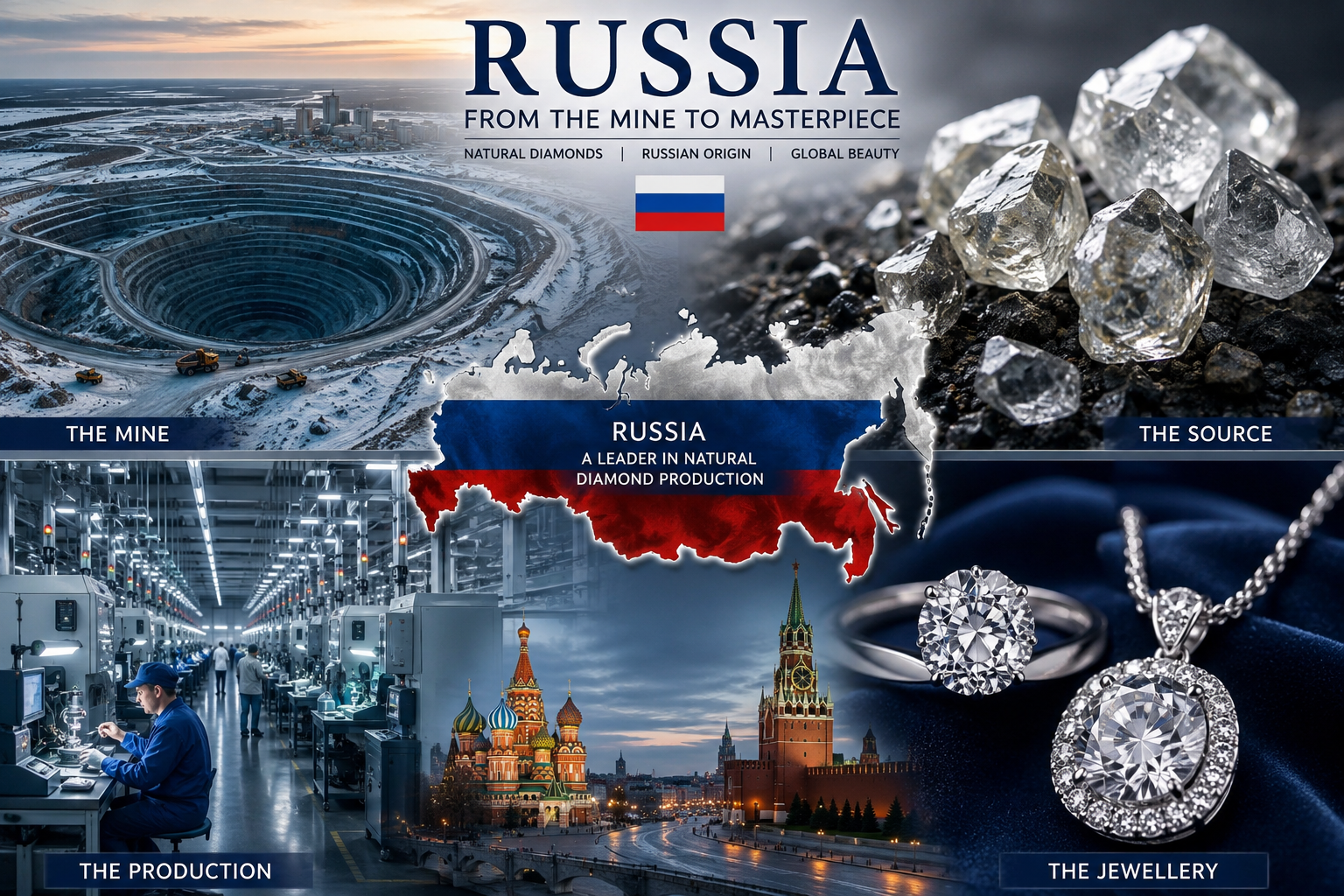
Alrosa, which is under an EU and G7 import ban, is the world’s largest diamond mining company by volume. It cut production by 2.8% to 34.6 million carats in 2023 and by 4.6% to 33 million carats in 2024.

Source: Themoscowtimes

US Diamond Importers Must Declare Country of Origin

New rules announced by US Customs and Border Protection (CBP) will require all diamond importers to declare the country of origin of all goods.

New rules announced by US Customs and Border Protection (CBP) will require all diamond importers to declare the country of origin of all goods.

The move, to be implemented in April, is aimed at enforcing sanctions on Russian diamonds.

Importers have been required, since last March, to certify that their goods are not Russian, but not to disclose where they are from.

The G7 nations – including the US and EU – imposed a ban on Russian diamonds of 1 carat or more from March 2024 and on goods of 0.5 carats or above from September 2024.

Despite the sanctions, Russia is still thought to be exporting 40 per cent of its diamonds output because they are below the size threshold or industrial quality.

The US Customs and Border Protection (CBP) said in a statement that it plans to start collecting additional data in April on jewelry imports (and seafood) requiring filers to provide the country of mining.

They’ll be required to upload a PDF document on official company letterhead to CBP’s automated commercial environment (ACE) document image system.

The requirement applies to both loose diamonds and jewelry containing diamonds. Jewelry imports without diamonds are exempt.

The carat size threshold is not mentioned in the CBP announcement.

Source: IDEX

Sanctioned Russia Sells Shares in Angolan Diamond Mines

Angolan Diamond Mine

Angola has announced that Russian shares in two of its major diamond mines have been sold to an Omani-backed fund as a result of international sanctions, a government official said.

Russia’s diamond giant Alrosa was until now a joint owner of Angola’s Catcoa mine, the fourth-largest in the world, and Luele mine, in partnership with the southern African nation’s state-owned company Endiama.

The European Union imposed sanctions on Alrosa, also state-owned, and its CEO in January as part of a ban on diamond imports over the Ukraine war.

This led to “a block on the commercialization” of diamonds from Catcoa and Luele mines, Angola’s Minister of Mineral Resources and Petroleum Diamantino Azevedo said Thursday.

After “negotiations between the Angolan and Russian governments, as well as between Endiama and its partner,” Alrosa has now “officially ceased operating in Angola,” Azevedo said.

The company has been “replaced by Maden International Group, a subsidiary of the Sovereign Fund of the Sultanate of Oman,” the minister added.

He said the transition process was “already underway and should be conducted swiftly.”

The sale comes as the United States President Joe Biden was expected to travel to Angola on Dec. 2.

The visit, his first to Africa, underscores the strategic importance of the oil and mineral-rich country where a massive U.S.-led project is underway to export critical minerals.

Source: Themoscowtimes

Russia to continue buying diamonds through state fund in 2025

Russia to continue buying diamonds through state fund in 2025

Russia will continue to buy diamonds through a state fund in 2025 in order to support the diamond industry and market, Deputy Finance Minister Alexei Moiseev said on Thursday.

The Russian budget for 2025-2027 has set aside $1.55 billion for the purchase of precious metals and gems, Moiseev said in a statement.

Sign Up for the Precious Metals Digest

Russia will continue to ensure “stable global rough diamond prices in the wake of oversupply in the current market,” the same statement said.

State-owned precious metals and gems repository Gokhran resumed buying diamonds from Alrosa in March 2024. Alrosa, under US and EU sanctions, is the world’s largest producer of rough diamonds by volume with 30% of the market.

Source: mining.com

Russian exports of diamonds to Hong Kong up 18-fold in 5M24

ALROSA MINING COMPANY, RUSSIA

In the first five months of the year, imports of Russian diamonds to Hong Kong increased 18-fold year on year, according to data from Hong Kong’s Statistics Bureau published on its official website on June 30.

Hong Kong has dramatically stepped its imports of diamonds from Russia, purchasing $657.3mn worth of Russian diamonds in the first five months of 2024.

In the period from January to May 2024, Hong Kong’s imports of Russian diamonds soared from $36.5mn a year earlier to $657.3mn. As a result, Russia has become the third-largest supplier of diamonds to Hong Kong, with its share of total diamond imports rising to 12% from just 1% in 2023.

India remains the leading supplier of diamonds to Hong Kong, with imports valued at $2.9bn, followed by Israel with $716.6mn. Notably, both India and Israel, unlike Russia, do not mine diamonds themselves.

The substantial increase in Hong Kong’s diamond imports from Russia highlights a significant shift in the global diamond market. Dubai has also become a major market for the trade in Russian diamonds.

As bne IntelliNews reported, the EU included sanctions on Russian diamond exports as part of the twelfth sanctions package, but due to intensive lobbying by Belgium, where Antwerp is the leading European diamond market and the number-one destination for rough diamonds from Russian miner Alrosa, the sanctions were watered down and will be phased in gradually.

Russian diamond sanctions watered down again

Afraid of losing the diamond business completely to the growing rival markets in Asia and the Middle East, the EU has watered down the restrictions on trading Russian diamonds again last week.

The EU has extended the “sunrise period” for sanctions on Russian diamonds by six months and included an important concession for goods that predate the new rules, according to a statement released by the EU on June 24.

The EU also said the update “fine-tunes” the import ban on Russian diamonds included in the twelfth package and is included as part of the fourteenth sanctions package. Earlier in June, De Beers called for a one-year extension to the sunrise period for the G7 sanctions on Russian diamonds, but it is up to the individual countries to rule on the implementation of the ban.

The mandatory traceability programme for imports of rough and polished natural diamonds will now take effect on March 1, 2025 instead of September 1, 2024. This extension is intended “to allow more time to set up the G7 traceability scheme,” the EU explained reports Rapport.

This decision comes in response to calls from diamond trading powerhouse De Beers and other industry leaders to extend the interim period during which importers can use alternative documentation to prove that diamonds are not of Russian origin. Once this period ends, importers into the EU must use a traceability-based certification scheme to verify imports of diamonds over 0.50 carats.

Additionally, the EU has introduced a “grandfathering” clause to exempt diamonds that were already located in the EU or a third country other than Russia – or were manufactured in a third country – before the new rules were implemented. The EU ban on direct imports of diamonds from Russia began on January 1, 2024, while the ban on goods processed outside Russia started on March 1, 2024.

The EU said that these pre-existing diamonds no longer provide revenue to Russia.

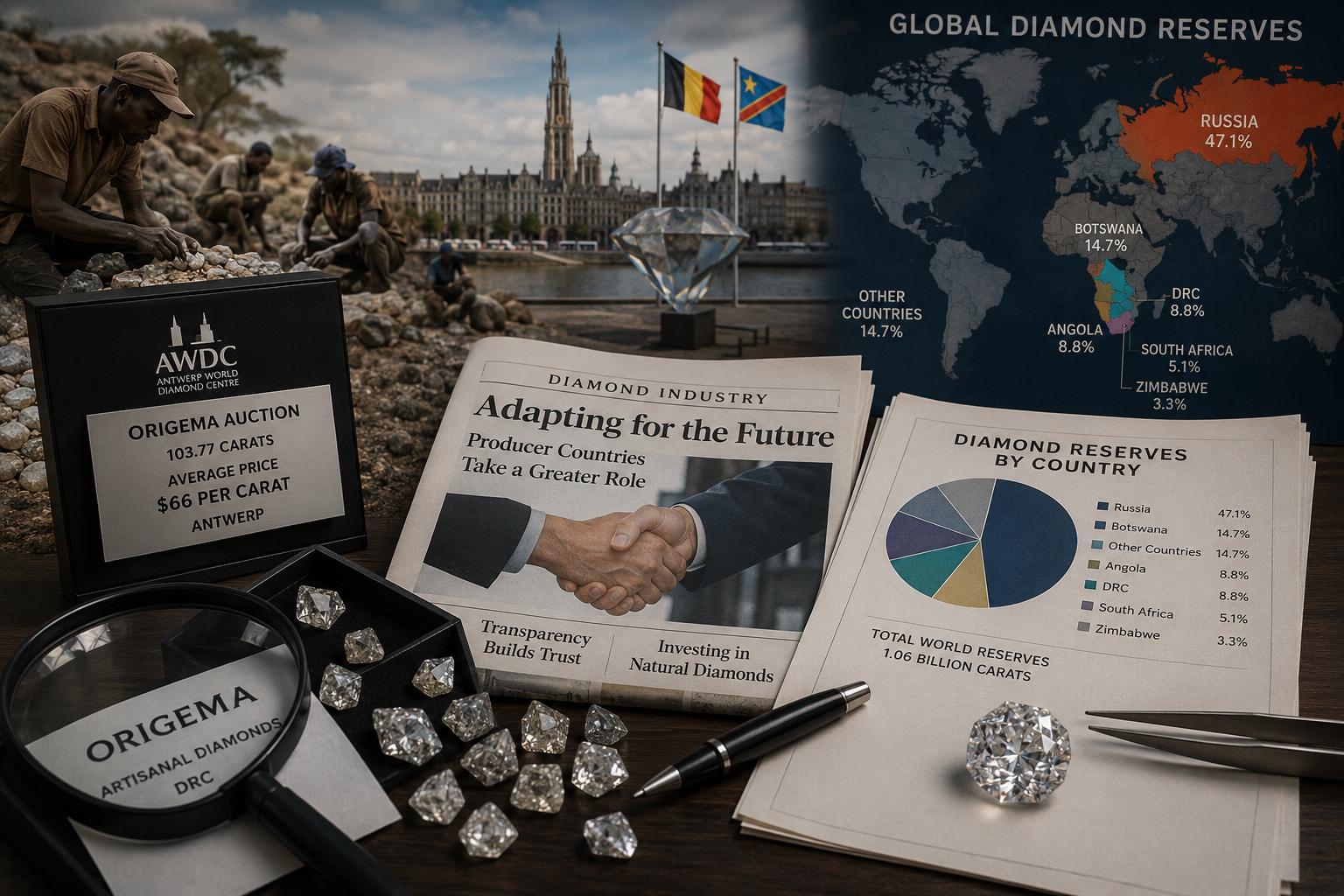
“We are extremely pleased that, after months of intense negotiations, we have succeeded in pushing the needle to allow regularisation of so-called ‘grandfathered stock,’” said the Antwerp World Diamond Centre (AWDC). “Sanctioning these goods and prohibiting their trade would impose an unfair and severe financial burden on diamond companies without significantly impacting Russia’s revenues.”

The extension and concession aim to balance the need for stringent sanctions with the “practical realities of the diamond industry,” providing additional time and clarity for businesses to adapt to the new regulations.

Moreover, temporary imports or exports of jewellery, for example for trade fairs or repairs, will not fall under the ban. In addition, the EU has delayed the prohibition on jewellery incorporating Russian diamonds processed in third countries until the European Council, the EU’s executive arm, “decides to activate” it, the EU statement said.

The US currently has the strictest limits on Russian trade, requiring self-certification for diamonds of 1 carat or lower, falling to 0.50 carats on September 1. Larger diamonds are not covered by the sanctions.

Source: Intellinews.com

Russia Seeks New Markets as “Illegal Unilateral Restrictions” Bite

Russia is seeking to strengthen ties with Brazil, India, China, and South Africa and other BRICS countries in response to tighter sanctions on diamonds from the G7 and EU.

Setting an agenda for “equal and fair interaction between the parties involved in all segments of the global diamond trade” was the focus of a roundtable discussion at the St. Petersburg International Economic Forum earlier this month.

Russia currently chairs BRICS (the initial letters of Brazil, Russia, India, China, and South Africa. Later additions are Iran, Egypt, Ethiopia, and the United Arab Emirates).

“The only universal mechanism for regulating the global diamond trade, the Kimberley Process Certification Scheme (KPCS), is being undermined by the attempts of numerous countries to introduce unilateral trade barriers,” said BRICS in a statement.
Alrosa CEO Pavel Marinychev said: “New cooperation mechanisms will ensure the stability of the global diamond market and preserve the system of the free global trade of diamond products based on the core principles of the Kimberley Process.”

Russia warned back in November 2023 that sanctions on it diamonds would have a “boomerang” effect – harming the countries that imposed them more than Russia itself.

Nikolayev Aysen, head of Russia’s Yakutia republic, where state-controlled diamond miner Alrosa is based, told the BRICS audience: “Given the illegal unilateral restrictions that certain Western countries have imposed on Russian diamonds, it is crucial for us to support the efforts of ALROSA, which aim to diversify international supply markets. For example, this will make it possible to maintain the sustainable socioeconomic development of Yakutia.”

Source: IDEX

The US is reportedly rethinking plans to ban Russian diamonds amid industry pushback

The US is rethinking restrictions on Russian diamonds after a wave of pushback from the industry and nations heavily involved in the diamond trade, Reuters reported on Monday.

Western countries have placed stiff restrictions on Russia’s diamond trade, with fresh sanctions in December banning the gems throughout the European Union. That’s a step up from the initial sanctions, which previously allowed the trade of Russian diamonds that were polished in other countries.

Diamond traders now need to self-certify that the gems they sell are not of Russian origin. By September, diamond traders in the European Union will need to send diamonds through a certification system in Belgium before selling them.

Those measures have helped crimp Russia’s war revenue, given that the nation is one of the largest producers of diamonds in the world. Yet the US, one of the world’s largest diamond consumers, could pull back on its commitment to implement the latest restrictions, three people familiar with the matter told Reuters.

Two sources said the US had pulled back on working with the G7 to implement the diamond ban and certifying that gems were not of Russian origin. Officials are “there but not engaging” in the discussion, one person said.

A senior White House official told Reuters the US would continue to work with the G7 on the Russian diamond ban, and that it had not changed its mind on the issue, but they noted several obstacles in enforcing the latest restrictions:

“We will want to make sure that we strike the right balance between hurting Russia and making sure that everything is implementable,” the official said.

The government has received pushback from firms and nations heavily involved in the diamond trade. Some African nations and Indian diamond polishers have complained about the latest restrictions, warning that the ban was faulty in its design and could raise problems in the industry. Diamond prices could also rise due to scarcer supply, they warned.

Virginia Drosos, the CEO of Signet, asked the US government to “stand against … the G7 Belgian solution,” according to a letter seen by Reuters.

De Beers, one of the world’s largest diamond miners, said it supported a ban on Russian diamonds but wants diamonds to be verified at the source of production, rather than in Belgium.

“The opportunities for, and likelihood, of Russian diamonds infiltrating the legitimate supply chain are in fact higher when you move further away from the source,” it told Reuters.

Source: Businessinsider