Childhood Friends Unearth $55,000 Natural Diamond in India

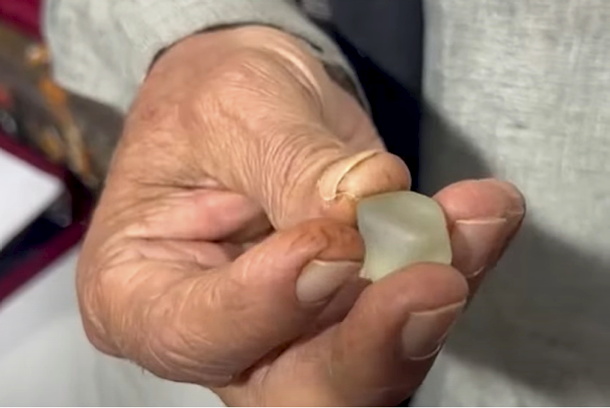
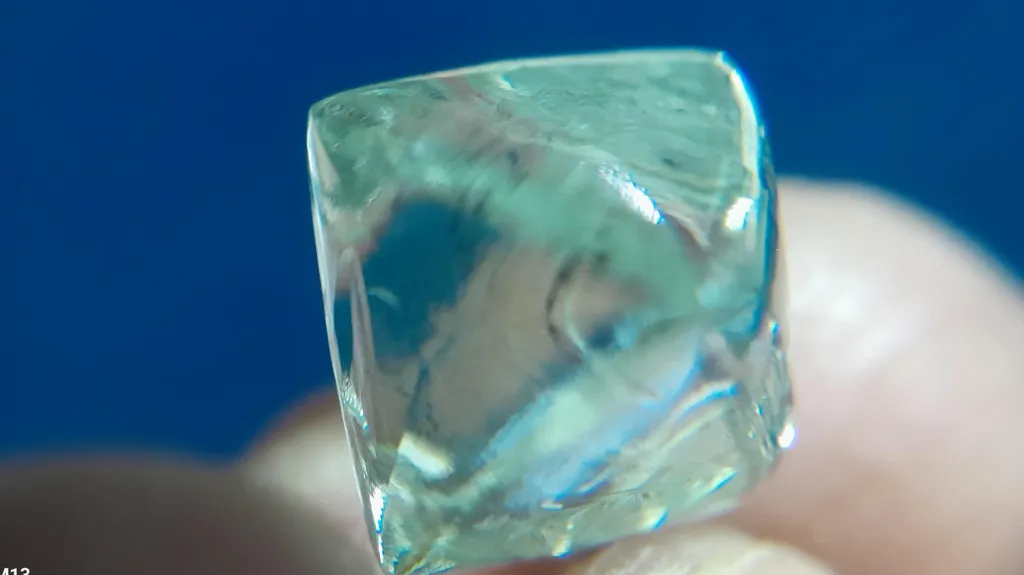
15.34-carat gem-quality natural diamond

On a crisp winter morning in Panna, a historic diamond-mining region in central India, two childhood friends made a discovery they believe will transform their lives.

Satish Khatik and Sajid Mohammed were working a small plot of land they had leased only weeks earlier when they came across a large, shimmering stone. Their instincts proved right. An official evaluation confirmed the find as a 15.34-carat gem-quality natural diamond, one of the finest varieties of diamond found in nature.

According to Anupam Singh, Panna’s authorised diamond evaluator, the stone is valued at approximately five to six million rupees (USD $55,000–$66,000) and will be sold at an upcoming government auction.
“Final prices depend on the US dollar exchange rate and benchmarks set by the Rapaport Report,” Singh said, referencing the globally recognised diamond pricing authority.

India’s government conducts quarterly diamond auctions in Panna, attracting buyers from across the country and overseas.

For the two young men, the discovery is deeply personal.
“We can finally get our sisters married,” they said, describing the moment as life-changing.

Mr Khatik, 24, runs a small meat shop, while Mr Mohammed, 23, sells fruit. Both come from modest backgrounds and are the youngest sons in their families. Like many residents of Panna, their families have searched for diamonds for generations.

Satish Khatik and Sajid Mohammed

Located in Madhya Pradesh, Panna is one of India’s least developed districts, facing ongoing challenges such as poverty, water shortages and unemployment. Yet it remains home to the country’s most significant diamond reserves, drawing hopeful locals to its fields year after year.

While most diamond mines are government-operated, small plots are leased annually to residents at nominal fees. With limited employment opportunities, many locals pin their hopes on a rare discovery—though most searches yield little more than dust and quartz.

Mr Mohammed recalls that his father and grandfather spent decades digging without success. His father, Nafees, says this find feels like long-awaited reward.
“The gods have finally honoured their hard work and patience,” he said.

Driven by rising living costs and the pressure of family responsibilities, the friends leased the plot out of necessity. After long days at work, they spent evenings digging by hand—hauling soil, washing gravel through sieves and painstakingly examining thousands of stones.

Panna’s district mining officer, Ravi Patel, described the discovery as exceptional.
“They leased the plot on 19 November. Finding a gem-quality diamond within weeks is extraordinary luck,” he said.

Although the auction proceeds are still to come, the two friends remain grounded.
“We’re not thinking about buying land or expanding our businesses just yet,” they said. “Our first priority is our families.”

How Efforts to Control the Diamond Trade Are Hurting the Very Communities They Were Supposed to Protect

Control the Diamond Trade Are Hurting the Very Communities They Were Supposed to Protect

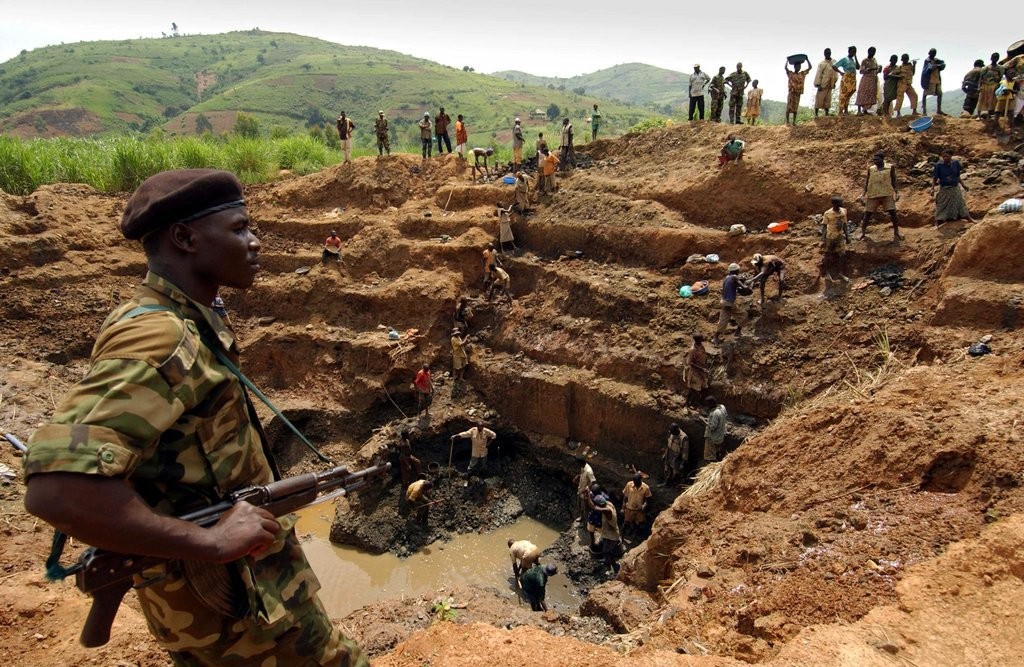
For more than two decades, global policies aimed at restricting the flow of diamonds from conflict zones most notably through the “blood diamond” narrative have reshaped the way diamonds are traded. These measures were intended to protect vulnerable communities in Africa from exploitation and violence. But today, the ripple effects of those same restrictions are being felt thousands of kilometres away, exposing the fragility of a supply chain that depends on the livelihoods of millions.

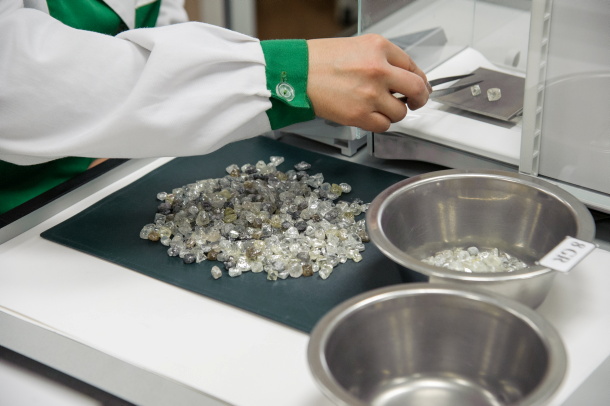
In India’s diamond capital of Surat, where an estimated 80% of the world’s diamonds are cut and polished, workers like Alpesh Bhai once saw diamonds as a pathway out of poverty. The industry offered stability, income, and, for the first time, the promise of private education for their children.

That progress has since been jeopardised.

A Perfect Storm of Restrictions and Sanctions

First, sanctions targeting Russian rough diamonds disrupted supply a supply which, for India, had been essential. Then came the imposition of 50% United States tariffs on polished diamonds, compounding the downturn.

The intention behind these measures from conflict-diamond controls in Africa to punitive trade tools against Russia has been to hold powerful actors accountable. Instead, the burden has fallen hardest on those with the least power in the chain: cutters, polishers, and their families.

Alpesh, once earning enough to support education for his two young daughters, saw his salary cut nearly in half before losing his job altogether. Private schooling quickly became unaffordable. He withdrew his children and moved them into a public school where learning opportunities are significantly limited.

“I’ve come back to where I started,” he said a sentiment now echoed across Surat.

The Human Cost Behind Supply Chain Pressure

Surat’s diamond sector employs over 600,000 people, many migrants from rural Gujarat who rely entirely on this trade. Layoffs, pay cuts, and reduced working hours have affected close to 400,000 workers.

Families are leaving the city. Children are dropping out of school. In the most tragic cases, mounting financial pressure has led to a rise in worker suicides.

Community leaders describe the situation as unprecedented. “The industry was always a ladder out of poverty,” one union representative explained. “Now that ladder is shaking for many, it’s disappearing.”

A Stark Reminder for the Diamond World

Conversations about responsible sourcing must include responsibility to all those in the value chain including cutters and polishers who transform rough diamonds into the beautiful stones valued globally.

Policies crafted to protect African workers from exploitation have, ironically, become a new form of harm both in Africa, where mining communities still struggle, and now in India, where workers are paying the price for geopolitical decisions far beyond their control.

As the global diamond market continues to evolve, one thing is clear:

Ensuring the ethical integrity of diamonds must not stop at the mine.
It must extend to every skilled hand that shapes them and every child whose future depends on this industry.

DCLA Transparent Certification and Shared Responsibility

Trump Imposes 25% Tariff, Plus “Penalty” on India Exports

President Donald Trump and Indian Prime Minister Narendra Modi

India’s diamond industry today (30 July) had its worst fears confirmed as the US announced all imports would be subject to 25 per cent tariffs, effective as of Friday (1 August).

In addition it will face an unspecified extra penalty for buying military equipment, oil and other goods from Russia.

Lingering hopes of a last-minute deal to avoid the additional tariffs were crushed when President Donald Trump singled out India, the world’s biggest diamond manufacturer, for special mention on his Truth Social platform.

“While India is our friend, we have, over the years, done relatively little business with them because their Tariffs are far too high, among the highest in the World, and they have the most strenuous and obnoxious non-monetary Trade Barriers of any Country,” he wrote.

Kirit Bhansali, chairman of the India’s Gem and Jewelry Export Promotion Council (GJEPC) reacted to the news saying: “This is a deeply concerning development. The Indian gem and jewellery sector, in particular, stands to be severely impacted.

“The United States is our single largest market, accounting for over $10 billion in exports – nearly 30% of our industry’s total global trade.

“A blanket tariff of this magnitude will place immense pressure on every part of the value chain.”

Colin Shah, managing director of diamond jewelry manufacturer Kama Jewelry, reacted to today’s news, said: “With the US being one of the key export destinations, this will severely impact the sectors like gems and jewellery that are heavily dependent on exports.

“Going ahead, we expect trade activities to remain muted with U.S. However, we also need to wait and watch how the situation unfolds.”

Less than two weeks ago, Trump said the US and India were “very close” to reaching an interim agreement, but those talks stalled, primarily over agricultural and dairy goods.

And only days ago US Trade Representative Jamieson Greer told reporters: “We continue to speak with our Indian counterparts. We’ve always had very constructive discussions with them.”

Source: IDEX

Surat Trade Show Moves to Smaller Venue

Surat Trade Show

The Carats 2025 trade show is switching to a smaller venue amid the ongoing diamond industry downturn.

The three-day B2B event, organized by the Surat Diamond Association (SDA), will take place at Avadh Utopia lifestyle club and hotel, in Surat, rather than the 1.5m sq ft Surat International Exhibition and Convention Centre (SIECC) where it has been held previously.

Only 73 exhibitors have registered for the event, which opens on 11 July, according to Times of India, compared to 118 last year.

Organizers said the move was in response to participants’ preferences, rather than lower exhibitor numbers. Many diamond manufacturers expressed a preference for a venue with hotel facilities.

SDA says in an Instagram post that it’s expecting over 7,000 visitors and over 200 buyers. In 2024 it reported 10,000 visitors.

“This milestone attendance underscores the exhibition’s position as a leading platform for showcasing innovation and excellence in diamond industry,” said SDA Jagdishbhai Khunt at the time.

Source: Idex

India’s Polished Diamonds Export Down 17%

India's polished exports fell by almost 17 per cent
Diamond polisher in a factory

India’s polished exports fell by almost 17 per cent in the fiscal year ending March 2025, to $13.29bn, according to the Gem and Jewellery Export Promotion Council (GJEPC).

That’s among the lowest annual export figures for two decades, although not, as widely reported, the lowest of all. The GJEPC figure for 2005 was $12.3bn, up from $10.3bn in 2004. By comparison 2023/4 foreign sales totaled $15.97m.

Overall gem and jewellery exports fell 11.7 per cent in 2024/5 to $28.5bn, the lowest figure in four years.

But there are signs of a recovery, with polished diamond exports for March showing a year-on-year decline of just 0.76 per cent to $1.16bn and gems and jewelry actually growing 1 per cent to $2.58bn.

“The decline in gems and jewellery exports is mainly due to the continuous dip in demand in China as well as the US, India’s key export markets, due to the ongoing geopolitical tensions,” said GJEPC Chairman Kirit Bhansali.

“Also, the correction in rough diamond prices by 10-15 per cent impacted the value, causing the overall decline in exports.”

Source: IDEX

Bombshell: Trump’s 26% Tariffs on Indian Exports

India's diamond industry is in shock today after the US imposed 26 per cent reciprocal tariffs on all its exports.

India’s diamond industry is in shock today after the US imposed 26 per cent reciprocal tariffs on all its exports.

That’s almost double the 13.3 per cent predicted by India’s Global Trade Research Initiative before yesterday’s news (2 April).

Traders, manufacturers, exporters and others in India’s diamond industry are still struggling to process the scale of the announcement, made by President Donald Trump in what he called his Liberation Day speech, outlining tariffs that would boost domestic industry and “make America wealthy again”.

He said US tariffs would be roughly half those charged by each of its trade partners. India charges the US 52 per cent, he said, a figure that includes currency manipulation.

“The [gems and jewellery] trade is expected to come at a standstill as US importers will assess whether to place orders with Indian jewellery exporters,” said Kirit Bhansali, chairman of the Gem and Jewellery Export Promotion Council, reacting to the news.

“The tariff is higher than expected,” Colin Shah, managing director of Kama Jewelry. “It is quite severe and will affect exports.”

The US represents over 30 per cent of all India’s gem and jewelry exports, worth $10bn a year. Exports of loose diamonds to the US which currently attract no import duty – and gold jewelry, which is charged at 5.5 per cent to 7 per cent. The US has a trade deficit of $46bn with India.

Trump announced a raft of tariffs on trade partners around the world, claiming the US had been losing out for decades.

“They (India) are charging us 52 per cent and we charge almost nothing for years and years and decades,” said Trump during his announcement.

For decades, the president said, the US “has been looted, pillaged, raped and plundered by nations near and far, both friend and foe alike”.

The White House said India imposed “uniquely burdensome” non-tariff barriers. Removing them would increase US exports by at least $5.3bn annually.

The US announced a baseline tariff of 10 per cent on all countries (except Canada and Mexico), to be implemented on 5 April. Additional tariffs (as high as 49 per cent for Cambodia) will be introduced on 9 April for targeted countries.

Source: IDEX

China’s Diamond Market Rebound Sparks Optimism for Indian Exports

The Chinese diamond market, second only to the US, is showing early signs of recovery, sparking optimism in India's diamond industry

The Chinese diamond market, second only to the US, is showing early signs of recovery, sparking optimism in India’s diamond industry. According to the Gem and Jewellery Export Promotion Council (GJEPC), this shift could reshape the global diamond manufacturing landscape.

China’s economic slowdown and declining marriage rates had severely impacted its diamond market, valued at approximately USD 9 billion. In 2023, diamond sales in China generated around USD 5.7 billion, but analysts project growth to USD 7.2 billion by 2030. Over the past two years, demand has dropped by as much as 50%, with wholesale diamond prices falling 40%. This downturn significantly affected India, which exports nearly a third of its cut and polished diamonds to China.

The impact was evident in India’s February 2024 gems and jewellery exports, which declined by 23.49% to USD 2.42 billion (Rs 21,085 crore), driven by weak demand from both the US and China. To counter this, GJEPC participated in the Hong Kong International Diamond, Gem & Pearl Show (DGP) earlier this month, showcasing 71 exhibitors across 116 booths in categories such as Loose Diamonds, Lab-Grown Diamonds, and Fine Jewellery.

Hong Kong, a key hub for India’s diamond trade, played a vital role in strengthening global ties. GJEPC Chairman Kirit Bhansali noted that stabilising prices and renewed Chinese demand are promising signs for the global diamond industry. He emphasized that India’s strong manufacturing capabilities and adaptability put it in a favorable position for long-term growth.

After a prolonged slump, buyers are now accepting current price levels, leading to steadier sales. GJEPC Vice Chairman Shaunak Parikh believes this renewed demand could shift India’s diamond manufacturing back towards natural diamonds. Industry insights indicate a resurgence, particularly in smaller diamonds, though a full-scale revival is still some way off.

According to Ajesh Mehta, Convener of the Diamond Panel at GJEPC, this year’s Hong Kong trade shows marked the first positive development in four to five years. While Chinese demand hasn’t returned to previous highs, price stabilisation and increased movement in smaller diamonds are encouraging. “Confidence is slowly returning, especially in diamonds below 10 points and dossier sizes,” Mehta said.

A shift in Chinese consumer preferences is also influencing the market. Retailers are now incorporating smaller diamond accents in gold jewellery instead of featuring diamonds as centrepieces. However, Mehta believes this trend is temporary, predicting a gradual return of confidence in larger stones, such as 30 to 50 points.

Beyond China, emerging markets like Cambodia, Vietnam, Brazil, and Venezuela are showing growing interest in larger stones. While they cannot replace China’s dominance, they are contributing to new demand pockets.

Devansh Shah, Partner at Venus Jewel, observed an increase in inquiries at the Hong Kong trade shows from diverse markets, including Europe, Australia, the US, and the UAE. He noted that Chinese and Far East buyers remain highly quality-conscious, with round brilliant diamonds attracting strong interest, while larger fancy cuts and 3-carat-plus rounds were available on an order-only basis.

Although the Chinese market’s resurgence remains gradual, it presents growth opportunities for India’s diamond cutting, polishing, and export sectors. With strategic planning and market adaptability, India is well-positioned to navigate this evolving landscape and sustain long-term industry growth.

De Beers sees India as a bright spot, notes early recovery signs in US

De Beers sees India as a diamond bright spot

India has been emerging as a bright spot for the cut and polished diamonds amidst a slowdown in key markets such as the US and China, Amit Pratihari, managing director, De Beers India told Reuters on Wednesday.

India is the world’s largest centre for cutting and polishing diamonds, accounting for nine out of 10 diamonds polished globally, according to Indian government data.

However, the country’s cut and polished diamond exports fell this year because of weak demand from China and the US, forcing the industry to focus on the growing domestic market that surpassed China last year to become the world’s second-largest.

“China has completely slowed down in the luxury segment … We see India growing very strongly,” Pratihari said in an interview.

De Beers, a unit of Anglo American, is the world’s top diamond producer by value and India’s number one supplier of rough diamonds.

However, there were some early signs of recovery in the US and “big growth” in the Middle East, Pratihari said.

“In next couple of months, we expect recovery,” he said.

Weak exports demand for polished diamonds forced Indian processors to trim imports of rough diamonds by 22% to $7.9 billion during April to December, according to India’s Gem and Jewellery Export Promotion Council (GJEPC).

De Beers is adjusting prices of rough diamonds to support the midstream industry – companies that buy rough diamonds from miners and sell them after cutting and polishing to retailers – in the face of polished diamond prices falling more than those of rough diamonds, he said.

“Miners are controlling the supply so more rough does not come into the market that would put additional pressure on the polished prices. But the pressure on polished prices is in midstream as in retail there is no change,” he said.

India’s cut and polished diamond exports fell by 8.3% to $9.76 billion in April-December compared with the 2023 period, according to GJEPC.

Source: Mining.com

India’s Government Urged to Adopt Lab Grown Rules

India's government is being urged to adopt the same rules on lab grown terminology as the US.
Lab grown polished diamond

India’s government is being urged to adopt the same rules on lab grown terminology as the US.

The GJEPC (Gem & Jewellery Export Promotion Council) says its 7,000-plus members are now required to adhere to the rules introduced by the US Federal Trade Commission (FTC) in 2016 and amended two years later. They have also been adopted by many other countries.

“Since India’s gem and jewellery trade has unanimously accepted the FTC’s new definition with respect to diamonds, we urge the Indian government and ministries to accept, adopt and adapt the same to existing consumer laws of our country.”

The FTC provides detailed guidance on exactly what forms of words can be used. It says: “If you sell laboratory-created diamonds, you should tell consumers that they are not mined diamonds by describing them as “laboratory-grown,” “laboratory-created,” “[manufacturer name]-created,” or some other word or phrase of like meaning so as to disclose, immediately preceding the word “diamond” and equally conspicuously, the nature of the product and the fact it is not a mined diamond.”

Smit Patel, convener of the GJEPC’s lab-grown diamond panel, said: “We have urged the government to align with the advancements and economic significance of lab-grown diamonds by adopting a forward-looking policy framework.”

The Indian government says its Central Consumer Protection Authority (CCPA) has organized a stakeholder consultation on consumer protection for the diamond sector, following representations from the GJEPC.

Source: Idex

Indian Digger’s Diamond Fetches $111,000

19.22 carat rough diamond

A 19.22 carat diamond, recovered from a shallow mine by a part-time digger in India’s Panna district, sold at auction for $111,000 (Rs 93,79,360).

It was one of 29 diamonds sold by the Panna Diamond Office, as part of a deal in which farmers and laborers rent small patches of land from the government. The other 28 stones raised just over $28,000 between them.

Many of the stones recovered have failed to find buyers at the three-monthly auctions over the last two years, but demand picked up at this latest event, with large crowds of bidders in attendance.

Panna is said to be home to 1.2m carats. Part-time miners pay $2.70 for the rights to dig a 25ft square patch there and diamond finds are quite common.

In February 2022 a part-time prospector dug up a 26.11-carat diamond which later sold for at auction for $193,000.

Source: Idex