Graff Opens Huge Store in Las Vegas

Graff Jewellers Las Vegas

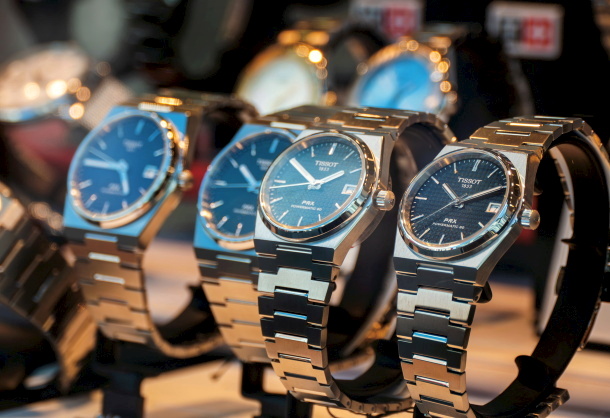
Graff has opened its biggest store in North America, at the Fontainebleau Las Vegas luxury resort and casino.

The 3,300sq ft showroom is second only to the flagship Graff in Paris, at 3,700sq ft.

Graff, founded in 1960 by British jeweler Laurence Graff, is recognized as one of the world’s most prestigious luxury jewelers.

CEO Francois Graff (Laurence’s son) said: “The opening of our new salon at Fontainebleau Las Vegas represents a pivotal moment for Graff in North America, a testament to our continued success and commitment to expansion across the region.”

The Las Vegas store is the brand’s 10th location in North America. It has more than 50 worldwide.

The new showroom features a serpentine counter with angular displays inspired by diamond facets, a bespoke bridal area with engagement rings, wedding bands, and bridal jewelry crafted from celadon wood and chiseled glass.

To celebrate the opening, Graff has curated a special selection of high jewelry featuring rare diamonds, emeralds, rubies, and sapphires.

Source: IDEX

35 ct Kashmir Sapphire sets World Record

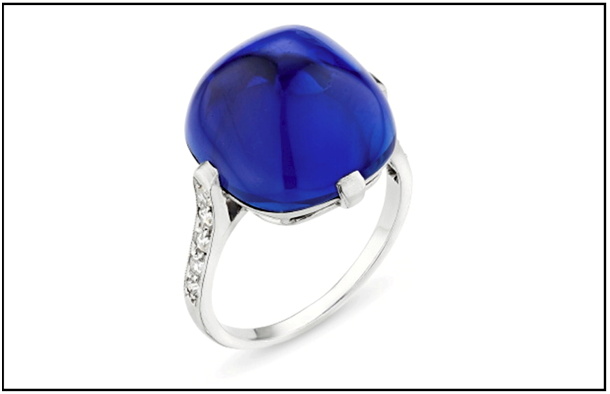
35 ct Kashmir Sapphire

A 35.09-carat sapphire yesterday set a new world record for the highest per-carat price paid at auction.

The Regent Kashmir sold for HKD 74.7m (USD 9.6m), equivalent to USD 271,515 per carat, at Christie’s Hong Kong.

The same gem also set a record back in 2015, when it was sold at Christie’s Geneva for USD 7.4m, equivalent to $209,689 per carat.

That record was broken the same year by another sapphire, the 27.6- carat Jewel of Kashmir, which sold for $6.7m at Sotheby’s Hong Kong in 2015, equivalent to USD 243,703 per carat.

But the record now reverts to gem known as the Regent Kashmir, an antique cushion-shaped, unheated, royal blue sapphire set in a platinum ring with round diamonds.

“The Regent Kashmir sapphire’s record-breaking price of $271,515 per carat with a total price of $9.5m, is a landmark moment for the sapphire market – proof that the rarest gems still command unstoppable power,” said Tobias Kormind, MD and co-founder of online jeweler 77 Diamonds.

“Gemstones of this calibre continue to be sought after and go up in value.”

The sapphire sold above its low estimate (HKD 65m, USD 8.3m) but didn’t reach its high estimate (HKD 95m, USD 12.1m).

Source: IDEX

3 ct Pink Diamond could Fetch $1.6m

3 ct Pink Diamond ring

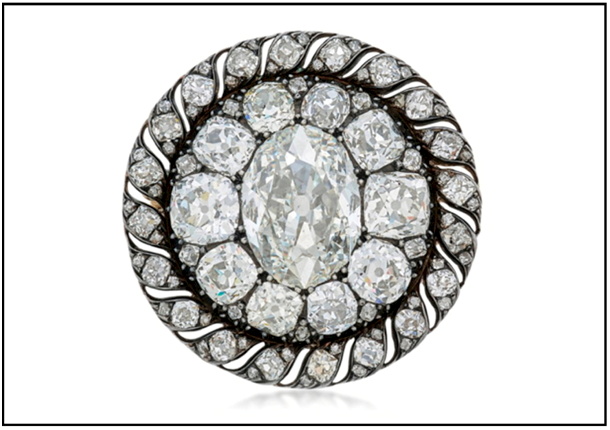
A fancy intense 3.03-carat pink diamond is among the highlights at Phillips’ New York Jewels Auction next month with a $1.2m to $1.6m estimate.

Other diamonds of note include a 4.43-carat oval fancy vivid yellow diamond ring (estimate $75,000 to $125,000), and a colorless emerald-cut diamond weighing 6.03 carats (F color, VVS1 clarity) with a $90,000 to $150,000 estimate. All three diamonds are set in rings.

The sale also features Etoile de Mer, a starfish-shaped sapphire, tsavorite, and diamond brooch by Jean Schlumberger, the French jewelry designer who famously revitalized Tiffany & Co during his tenure there, from 1956.

Among the 105 lots there is also a selection of signed jewels from Van Cleef & Arpels, Bulgari, Chaumet, and others. The sale is on 12 June.

Source: IDEX

392 ct Blue Belle Sapphire could Fetch $12m

392 ct Blue Belle Sapphire

The Blue Belle sapphire and diamond necklace is to lead a Christie’s New York sale next month with an estimate of $8m to $12m.

The tassel pendant features a 392.52 carat unheated, cushion modified, mixed-cut sapphire from the famed Ratnapura region of Sri Lanka, together with oval-shaped diamond terminals, and a brilliant-cut diamond neckchain, mounted in gold.

The estimate is well below the $17.6m the piece sold for at Christie’s Geneva when it last changed hands in November 2014.

The sapphire was recovered in 1926 and was sold in 1937 to was sold to British motor magnate Lord Nuffield, founder of Morris Motors.

There were reports at the time that the gem would be gifted to HM Queen Elizabeth the Queen Mother on her coronation day, though this didn’t actually happen.

“Sapphires of this caliber are extraordinarily rare,” said Rahul Kadakia, Christie’s international head of jewelry.

“This remarkable stone must be considered among the most prestigious colored gemstones to appear on the market in many years – truly worthy of any world-class collection.

Among other highlights at the Magnificent Jewels live auction on 17 June, is the Marie-Thérèse Pink Diamond, 10.38-carat kite-shaped fancy purple-pink diamond that is said to have belonged to Marie Antoinette.

It has recently been set into a contemporary ring by the Parisian jeweler Joel Arthur Rosenthal

Source: IDEX

$28m Emergency Funding as Lucara Sales Dip

Emergency Funding as Lucara Sales Dip

Lucara is drawing down up to $28m in emergency funding for its underground mine expansion after reporting a slump in Q1 earnings and lowering its revenue guidance for the full year.

The Vancouver-based miner received lender approval for the funds from its Cost Overrun Reserve Account (CORA) extending a standby undertaking, as it faces increasing financial pressure from declining revenues, operational disruptions, and a weak diamond market.

Revenue for the first quarter slipped 23 per cent to $30.3m, as heavy rainfall in January forced the company to process lower-grade stockpile material at its Karowe open pit mine, in Botswana. It sold 72,871 carats, down 22 per cent year-on-year.

“This lower revenue outlook has led management to assess the company’s ability to continue as a going concern, with concerns raised about sufficient working capital, cash flow from operations, and liquidity to meet obligations and ongoing UGP (underground mine plan) development,” Lucara said in its Q1 2025 Results.

Projected revenue for the full year has been lowered from $195m – $225m to $150m – $160m, although this figure excludes sale of the 2,488-carat Motswedi diamond that was recovered in August 2024.

Petra said lenders had approved a draw of up to $28m from the cost overrun reserve account to allow work on the underground expansion to continue.

In exchange, Nemesia, its largest shareholder, agreed to extend its shareholder standby undertaking until the project is finished.

During Q1 Lucara said it recovered six stones over 100 carats including the a 1,476 carat non-gem diamond that was sold on tender for $1.11m.

Source: IDEX

Graff and Moussaieff in UK Rich List

Laurence Graff courtesy Graff Diamonds.

Laurence Graff and his son Francois are ranked 44th in the newly-published Sunday Times Rich List 2025 of Britain’s 350 wealthiest individuals.

Their worth is estimated at £3.65bn ($4.85bn), up £50m ($66m) on last year’s figure.

Laurence Graff founded the iconic Graff Diamonds in 1960 and remains chairman, aged 86. Francois, who has been involved in the family business for over 35 years, now serves as CEO.

Also in the Rich List, at number 342, is Alisa Moussaieff and family, with an estimated £342m ($454m) worth.

She is the CEO and creative director of the exclusive Moussaieff Jewellers, founded by her late husband Shlomo in 1963.

Top of the list is Gopi Hinduja and family. He chairs the Hinduja Group, a multinational conglomerate spanning automotive, oil and speciality chemicals, banking and finance, IT, cybersecurity, healthcare, trading, infrastructure project development, media and entertainment, power, and real estate, valued at £35.3bn ($46.9bn).

King Charles II is at 238, with £640m ($851m).

Source: IDEX

No Golconda Blue, but Christie’s still Raises $72m

Golconda Blue diamond

Christie’s Geneva sold 100 per cent of lots at its Magnificent Jewels yesterday (14 May) and raised $72.3m – despite the withdrawal of the sale’s main attraction, the 23.24-carat Golconda Blue.

It carried a $35m to $50m estimate and would have been the largest fancy vivid blue diamond ever offered at auction. But consignors pulled the gem with less than three weeks’ notice, saying it would be sold a family member instead.

The new top lot was another blue, an emerald-cut 6.24-carat fancy deep blue diamond (pictured) that was sold to London-based Moussaieff Jewellers for $12.7m. Christie’s said it set an auction record price per carat for a deep blue jewel.

A fancy, vivid blue oval-shaped diamond ring of 3.68 carats set by Graff, sold for $5.8m to Lawrence Graff.

And a private collection of 21 pieces by JAR (Joel Arthur Rosenthal) sold for $7.1m, with a diamond necklace selling for $2.8m, almost five times its pre-sale estimate.

Christie’s said the auction raised $72.3m, with 77 per cent of the 115 lots selling above their high estimate. By comparison, last year’s Magnificent Jewels auction raised $54.2m.

Source: IDEX

Auction House Pulls Fake Pink Diamond from Sale

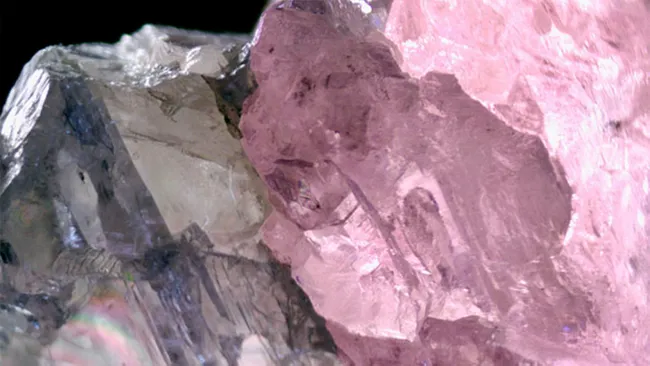
A leading auction house was shocked to discover a pink diamond it planned to sell was actually a fake.

A leading auction house was shocked to discover a pink diamond it planned to sell was actually a fake.

The gem was sent to the Institute of Diamonds – the De Beers diamond grading and verification division – ahead of the sale.

It was examined there and found to be a forgery, De Beers CEO Al Cook said in a LinkedIn post to his 42,500 followers.

“At first glance, the stone looks beautiful. It even has an inscription on the side which claims its a diamond,” he said.

But a combination of experts and sophisticated detection machines confirmed the stone was not actually diamond.

“As soon as our team looked at the stone, they suspected it was a fake,” said Cook in a follow-up to his original post.

“The certification inscription on the side had led the auction house to believe it was real.”

He also said: “Our team was quite excited to see this extraordinary stone and actually very sad when it turned out to be a fake.

“Luckily the fraud was stopped before an auction customer paid a vast sum of money!”

Cook didn’t provide further details, and De Beers declined to elaborate.

In his original post Cook said: “Henry Smith from our Institute of Diamonds confirmed that this pink stone was a forgery. ‘It had even been lasered with a fake inscription’.

“Henry explained that the auction house was shocked, but ‘cases like this emphasise the critical role of advanced detection technologies’.”

Cook also said in his post that De Beers was ramping up production of DiamondProof, the verification device aimed specifically at retailers that was showcased at JCK last year and which is now available in the US.

He said it can distinguish a natural diamond from a lab-grown or moissanite in a few seconds.

Source: IDEX

US Watch and Jewelry Sales Steady Again in March

Diamond Bracelet
Diamond Bracelet

Watch and jewelry sales in the US remained steady in March, with a slight overall increase of 0.4 per cent, according to the latest US Department of Commerce figures.

Jewelry sales rose slightly, while watch sales dipped, as consumers opted for higher-priced items, but bought fewer of them.

In February overall sales increased by just 0.2 per cent and in January they fell by 1.0 per cent

The US government’s BEA (Bureau of Economic Analysis) reported a 0.7 per cent increase in consumer spending in March, the biggest increase for two years, but said it was largely driven by a rush to buy cars before US reciprocal tariffs forced prices up.

Watch and jewelry sales have been characterized by very modest increases in recent months, following on from a year of sustained growth – 10 per cent or more in some months – as shown below.

Reciprocal US tariffs – announced in April, then paused until July – will almost certainly hit sales, as producers forced to either absorb the costs or pass them on to consumers.

Source: IDEX

De Beers Boss Says Trump’s Diamond Tariffs Do Nothing for U.S. Jobs

 “Diamond Tariffs: A Tax on Love?”

The diamond world is facing fresh turbulence following the U.S. government’s decision to impose tariffs on imported diamonds — a move that De Beers CEO Al Cook says does nothing to support American jobs or the economy.

In an exclusive interview with the Financial Times, Cook made it clear: “There are no U.S. diamond mining jobs to protect.” He stressed that these tariffs don’t create employment or benefit the domestic industry — instead, they act as a consumption tax that ultimately punishes the American public.

A Tax on Love, Not a Boost to Industry
The U.S. remains the largest market for diamond jewellery, accounting for about half of global demand, yet it has no significant commercial diamond mining of its own. Every diamond on American soil has been imported — meaning the 10% blanket tariff on all imports, introduced by President Donald Trump, hits the diamond trade especially hard.

Unlike many raw materials that were exempt from the tariffs, diamonds were left out, intensifying the impact on a sector already grappling with declining demand and competition from synthetic alternatives.

According to Cook, the result has been immediate: the trade in natural diamonds briefly ground to a halt. The World Diamond Council echoed his warning, stating that $117 billion in annual revenue and over 200,000 U.S. jewellery jobs could be at risk if diamonds aren’t removed from the tariff list.

“Tariffs on diamonds are not protecting American industry,” Cook emphasised. “They’re just increasing the cost of engagement rings, anniversary gifts, and other sentimental purchases.”

Global Trade Routes Disrupted
What makes diamonds unique is their complex, high-value supply chain. They’re small, easy to transport, and often pass through multiple countries — from mines in Botswana and Angola, to polishing hubs in India, and finally into U.S. jewellery stores. Tariffs disrupt that finely tuned system.

This comes at a particularly sensitive moment for De Beers, as parent company Anglo American prepares for a sale or initial public offering (IPO) of the diamond giant. Despite industry challenges, De Beers is pushing ahead with IPO plans that could launch by early next year.

But the company is feeling the pain too: first-quarter revenue dropped 44% year-on-year to $520 million, reflecting both lower prices and reduced demand. Anglo American has also written down De Beers’ value by $4.5 billion over the past two years.

Hope on the Horizon?
Still, Cook remains optimistic. He believes that over time, U.S. tariffs on diamonds will be lifted. The American government has already granted tariff exemptions for items like smartphones and car components, and Cook is confident natural resources like diamonds will follow suit.

Adding to that optimism are positive developments in U.S.–India trade talks. India polishes over 90% of the world’s diamonds, making it a key link in the supply chain. A favourable trade agreement between Washington and New Delhi could ease the pressure and offer the diamond sector a much-needed reprieve.

In the end, the message from De Beers is clear: Tariffs on diamonds don’t help American workers or industry — they just make life more expensive for consumers. As negotiations progress and the global market adjusts, the diamond world will be watching closely to see whether policymakers come to the same conclusion.