India’s Polished Exports Rise in Rush to Beat US Tariffs

India's Polished Exports Rise
Surat, Gujarat, India

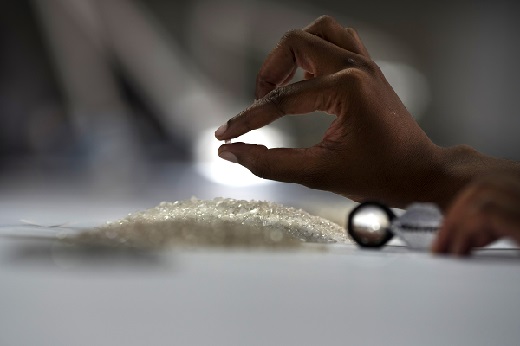
India’s gross monthly exports of polished diamonds jumped 17.8 per cent in July, as manufacturers rushed to get their goods into the US before the 50 per cent tariffs took effect.

It was the first year-on-year increase since last October, when the markets showed some small signs of a possible recovery. Since then exports have declined every month.

Foreign sales were $1.07bn, according to the latest data from the Gems and Jewellery Export Promotion Council (GJEPC), following on from India suffered a 23 per cent dip in June, with total exports of $779m.

US tariffs on Indian exports were first announced in April, but didn’t take effect until August. The initial 25 per cent tariff was imposed on 7 August, prompting a rush to export, and an additional 25 per cent tariff – what President Donald Trump describes as a punishment for India buying Russian oil – comes in on 27 August. This could lead to another monthly increase in August, as manufacturers try to beat the next tariff deadline.

Meanwhile, imports of rough diamonds for April to July grew slightly, up 1.5 per cent to $4.37bn.

Overall gross exports of gems and jewelry also rose on tariff worries, up 17 per cent to $2.18bn.

Kirit Bhansali, GJEPC chairman, said: “The July export figures, a successful IIJS Premiere with strong order bookings, and the revival of the Hong Kong market are encouraging signs for our industry, especially amid global challenges such as the impact of US tariffs.”

Source: IDEX

Administration-led DOCA offers lifeline to Lucapa

DOCA offers lifeline to Lucapa diamonds

Lucapa Diamond Company, the Perth-based miner behind the Lulo alluvial mine in Angola and the Merlin project in Australia, has secured a potential lifeline through a planned Deed of Company Arrangement (DOCA) that promises full repayment to creditors and a partial return to shareholders.

Administrators Richard Tucker and Paul Pracilio of KordaMentha were appointed in May after Lucapa faced plummeting diamond markets and operational strains. They recently reached a binding term sheet with Dubai-based Gaston International, part of the broader Jemora Group, setting the stage for a restructuring that would transfer Lucapa’s shares to the proponent, subject to creditor and court approvals.

Under the proposed DOCA, creditors stand to receive 100c on the dollar, while shareholders may receive up to A$0.018 a share. That potential payout exceeds Lucapa’s last traded share price of around A$0.014 a share.

The company has struggled amid a downturn in diamond prices.

Gaston International invests heavily in mining globally, with a particular affinity for critical minerals and gemstones. Its interest in Lucapa could give the company access to high-value assets while securing its Angolan and Australian operations.

KordaMentha’s dual-track recapitalisation and sale process hinges on creditor approval at meetings scheduled for August 20, court clearance under a key provision of the Australian Corporations Act, and any regulatory consents. If successful, the DOCA would preserve Lucapa’s operations and deliver better outcomes than liquidation, the administrators stated.

Source: Miningweekly

South Africa Joins Luanda Accord to Promote Natural Diamonds

South Africa Joins Luanda Accord

South Africa is to sign up to the milestone Luanda Accord, which is funding a global campaign to promote natural diamonds.

It joined the governments of Angola, Botswana, Namibia, Sierra Leone and the Democratic Republic of the Congo, in June in pledging to contribute 1 per cent of the value of their rough sales annually.

But the move was only approved South Africa’s cabinet last week. Minister in the Presidency Khumbudzo Ntshavheni and confirmed the decision on 7 August, committing 1 per cent of the annual revenues generated from rough diamond sales to a global marketing fund led by the Natural Diamond Council (NDC).

South Africa, the world’s sixth biggest diamond producing nation by value, saw sales down by 21 per cent last year amid the global slowdown.

The country’s mining minister mining minister Gwede Mantashe was listed as a signatory to the Luanda Accord in an official communique after the agreement.

But a conflicting Reuters report said South Africa did not actually sign at the time and has only done so now.

The Luanda Accord is seen as a potential turning point for the sector, aiming to rebuild consumer trust and interest in natural diamonds over lab growns, by emphasizing their origin, authenticity, and community impact.

It will highlight the positive economic and social contributions of the natural diamond industry to producing nations and their communities.

Governments of the African diamond producing nations have been joined by the Antwerp World Diamond Centre (AWDC), African Diamond Producers Association, India’s Gem and Jewellery Export Promotion Council (GJEPC) and the Dubai Multi Commodities Centre (DMCC).

Source: IDEX

Petra to Refinance as Sales Slide by a Third

Petra Diamonds - Cullinan Diamond Mine

Petra Diamonds has announced plans for a major refinancing program – together with a 33 per cent slide in revenue for FY2025.

The UK-based miner, which has recently sold off two of its four diamond mines, is facing substantial financial and operational challenges.

It is proposing an extension of senior secured bank debt and notes due early next year to 2029 and 2030 respectively, together with a $25m rights issue.

The moves are designed to preserve cash, extend debt repayment timelines, and ensure Petra can continue investing in its two remaining core mines – Cullinan and Finsch, both in South Africa.

Petra’s latest sales results, published on the same day (8 August) as its refinancing package, show some positive momentum in the market with like-for-like rough diamond prices from its latest tender, but revenue for Q4 was down 49 per cent year-on-year to $50m.

Revenue for FY2025 was $206m, down 33 per cent year-on-year from $309m and net debt increased to $264m.

“We would once again like to acknowledge the resilience shown by our employees in navigating a very difficult period for the company and the diamond sector as whole,” the company said in its Q4 and FY 2025 Operating Update.

Meanwhile, in its refinancing proposal Petra said: “Petra has, over the past 18 months, been focused on an internal restructuring that has resulted in a simpler and more streamlined business and operating model.

“This has included the sale of the Koffiefontein and Williamson mines, multiple labour restructuring initiatives and an optimisation and smoothing of the group’s capital development profiles.”

Source: IDEX

Tanishq Offers “First” In-Store Diamond Evaluation

Tanishq Showroom in Iselin, New Jersey

Indian jewelry retailer Tanishq is introducing in-store diamond evaluation some of its 500-plus outlets, as part of an ongoing partnership with de Beers.

Customers will be able to see proof that the diamond they’re buying is natural rather than lab grown, thanks to the De Beers SynthDetect machine, which works with loose and mounted stones.

They can also have diamonds tested with Lightscope, which measures light performance, and with other equipment for performance, inclusions, and laser markings.

Tanishq, part of the Titan group, says the launch of its Diamonds Expertise Centres is designed to give customers greater peace of mind by presenting complex gemological data as simple, visual insights. It says the centers are a “first of a kind initiative”.

The first three are in Bengaluru, but the company plans to expand them to 200 stores this year and eventually to all its outlets.

Ajoy Chawla, CEO at Tanishq, said: “Our aim is to set a new standard in natural diamond retail — one that goes beyond traditional display and transforms the buying journey into a transparent, educational, and truly immersive experience.”

Last August Tanishq and De Beers jointly announced that they’d be working together to promote natural diamonds in India, now the world’s second biggest diamond market.

The partnership leverages Tanishq’s retail presence and De Beers’ expertise and proprietary diamond verification technology.

Source: IDEX

Capacity Boost: Indian Company Buys 1,100 Lab Grown Machines

Capacity Boost: Indian Company Buys 1,100 Lab Grown Machines

Greenlab, recognized as India’s largest lab-grown diamond producer, is set for a huge increase in capacity, after buying more than 1,100 new growing machines.

The company already has 1,600 machines, producing 2.9m carats of rough diamonds a year.

It has reportedly bought 105 high-tech growers from the Israeli firm Isrough and 1,000 more from India-based Bhanderi Lab Grown.

It said it chose Isrough’s machines for their ability to produce top-quality diamonds: D and E colors, with much of their output in the VVS clarity range.

Greenlab sells its polished diamonds through its US subsidiary, Labon, and has a distribution partnership with Florida-based Green Rocks.

India is the world’s second-largest lab-grown diamond producer with a 15 per cent market share, but trails a long way behind China, which produces about half of the world’s lab-grown diamonds.

Source: IDEX

The Kao Legend Collection: A Rare Suite of Pink Diamonds from Lesotho

A Rare Suite of Pink Diamonds from Lesotho

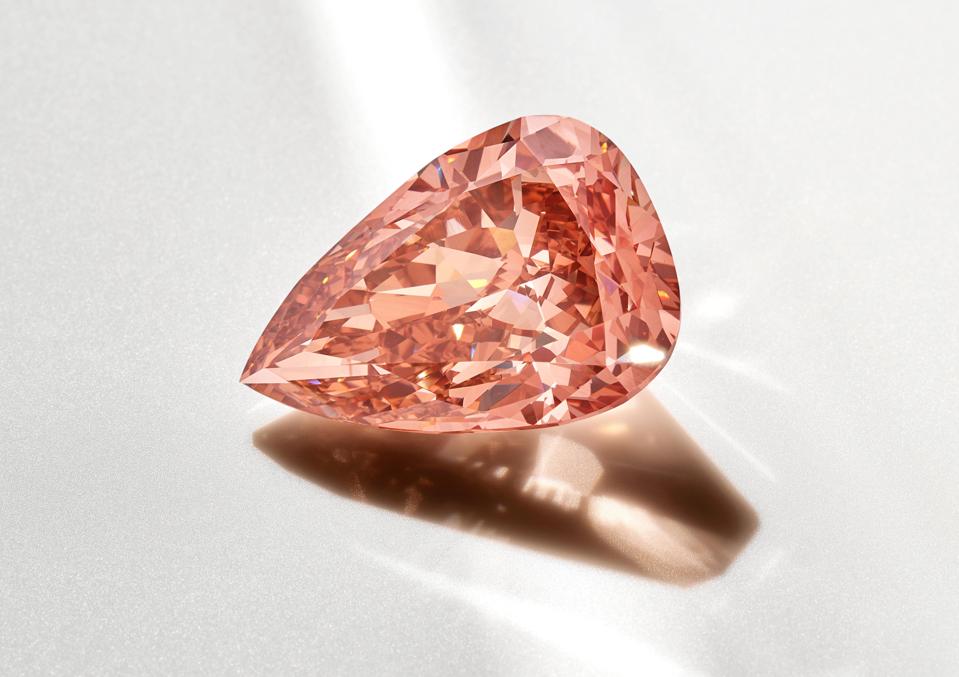
The Kao Legend Collection represents an extraordinary achievement in diamond cutting and curation. Cut from a single 108.39-carat pink diamond crystal unearthed at the renowned Kao Mine in Lesotho, this suite features seven magnificent pink diamonds each documented in detail by the GIA Monograph.

At the heart of the collection lies the Kao Legend, a 20.49-carat diamond graded Fancy Intense Purplish Pink by the Gemological Institute of America (GIA). The accompanying diamonds in the collection range in colour from Fancy Intense Purplish Pink to Faint Pink, showcasing a delicate and rare spectrum of pink hues.

What sets this collection apart is not only its shared origin and harmonious beauty but also the diamonds’ classification. All seven are Type IIa diamonds known for their exceptional chemical purity and rarity, comprising less than 2% of all natural diamonds. Type IIa pink diamonds are especially coveted for their remarkable clarity and vibrant colour saturation.

The Kao Mine, one of Lesotho’s most prominent diamond sources, has established a reputation for yielding high-quality pink diamonds. Alongside the Kao Legend, the mine also produced the celebrated Pink Eternity, a 47.80-carat gem of international acclaim.

For gemmologists and collectors alike, the Kao Legend Collection exemplifies nature’s artistry and the pinnacle of diamond excellence.

US Watch and Jewelry Sales Dip in June Ahead of Tariffs

US Watch and Jewelry Sales

Watch and jewelry sales in the US slipped into negative growth during June – down 1.7 per cent – after 19 months of almost uninterrupted increases.

The decline, after such a prolonged positive period, reflects growing concern over the impact of US reciprocal tariffs which came into force on 1 August, along with broader economic uncertainty in the market and higher gold prices.

Meanwhile the US Department of Commerce has made significant changes to figures published last month. Sales for May have been revised down from +2.8 per cent to +0.7 per cent, based on actual transactions rather than estimates, and April is down from +2.3 per cent to +1.8 per cent.

The original figures indicated that things were better than they actually were, especially after a number of months when monthly sales increases were hovering just above zero. The June dip appears to signal a downturn ahead of the 1 August implementation of tariffs.

Source: IDEX

US Importers to Pay 37% Tariff on Botswana Diamonds

Botswana Diamonds

The US is almost certain to go ahead and impose a 37 per cent tariff on all goods imported from Botswana, starting tomorrow 1 August.

That is one of the highest rates of tariff being introduced by the US.

Botswana, the world’s second biggest diamond producer after Russia, has been actively seeking dialogue with the US government to reverse or mitigate the tariff, but without success.

Last month President Duma Boko said tariff imposed on Botswana worsened the already bleak future faced by the diamond industry, and were likely to hinder efforts to grow the African economy.

Most of Botswana’s rough diamonds are sold direct to India, Belgium, and the UAE, but goods worth around $500m annually are exported to the US and will be subject to tariffs. Until now diamonds have been zero-rated.

US importers will have to pay a total of 37 per cent in duties. The reciprocal duty includes the 10 per cent baseline duty that was imposed back in April.

The tariff rules for Botswana, and most other countries, are unlike those for India, where the reciprocal tariff is in addition to the baseline 10 per cent.
US-bound diamonds represent a modest slice of Botswana’s total diamond export business, and most of the country’s diamond revenue is not directly affected by the new US tariff.

It is, however, another blow to a country that relies on diamonds for the vast majority of its export revenue, and that has seen foreign sales halve amid the global downturn.

Source: IDEX

Making a Gold Ring in 18K or Platinum: Understanding the Cost and Weight Differences

Making a Gold Ring in 18K or Platinum

When choosing a precious metal for a custom-made ring, the two most popular options are 18-carat gold andWhen choosing a precious metal for a custom-made ring, the two most popular options are 18-carat gold and platinum. Both metals are prized for their beauty, durability, and prestige, but they differ significantly in terms of cost, weight, and long-term maintenance. Whether you’re designing a bespoke engagement ring, a wedding band, or a statement piece, understanding the key differences between 18K gold and platinum will help you make an informed decision.


Material Comparison: 18K Gold vs. Platinum

1. Purity and Composition

  • 18K Gold is made up of 75% pure gold and 25% alloy metals (such as copper, silver, or palladium), which influence its colour and strength. It is available in yellow, white, or rose tones.
  • Platinum is typically 95% pure, making it denser and more hypoallergenic than gold. It retains its naturally white colour over time without the need for rhodium plating.

2. Weight

  • Platinum is approximately 60% heavier than gold. For example, a ring that weighs 5 grams in 18K gold would weigh about 8 grams if made in platinum. This weight difference gives platinum rings a more substantial feel but also impacts the price.

Cost Breakdown: Gold vs. Platinum Ring

Example: Classic Solitaire Ring Design

Feature18K Gold (5g)Platinum (8g)
Metal Cost per GramAUD $123-145AUD $73 -85
Total Metal CostAUD $615–725AUD $584–680
Crafting ChargesAUD $300–500AUD $400–600
Total Estimated CostAUD $915–1125AUD $984–1280

Note: These figures are approximations and vary based on ring design complexity, jeweller’s rates, and daily bullion prices.


Why Choose 18K Gold?

  • Affordable luxury: Gold offers the prestige of a precious metal at a more accessible price.
  • Colour variety: Choose from yellow, white, or rose tones to suit your personal style.
  • Classic and timeless: 18K is the standard for luxury jewellery, combining durability with rich colour.

Why Choose Platinum?

  • Exceptional durability: Platinum is more resistant to wear and ideal for heirloom pieces.
  • Hypoallergenic: A top choice for sensitive skin.
  • Low-maintenance: Maintains its natural white lustre without plating.

Choosing between 18K gold and platinum comes down to your budget, lifestyle, and personal preferences. If you’re looking for a lighter, more affordable option with colour flexibility, 18K gold is a great choice. If you value longevity, weight, and purity, platinum may be worth the higher investment.

Either way, a well-crafted ring in either metal will provide a lifetime of beauty and meaning. Always consult with a reputable jeweller to discuss your design and get an accurate quote based on current metal prices.